QuEra, a quantum computing startup based in Boston, has made an ambitious promise to deliver thousands of error-corrected qubits by 2029. If they can achieve this, they’ll outpace every competitor in the industry.
This announcement is bold for good reason: QuEra’s current technology would need a dramatic upgrade to meet those goals. With quantum computing now a priority for the White House and billions being invested, QuEra is betting on its unique strategy to tackle one of tech’s toughest challenges.
What Is Quantum Computing, Exactly?
Standard computers handle information as bits, which you can think of as switches that are either on (1) or off (0). In contrast, quantum computers use qubits (quantum bits). These can exist in both states at once, thanks to superposition. This ability isn’t just a neat trick; it allows quantum computers to explore multiple solutions to a problem at the same time, much like how you might navigate a maze by sending out copies of yourself to check every route all at once.
The downside? Qubits are incredibly delicate. Any disturbance from heat, vibration, or stray electromagnetic signals can lead to errors. That’s why error correction is such a vital challenge in this field. An error-corrected qubit is stabilized using additional qubits that automatically detect and correct mistakes — similar to having a spell-checker constantly running in the background.
QuEra’s method involves using neutral atoms — single atoms held in place by laser traps — as its qubits. The company claims this technique is more effective for error correction compared to the superconducting qubit approach used by IBM and Google.
What QuEra Is Promising
QuEra aims to develop systems with thousands of error-corrected logical qubits by 2029. For context, most quantum computers in use today have far fewer error-corrected qubits. Achieving “thousands” would mark a significant leap in capability.
Reports from Ars Technica indicate that QuEra’s existing hardware would need a substantial upgrade to meet these ambitious targets. This gap between what’s currently possible and what they’re promising makes their claim both thrilling and worth watching closely. Quantum computing roadmaps often experience delays.
However, QuEra isn’t alone in this journey. The company enjoys support from prominent investors and academic collaborations. Its neutral-atom approach has shown real promise in peer-reviewed studies.
| Metric | Detail |
|---|---|
| Target year | 2029 |
| Promised qubits | Thousands of error-corrected logical qubits |
| Qubit type | Neutral atoms (laser-trapped) |
| Headquarters | Boston, MA |
| Key competitors | IBM, Google, IonQ, Microsoft |
Why the White House Is Paying Attention
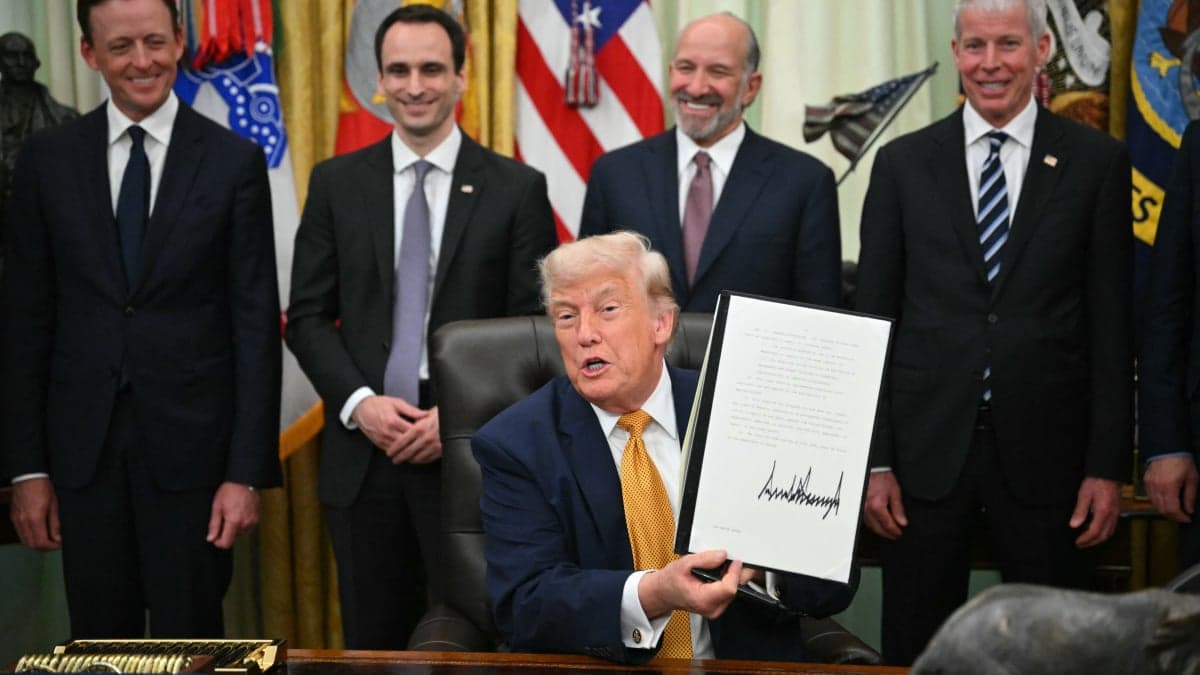
Quantum computing has quickly become a geopolitical priority, much like AI. The Trump administration has explored executive action related to quantum technology, viewing it as a matter of national security and economic competitiveness. This is similar to how past administrations approached semiconductors and AI infrastructure.
The concern is clear: a powerful quantum computer could theoretically break the encryption that secures everything from your bank account to military communications. Countries that build one first gain a significant strategic edge. China has made quantum a national priority, prompting the U.S. government to respond with similar urgency, as reported by Mashable.
What This Means
For most people, the everyday impact of quantum computing is still years away. But when it arrives, it could be transformative. Drug discovery could speed up significantly, as quantum computers excel at simulating molecular behavior — something classical computers struggle with. Other fields like financial modeling, logistics optimization, and materials science could also benefit first from quantum advancements.
A more immediate concern for users is encryption. Security researchers are already developing “post-quantum cryptography” — new encryption methods designed to withstand quantum attacks. Some of this work is already being integrated into future standards. You might not notice when your browser updates its encryption, but those updates are happening quietly in preparation for this shift.
If QuEra meets its 2029 targets, it could speed up this timeline for everyone, including the less desirable applications.
Community Reaction
“Every quantum computing company has had a ‘we’ll have fault-tolerant qubits in 5 years’ roadmap for the past 15 years. I’ll believe it when I see the peer-reviewed benchmarks.”
“Neutral atoms are genuinely interesting though. Not dismissing this one as easily as I would a superconducting play at this scale.”
What To Watch
- QuEra’s near-term hardware milestones: The company needs to demonstrate credible intermediate steps — not just a 2029 finish line — to keep investor and research credibility. Look for published benchmarks in 2025 and 2026.
- White House executive action: Reports suggest the Trump administration may formalize quantum computing policy through executive order. Such a move would likely direct federal funding and set export controls on quantum hardware.
- IBM and Google responses: Both companies have their own error-correction roadmaps. If QuEra’s claims gain momentum, expect updated timelines from these major players.
- NIST post-quantum encryption standards: The National Institute of Standards and Technology finalized its first post-quantum cryptography standards in 2024. Adoption by major platforms will be a key indicator of how seriously the industry is addressing the quantum threat.
Sources: Ars Technica — QuEra promises thousands of error-corrected qubits by 2029 | Mashable — What is quantum computing, and why does Trump care?

Ava Mitchell
Ava Mitchell is a digital culture journalist at Explosion.com covering social media platforms, streaming services, and the creator economy. With 4 years reporting on TikTok, Instagram, YouTube, and the apps that shape daily life, Ava specializes in explaining platform policy changes and their impact on everyday users. She previously managed social media strategy for a tech startup, giving her firsthand experience with the platforms she now covers.