
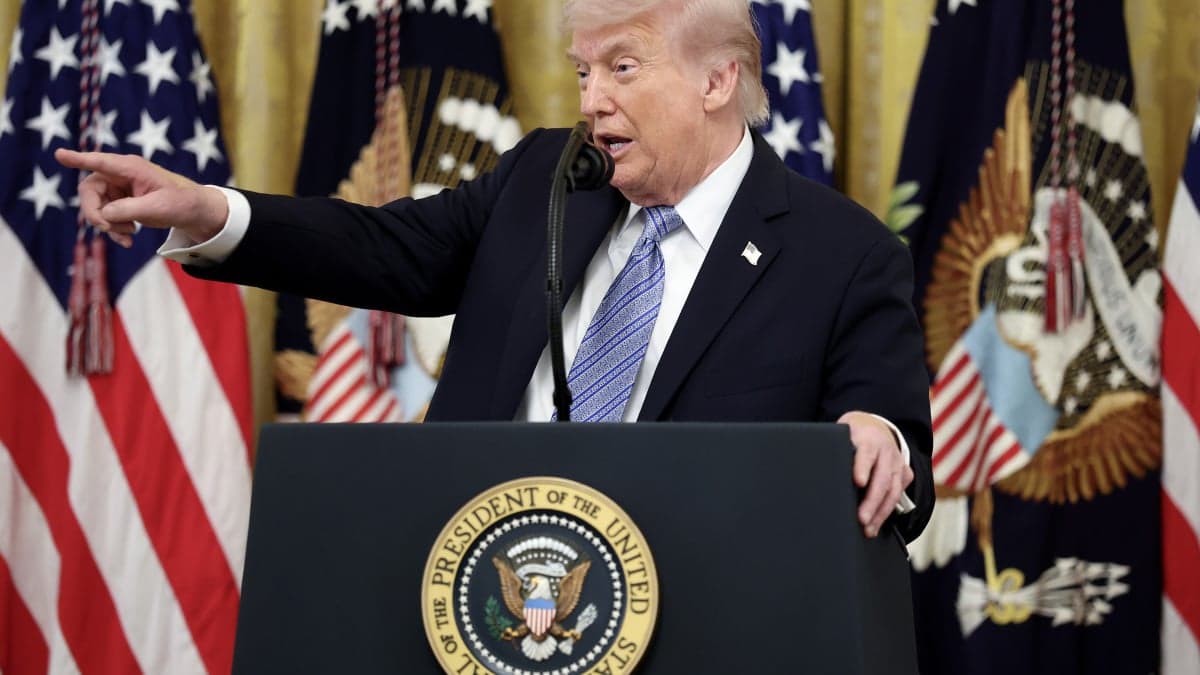
The White House is looking into a system that would require federal review of new artificial intelligence models before they’re released to the public. Reports from Mashable and Engadget highlight this potential policy shift, which would represent a big change from President Trump’s earlier hands-off approach to AI regulation.
What’s Being Proposed
Officials at the White House are establishing an AI working group to discuss oversight and review processes for new AI models. You can think of it like a food safety inspection, but for software: before a new AI system can hit the market, it may need to pass a federal review first.
Details are still being finalized, and no formal policy has been announced yet. However, the fact that discussions are taking place is interesting. When Trump returned to office, one of his first moves was to roll back AI safety requirements set by the Biden administration. This indicated his administration preferred to let the private sector advance without government oversight.
This new working group hints that this stance might be changing, particularly for the most powerful AI systems entering the market.
Why the Reversal?
The push for oversight likely arises from growing concerns about how quickly AI models are being released and the limited information available about their capabilities before they go live. Over the past year, major AI labs have introduced systems that can write code, generate lifelike images and videos, and hold conversations that many users find indistinguishable from human interaction.
There’s also a national security aspect. Some AI models can assist with sensitive tasks, like helping users understand how certain chemicals or biological agents function. A pre-release vetting process could help identify these capabilities before a model becomes widely accessible.
That said, the working group is still in the early stages. “Considering” and “discussing” are very different from “implementing,” and Washington has a long track record of working groups that produce little actual policy.
How AI Regulation Has Worked (and Not Worked) So Far
The U.S. currently lacks a comprehensive federal law governing AI. Regulation has been a mix of executive orders, agency-level guidelines, and voluntary commitments from AI companies to conduct safety testing without any legal obligation.
In contrast, the European Union has adopted a more structured approach with its AI Act. This law classifies AI systems by risk level and enforces stricter requirements on the most powerful models. The U.S. has generally resisted such a framework, arguing it could hinder American innovation and give China a competitive edge.
A pre-release vetting system would bring the U.S. closer to the EU model, though it would fall short of the comprehensive regulations that Brussels has established.
| Data Point | Figure |
|---|---|
| Major AI models released globally in 2024 | Over 100 frontier models tracked by researchers |
| EU AI Act risk tiers | 4 (Minimal, Limited, High, Unacceptable) |
| Biden AI executive order (rescinded) | October 2023 |
| Trump order rolling back Biden AI rules | January 2025 |
What This Means for Everyday Users
If a pre-release review process becomes law or formal policy, you probably wouldn’t notice it right away. You’d still use ChatGPT, Claude, Gemini, or any other AI tool just like you do now.
The real change would happen behind the scenes. AI companies would need to submit their new models for government review before launching them, which could slow down release timelines. A model that currently goes from internal testing to public release in weeks might take months if it has to sit in a federal review queue.
There’s also the question of what reviewers will actually examine. If they focus mainly on national security risks, the average user may not feel much impact. But if oversight extends to misinformation, bias, or data privacy, the effects could be broader.
For small AI startups, even a modest compliance requirement could pose a serious challenge. Big companies like Google, OpenAI, and Anthropic have the resources to navigate a vetting process. A tiny AI startup likely doesn’t have that kind of support.
Community Reaction
“This is the government that can’t keep its own websites running trying to evaluate cutting-edge AI systems. I’ll believe it when I see it actually implemented with any teeth.”
“Honestly, some kind of review process makes sense. These things are getting released and nobody outside the company really knows what they can do. That’s a problem.”
What To Watch
- Working group formation: Keep an eye out for any official announcement naming members of the AI oversight working group. That would indicate the effort is shifting from talk to action.
- Congressional response: Several bipartisan AI bills have stalled in Congress over the last two years. A White House push for oversight could either revive those efforts or create friction with lawmakers who want to set the terms themselves.
- Industry lobbying: Major AI companies have significant lobbying operations in Washington. Expect pushback if any formal vetting proposal starts to look like it might actually pass.
- International pressure: The G7 and other international organizations are having ongoing discussions about AI governance. U.S. movement toward oversight could influence or be influenced by those conversations in the coming months.
Sources: Mashable: Trump considering federal AI model oversight | Engadget: The White House is considering tighter regulation of new AI models

Maya Torres
Maya Torres is the Consumer Tech Editor at Explosion.com with 7 years covering product launches for major technology publications. She has reviewed over 300 devices across smartphones, laptops, wearables, and smart home products. Maya specializes in translating spec sheets into real-world buying advice and attends CES, MWC, and Apple keynotes as press. Her reviews focus on helping readers decide what to buy, not just what specs look good on paper.


