If you’ve recently upgraded to a powerful new graphics card but your games still feel choppy or stuttery, your aging CPU might be the hidden issue. This could be silently choking your performance in ways many players overlook.
A thorough investigation by XDA Developers reveals a growing concern in the PC gaming community: older processors, even those that seemed perfectly capable just a few years back, are becoming the weak link in gaming setups. The performance impact is real and measurable.
What’s Actually Happening Inside Your PC
To grasp the issue, think of your PC as a kitchen. Your GPU (graphics processing unit), which renders game visuals, is the chef. Meanwhile, your CPU (central processing unit) handles all game logic, physics, and world simulation, acting as the sous chef prepping ingredients. If the sous chef is too slow, the head chef waits, regardless of their skills.
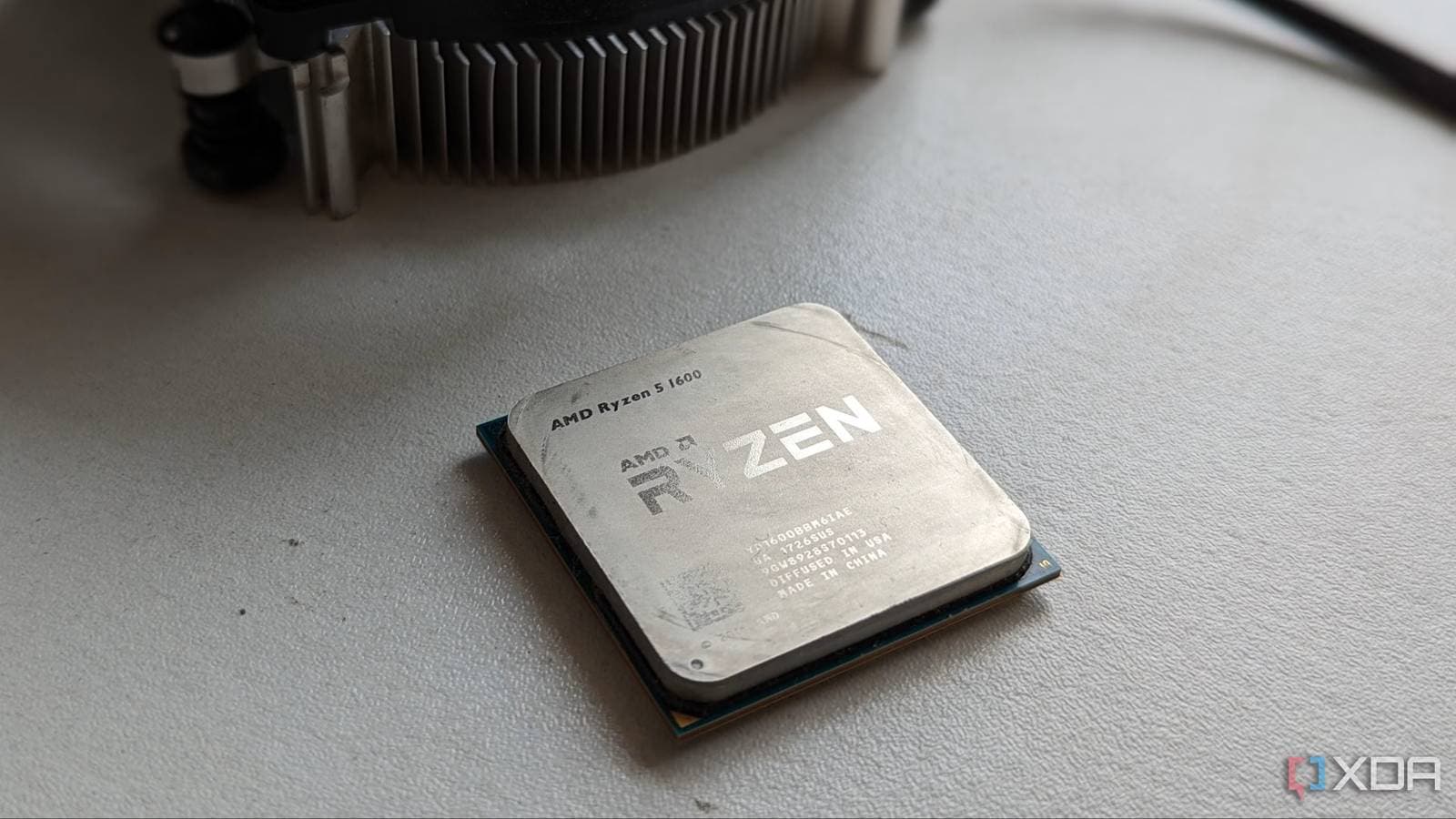
This bottleneck is known as CPU-limited performance. It results in lower frame rates, stuttering, and inconsistent frame delivery, even when your GPU usage appears low. You might have a GeForce RTX 4080 but still see disappointing numbers because an older processor like the Intel Core i7-7700K or AMD Ryzen 5 1600 can’t supply data quickly enough.
Which CPUs Are Now a Problem
XDA Developers points out that processors released before around 2020 are increasingly lagging behind in modern game engines. This includes Intel’s 7th, 8th, and even some 9th generation Core chips, alongside AMD’s first and second generation Ryzen processors (the original Zen and Zen+ architectures).
The problem isn’t just about raw clock speed. Today’s games utilize more CPU cores and threads, faster cache memory, and newer instruction sets that older chips struggle to support efficiently. Titles like Cyberpunk 2077, Alan Wake 2, and Star Wars Outlaws demand a lot from processors, and this trend will only continue.
The XDA analysis found that upgrading from an older chip to a current-generation processor like the Intel Core i5-14600K or AMD Ryzen 7 7800X3D could lead to frame rate improvements of 30% to 50% in CPU-demanding scenarios. The gains can be even larger in games that heavily simulate crowds, physics, or open worlds.
The 3D Cache Difference
One technology to know about is AMD’s 3D V-Cache. You can think of it as adding an extra storage shelf directly on top of the CPU chip, which boosts how much data the processor can quickly access without relying on slower system memory. AMD’s X3D chips, such as the Ryzen 7 9800X3D, consistently perform well in gaming benchmarks thanks to this feature. Intel is developing competing cache designs, but AMD currently leads in games sensitive to this kind of latency.
Why 2026 Might Be the Year to Act
Platform longevity is another reason many are considering upgrades this year. Intel’s LGA 1700 socket, used by 12th through 14th generation processors, is being phased out in favor of the new LGA 1851 platform. So, if you’re on an older Intel platform, you’ll need to replace your motherboard to upgrade. However, AMD’s AM5 platform is expected to be supported through at least 2027, giving Ryzen users more time.
Additionally, current-generation CPU prices have dropped significantly since their launch, making upgrades more justifiable.
| Data Point | Detail |
|---|---|
| Frame rate gains in bottlenecked scenarios | 30–50% improvement when upgrading old CPU |
| Affected CPU generations (Intel) | 7th, 8th, some 9th gen Core (2017–2019) |
| Affected CPU generations (AMD) | Ryzen 1000 and 2000 series (Zen, Zen+) |
| AMD AM5 platform support expected through | At least 2027 |
| Intel LGA 1700 socket status | Being retired, no further upgrade path |
| Top gaming CPU for cache-sensitive games | AMD Ryzen 7 9800X3D (3D V-Cache) |
What This Means for You
If you bought your CPU before 2020 and upgraded your graphics card since, you might be missing out on performance. Symptoms like stutters, frame rate drops in busy scenes, or lower-than-expected GPU usage can easily be misinterpreted as GPU issues or poorly optimized games.
Before making any purchases, check your GPU utilization during gaming. If it consistently stays below 90% in graphically intense games while your frame rate disappoints, your CPU is likely the bottleneck. Free tools like MSI Afterburner or HWiNFO can help you monitor this in real time.
If upgrading isn’t an option right now, consider reducing CPU-heavy settings in some games, like crowd density, physics quality, and draw distance. This can help alleviate the bottleneck without adjusting your GPU settings.
Community Reaction
“Finally someone said it. I was blaming my 3080 for months until I realized my i7-8700K was the problem the whole time. Swapped to a 13600K and it was like a different PC.”
— u/FrameTimeFrustration, Reddit r/hardware
“The 5800X3D was my last upgrade before going to AM5. Worth every penny for the games I play. People sleep on how much cache matters in open world games.”
— YouTube commenter on XDA Developers video coverage
What To Watch
- AMD Ryzen 9000 series pricing: Prices on X3D variants are expected to fluctuate as retailer inventory adjusts through mid-2026, possibly making the 9800X3D more affordable.
- Intel Arrow Lake refresh: Intel’s next steps on the LGA 1851 platform could influence whether waiting to upgrade to their current generation is worthwhile.
- Game engine demands: Adoption of Unreal Engine 5 is speeding up across major studios, and its CPU requirements are much heavier than previous engine generations. Games launching in late 2026 will likely widen the gap further for older processors.
- Used CPU market: As more users upgrade, prices for last-gen chips like the Ryzen 5600X or Intel Core i5-12600K on the second-hand market may present a budget-friendly option for those not ready for a complete platform switch.
Sources

Ava Mitchell
Ava Mitchell is a digital culture journalist at Explosion.com covering social media platforms, streaming services, and the creator economy. With 4 years reporting on TikTok, Instagram, YouTube, and the apps that shape daily life, Ava specializes in explaining platform policy changes and their impact on everyday users. She previously managed social media strategy for a tech startup, giving her firsthand experience with the platforms she now covers.