
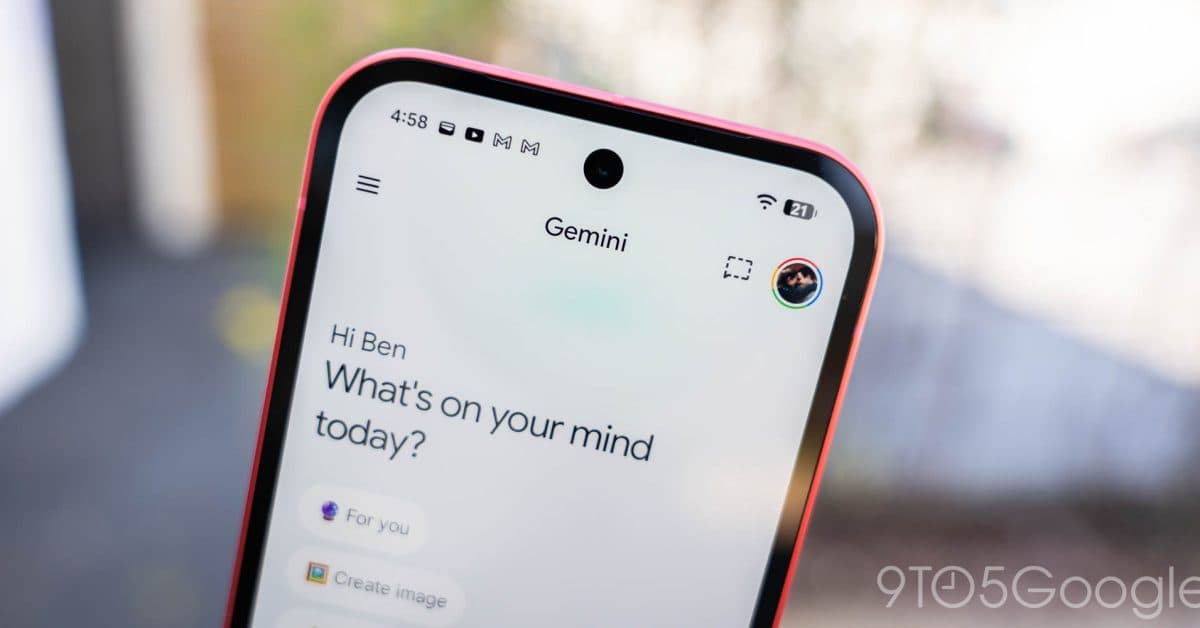
Google’s expanding its Gemini AI app in two ways at once. Android users now have access to Gemini notebooks, while iPhone users are enjoying a visual refresh inspired by Apple’s new Liquid Glass interface style.
| By The Numbers: Alphabet/Google | |
|---|---|
| Ticker | GOOGL |
| Stock Price | $385.69 (+0.23%) |
| CEO | Sundar Pichai |
| Headquarters | Mountain View, CA |
| Founded | 1998 |
What Are Gemini Notebooks?
Gemini notebooks help you organize your AI conversations and research into dedicated workspaces. It’s like keeping separate notebooks for different subjects in school. Instead of scrolling through one long chat history, you can create focused collections around specific topics, projects, or questions and easily return to them later.
Google first introduced notebooks in the Gemini app earlier in April on the web and iOS. The Android launch, reported by 9to5Google, puts this feature in front of the largest mobile audience, making it accessible to most Gemini users.
Think of it this way: regular AI chat is like sending a text and forgetting it. Notebooks let you keep a running document where the AI helps you build on your ideas over time.
iOS Gets a Visual Overhaul with Liquid Glass
For iPhone users, the Gemini app now embraces Apple’s Liquid Glass design language. This new visual style, introduced with iOS 26, features translucent, glossy elements that blend beautifully with what’s behind them on screen, much like frosted glass over a photo.
This update isn’t just about new features; it’s a polish. The app functions the same way but now looks more integrated with the latest version of iOS, rather than feeling like a third-party app. For users who value a cohesive phone experience, that’s a big plus.
Gemini Is Also Coming to Your Car
The notebook and design updates aren’t the only news about Gemini this week. Google is rolling out Gemini to cars equipped with Google built-in, which runs on Android natively in dashboards from brands like Volvo, Polestar, and Renault. According to The Verge, this will replace the older Google Assistant in those vehicles.
This upgrade promises a more natural conversation, allowing you to talk to your car’s assistant like you would with a person, instead of just issuing short commands. Google claims it can also fetch vehicle-specific information, though they haven’t detailed the full extent of that feature yet.
What This Means
If you’re using Gemini on Android, the notebooks update gives you a solid reason to use the app regularly. It’s not just for quick questions anymore; you can manage ongoing projects like planning trips, researching purchases, or working through problems over several days.
For iPhone users, the Liquid Glass redesign is mostly about looks. But a visually appealing app can feel more trustworthy and enjoyable to use every day. That’s important when you’re deciding between Gemini, ChatGPT, and other AI assistants that offer similar functionalities.
The car integration is the bigger story here for the long term. Google Assistant has been in cars for years, but it was often limited in its capabilities. With Gemini’s improved conversational skills, voice interaction in the car could become genuinely useful rather than frustrating.
What People Are Saying
“Notebooks is the feature that actually makes me want to use Gemini over ChatGPT. Being able to keep context across sessions without copy-pasting everything is huge.”
“The Liquid Glass update looks clean but I’m still waiting for Gemini to actually replace my notes app. Until then it’s just pretty.”
What To Watch
- Broader car rollout: Google hasn’t confirmed which car models will get the Gemini upgrade first or when. Owners of Google built-in vehicles should look out for an over-the-air software update notification.
- Notebook feature depth: The initial notebook rollout is quite basic. Google I/O, typically in May, would be a great time to announce deeper features like shared notebooks or integration with Google Docs and Drive.
- iOS 26 adoption: The Liquid Glass redesign only displays as intended once users upgrade to iOS 26. Keep an eye on user feedback after Apple’s new OS rolls out more widely to see how well the redesign is received.

Maya Torres
Maya Torres is the Consumer Tech Editor at Explosion.com with 7 years covering product launches for major technology publications. She has reviewed over 300 devices across smartphones, laptops, wearables, and smart home products. Maya specializes in translating spec sheets into real-world buying advice and attends CES, MWC, and Apple keynotes as press. Her reviews focus on helping readers decide what to buy, not just what specs look good on paper.


