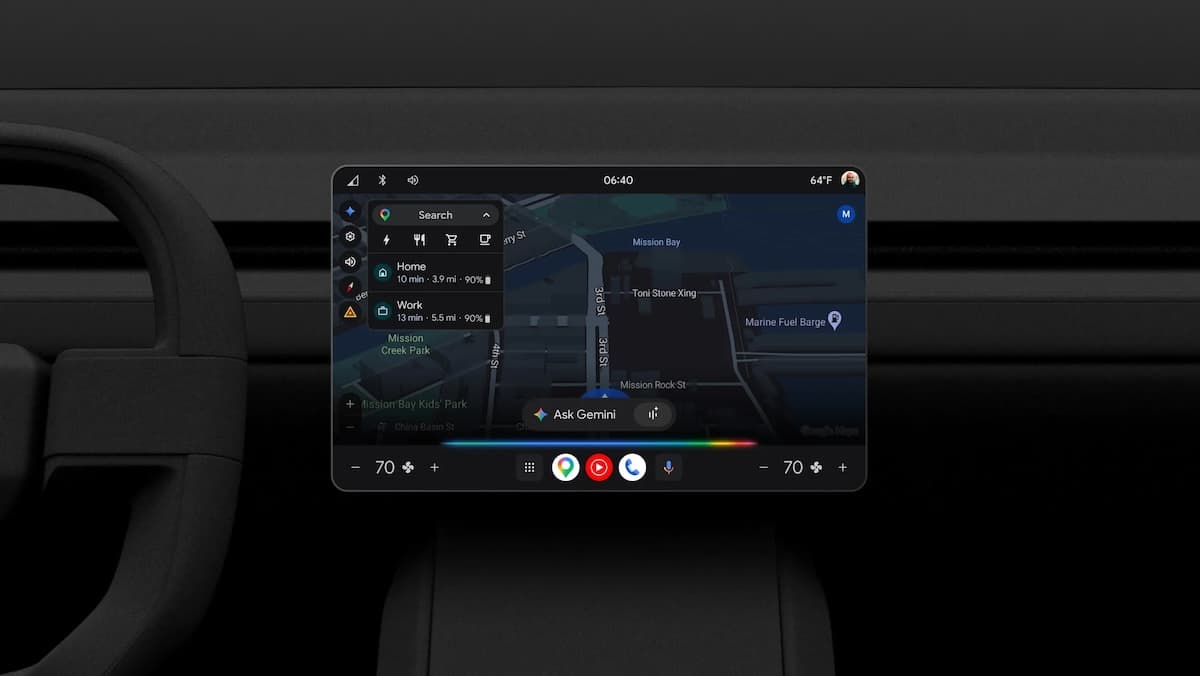
Google is starting to roll out its Gemini AI assistant to cars with Google built-in. This update replaces the older Google Assistant and offers a more advanced, conversational AI experience to millions of vehicles on the road.
What Is Google Built-In?
Google built-in, previously known as Android Automotive OS, is an in-car software platform integrated directly into the vehicle’s infotainment system. Think of it as Android designed for your dashboard instead of your phone. This is different from Android Auto, which merely mirrors your phone’s screen. Brands like Volvo, Polestar, and Renault already include Google built-in, with millions more cars equipped with it.
Until now, these vehicles relied on Google Assistant for voice commands. But that’s changing. Google announced on April 30 that Gemini will start rolling out in these cars, bringing the AI model behind Google’s most advanced chatbot straight to your vehicle’s controls.
What Can Gemini Actually Do in Your Car?
This upgrade goes beyond visual changes. Gemini is a large language model, trained on vast amounts of text, allowing it to understand and respond to natural, conversational requests better than the previous Assistant.
Natural Language Controls
You won’t need to memorize specific commands anymore. Instead of saying, “Hey Google, turn up the heat,” you can just say, “It’s getting stuffy in the back seat.” Gemini should then adjust the rear climate controls automatically. This contextual understanding makes Gemini a step ahead of its predecessor.
Owner’s Manual Answers, On Demand
One of the most practical features is Gemini’s ability to answer questions tailored to your car’s owner’s manual. Whether you’re curious about a warning light, how to fold down the rear seats, or if you can tow a trailer, Gemini pulls information directly from your vehicle’s documentation. It’s like having your owner’s manual accessible through a chatbot while you drive at 70 mph, keeping your focus on the road.
Conversational Follow-Ups
Gemini can manage follow-up questions within the same conversation, something Google Assistant often struggled with. If you ask for a restaurant recommendation, you can immediately follow up with, “How long is the drive there?” without needing to repeat yourself or wake up the assistant again.
| Company | Alphabet / Google |
|---|---|
| Ticker | GOOGL |
| Stock Price | $385.69 (+0.23%) |
| CEO | Sundar Pichai |
| Headquarters | Mountain View, CA |
| Founded | 1998 |
| Platform | Google Built-In (Android Automotive OS) |
| AI Model | Gemini (replacing Google Assistant) |
Why Is Google Doing This Now?
The timing is intentional. Google faces pressure from various directions in the AI landscape, and the car dashboard is one of the last major screens in our lives that hasn’t been fully dominated by advanced AI. Amazon has Alexa in vehicles, and Apple uses Siri through CarPlay. By integrating Gemini into millions of cars, Google strengthens its presence where daily habits and long-term platform loyalty often begin during commutes.
This rollout also fits into a broader strategy of Google pushing Gemini across all its platforms, from Android phones to smart TVs and now car dashboards. TechCrunch highlighted that this announcement marks a significant step in Google’s goal to enhance AI in the driving experience.
What This Means for Everyday Drivers
If you drive a car with Google built-in, like models from Volvo, Polestar, or select Renault vehicles, expect this update as an over-the-air software upgrade. You won’t need to visit a dealership or buy new hardware.
The main benefit is a hands-free assistant that’s genuinely helpful for more complex requests, not just timers and music. For drivers who’ve found voice assistants frustrating due to their need for precise phrasing, Gemini’s conversational approach is a real upgrade. However, actual performance in a moving car—facing road noise, accents, and incomplete sentences—will be a tougher challenge than a controlled demo.
Keep in mind, though, that this update doesn’t change everything. Gemini remains a voice assistant tied to Google’s ecosystem. If you’re using an iPhone with CarPlay, this update won’t impact you. Google built-in operates separately from CarPlay or Android Auto.
Android Authority reported that specific features include in-car settings control via natural language and answers based on your owner’s manual, with more capabilities on the way.
What Drivers Are Saying
The community reaction has been mixed. One commenter on Android Authority said:
“Sounds good on paper but Google Assistant in my Volvo still mishears me half the time on the highway. I’ll believe it when I see it.” — Android Authority commenter
Others seem more hopeful about the owner’s manual integration:
“The manual lookup feature alone is worth it. I still don’t know what half the buttons in my car do.” — Reddit user, r/Android
What To Watch
- Rollout timeline: Google hasn’t given a specific end date for the Gemini rollout across all vehicles with Google built-in. Look out for over-the-air update notifications in supported cars soon.
- Automaker expansion: More car brands are expected to announce Google built-in integration. New partnerships could greatly expand Gemini’s reach.
- Feature additions: Google has indicated this is just the beginning, with more Gemini features planned for cars in the future. Integration with Google Maps, calendars, and third-party apps seems like the next logical step.
- Competitor response: Amazon and Apple will likely speed up their own in-car AI enhancements in reaction. Keep an eye on Apple’s next CarPlay update and any improvements to Alexa Auto throughout 2026.

Daniel Park
Daniel Park covers AI, cloud infrastructure, and enterprise software for Explosion.com. A former software engineer who transitioned to technology journalism 5 years ago, Daniel brings technical depth to his reporting on artificial intelligence, startup funding rounds, and the companies building the future of computing. He breaks down complex AI developments and business strategies into clear, actionable insights for readers who want to understand how technology is reshaping industries.