Uber and Zipline’s Drone Delivery Takes Off in Texas, With Dozens of Cities to Follow
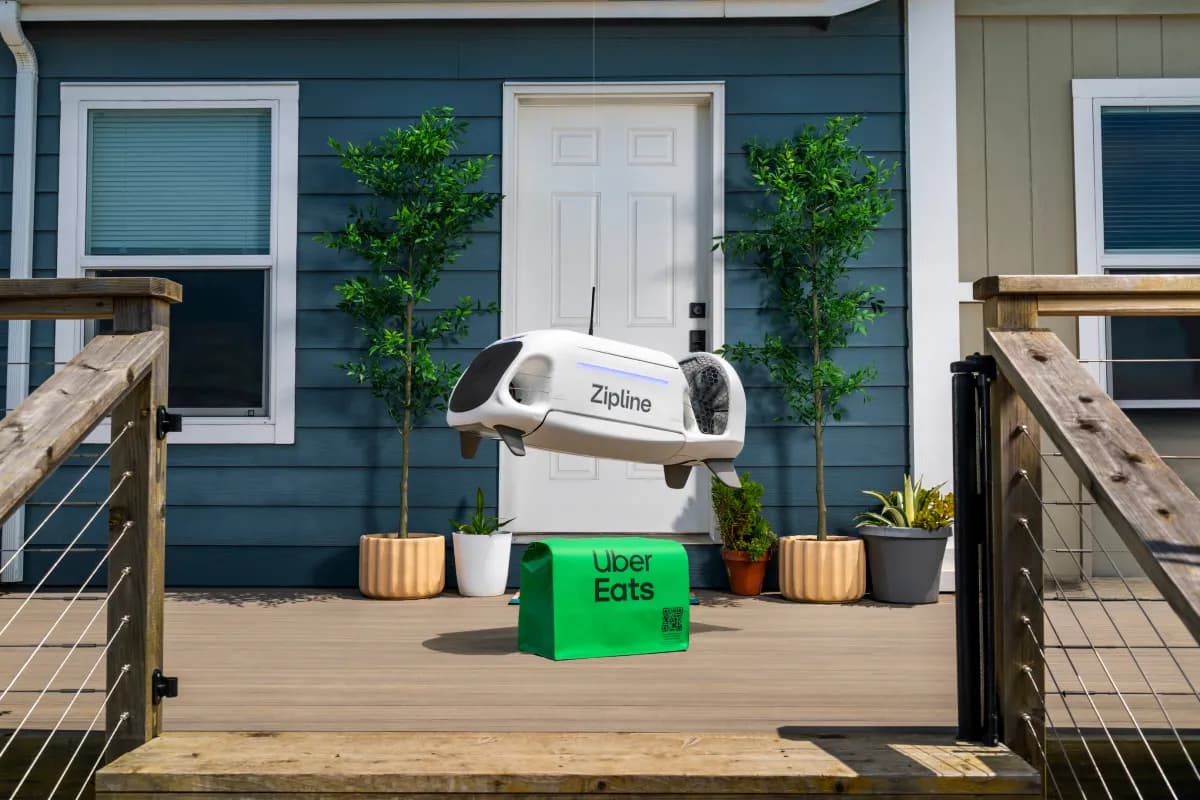
Uber Eats has kicked off its drone delivery service in partnership with Zipline this week in Spring, Texas, a suburb of Houston. This launch marks a major move toward making autonomous delivery a reality.
The two companies plan to expand rapidly, with Dallas next on the list and many more U.S. cities to follow. Their ambitious goal is to reach one million daily drone deliveries by the end of 2029. This could change how we receive everything from takeout meals to essential items. This launch turns their partnership from an idea into a functioning service. (TechCrunch)
How Zipline’s Drone Delivery Works
Zipline uses fixed-wing drones instead of multi-rotor drones like large quadcopters. These fixed-wing aircraft operate more like traditional planes, which allows them to fly efficiently over longer distances and at higher speeds. They launch from a central hub and cruise silently above typical neighborhood noise levels.
When someone orders through Uber Eats, a Zipline drone heads to the customer’s location. It descends to a lower altitude for the drop-off. Instead of landing, the drone releases the package via a parachute, gently lowering it to a designated spot, often a backyard or driveway. This approach speeds up deliveries and reduces ground-level contact. Plus, these drones are designed to be quiet, blending in with background sounds. Picture a small, silent cargo plane dropping off a care package instead of a loud helicopter trying to land.
The Uber-Zipline Partnership: A Strategic Move
This partnership allows Uber to enhance its delivery services, moving beyond traditional road-based methods. Drone delivery could mean faster delivery times, especially in congested areas or places with limited road access. In the long run, it might also lower operational costs. By leveraging Zipline’s established drone technology, which has successfully delivered medical supplies in other countries, Uber hopes to outpace its competitors in the rapidly changing logistics (the detailed organization and implementation of a complex operation) sector.
Zipline benefits from access to Uber’s vast customer base and network, creating a clear path to grow its delivery operations across the U.S. This collaboration combines Uber’s market reach with Zipline’s technology, forming a powerful new player in on-demand delivery. (Engadget)
| By The Numbers: Uber | |
|---|---|
| Ticker | UBER |
| Stock Price | $67.70 (-3.27%) |
| Sector | Transport |
| CEO | Dara Khosrowshahi |
| Headquarters | San Francisco, CA |
| Founded | 2009 |
What This Means For You
For everyday users, Uber Eats’ drone delivery could offer unmatched convenience and speed. Imagine ordering lunch and having it arrive in 10-15 minutes instead of the usual 30-45. It could arrive right in your yard. This is especially helpful in suburban and rural areas where traditional delivery often struggles. It also opens up new possibilities for urgent items, like over-the-counter medications or your favorite coffee without the usual wait.
However, the experience will depend on local regulations, weather, and suitable drop-off spots. While the initial rollout is limited, the promise of widespread drone delivery suggests a future where getting goods is faster, more efficient, and possibly more eco-friendly than current road-based methods.
Community Reactions
The idea of drone delivery sparks mixed reactions from the public:
- u/FutureFoodie on Reddit: “Finally! No more cold food or waiting forever. This is the future! Can’t wait for this to hit my city.”
- @SkyWatcher77 on YouTube: “Great, more drones buzzing overhead. What about privacy? And what happens to all the delivery drivers? Hope they’ve thought this through.”
What To Watch
The launch in Spring, Texas, is just the start. Here are a few key developments to keep an eye on:
- City Expansion: Look for announcements about further city rollouts, with Dallas specifically mentioned as the next target. The speed of this expansion will indicate the service’s success and potential.
- Regulatory Landscape: Drone delivery must navigate complex airspace regulations. How Uber and Zipline manage these rules and collaborate with aviation authorities will be vital for growth.
- Delivery Volume: Achieving one million daily deliveries by 2029 will require significant infrastructure and public acceptance. Watching their progress toward this goal will reveal the true impact of this initiative.
- Service Offerings: While starting with Uber Eats, keep an eye out for possible expansions into other deliveries, like groceries or small retail items, as the service evolves.

Daniel Park
Daniel Park covers AI, cloud infrastructure, and enterprise software for Explosion.com. A former software engineer who transitioned to technology journalism 5 years ago, Daniel brings technical depth to his reporting on artificial intelligence, startup funding rounds, and the companies building the future of computing. He breaks down complex AI developments and business strategies into clear, actionable insights for readers who want to understand how technology is reshaping industries.