
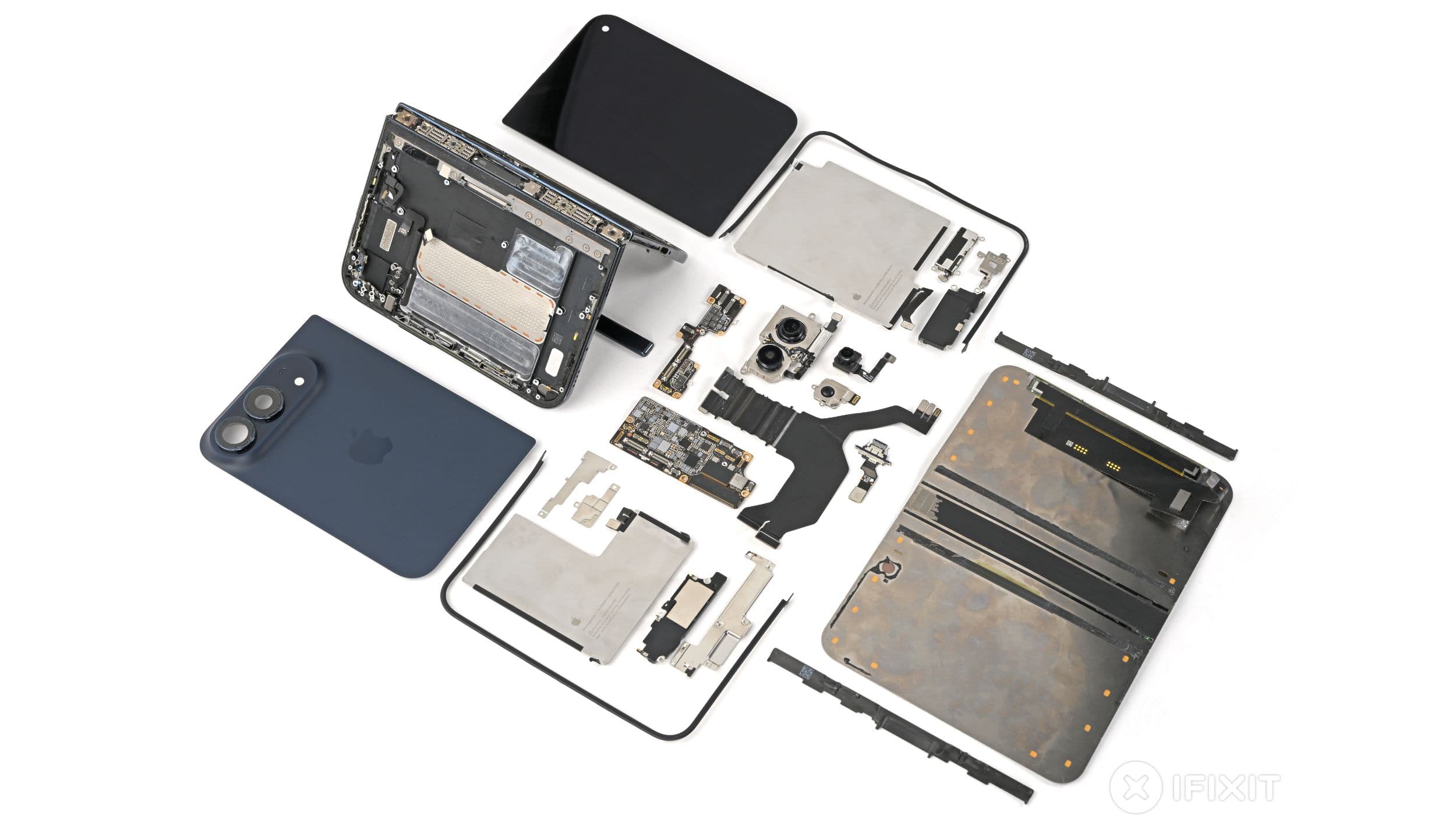
iFixit recently disassembled the iPhone Duo, giving Apple’s folding phone a repairability score of 5 out of 10. They highlighted design features that could explain early reports of screen and hinge issues.
The teardown, which breaks down the device piece by piece, was published on October 25, 2026, along with a video walkthrough. According to MacRumors, iFixit examined the internal components, how well the phone resists dust, and its repair process.
What iFixit Discovered Inside the iPhone Duo
Two main themes emerged from the coverage. First, there’s how Apple manages the crease, the bend in the folding screen. The Verge notes that iFixit uncovered intriguing details about how Apple might be concealing that crease on the Duo’s display.
The second theme revolves around durability. 9to5Mac described the teardown as revealing “some interesting (and some worrisome) details,” with its headline hinting at possible causes for early screen failures. The term “possible” is key here; a teardown shows how a phone is constructed but doesn’t confirm why a specific device failed.
Consider how a paperback book bends open repeatedly. The spine weakens over time, regardless of the book’s quality. A folding phone faces the same issue, featuring a glass-like screen and a mechanical hinge instead of paper. A teardown reveals where stress accumulates in such designs.
By The Numbers
| iPhone Duo Teardown | |
|---|---|
| Teardown by | iFixit |
| Published | October 25, 2026 |
| Repairability score | 5 out of 10 |
| Areas examined | Internal layout, dust protection, repairability |
| Focus of concerns | Folding screen and hinge |
Understanding a 5/10 Repairability Score
iFixit rates devices on a 10-point scale. A higher score means the phone is easier to open and its components are simpler to replace without special tools or risk of damage. A score of 10 is nearly perfect, while a 1 means it’s almost impossible to fix at home.
The Verge points out that while a 5/10 might not seem impressive, it gains significance in context. Their report includes a full comparison.
What This Means
If you own an iPhone Duo or are considering getting one, here are some practical insights.
- Repairs might be possible, but not straightforward. A middle score suggests some parts can be replaced, but others could be challenging or expensive to service.
- The folding components require attention. Most concerns revolve around the screen and hinge. Treat this phone like a delicate watch, not a rugged brick.
- Dust is a bigger deal for folding phones. iFixit examined dust protection because moving parts in a hinge can trap debris, similar to sand jamming a door latch.
- Carefully review protection plans. If screen failures become common, the terms for coverage of the folding display will be more crucial than for a standard iPhone.
This doesn’t guarantee your phone will fail. The sources discuss potential issues, not confirmed failures, and don’t specify a failure rate.
What We Still Don’t Know
The sources we checked don’t include any comments from Apple regarding the teardown or the reported screen and hinge problems. They also don’t mention how many units have been impacted. Without this information, it’s premature to determine if early failures are common or rare.
Community Feedback
At the time of writing, we didn’t have verified comments from Reddit or YouTube about this teardown, so we won’t quote any. You can check out iFixit’s video walkthrough, linked from the MacRumors report, to see the teardown yourself and read viewer reactions.
What To Keep an Eye On
- Apple’s response. Look out for any announcements regarding screen or hinge durability, or changes to repair or warranty policies.
- More user reports. An increase in broken-screen reports or a lack thereof will tell us more than a single teardown can.
- Additional durability tests. Other reviewers and repair shops might conduct their own bend and dust tests to confirm or dispute iFixit’s findings.
- iFixit’s written guide. The complete step-by-step teardown should provide further details on how the screen and hinge are connected.

Daniel Park
Daniel Park covers AI, cloud infrastructure, and enterprise software for Explosion.com. A former software engineer who transitioned to technology journalism 5 years ago, Daniel brings technical depth to his reporting on artificial intelligence, startup funding rounds, and the companies building the future of computing. He breaks down complex AI developments and business strategies into clear, actionable insights for readers who want to understand how technology is reshaping industries.