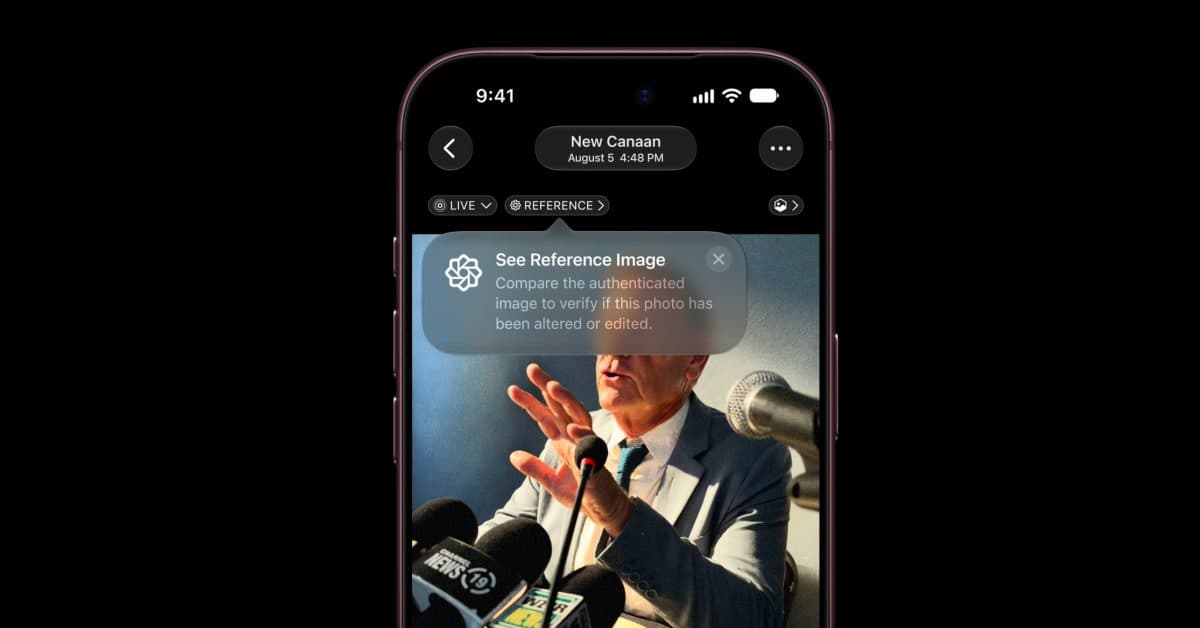
Apple has shared a comprehensive technical overview of Reference Image, a new camera mode in the iPhone 18 Pro. This mode cryptographically verifies that a photo was taken by a real person, using a real device, at a specific moment, making it much harder to pass off AI-generated images as authentic photographs.
| Apple — Company Snapshot | |
|---|---|
| Ticker | AAPL |
| Stock Price | $338.03 (+0.40%) |
| CEO | Tim Cook |
| Headquarters | Cupertino, CA |
| Founded | 1976 |
| Sector | Big Tech |
What Is Reference Image, Exactly?
Reference Image is a camera mode integrated into the iPhone 18 Pro. It attaches a cryptographic certificate to each photo you take. Think of this certificate as a tamper-proof digital seal. It includes verified details about when the photo was taken, what device captured it, and it confirms the image came directly from the camera sensor — not from any AI generator or editing software.
Apple laid out the technical specifics on its Security Research blog. According to 9to5Mac, the system generates the certificate within the iPhone’s Secure Enclave. This is a separate chip designed to handle sensitive operations, ensuring the image never touches the main processor or editing pipeline.
The outcome? A photo with authenticity proof embedded right in the file. Anyone receiving the image can verify the certificate and confirm that it hasn’t been altered since the moment it was captured.
How It Actually Works
The Signing Process
When you capture an image in Reference Image mode, the iPhone collects the raw sensor data and sends it to the Secure Enclave. This chip then signs the image with a private cryptographic key unique to your device. That key remains in the Secure Enclave — not even Apple can access it.
The signed photo undergoes normal processing, like color correction and exposure adjustments. However, the original signed reference stays attached as metadata. If anyone edits the image significantly, such as swapping faces or changing backgrounds, the certificate becomes invalid. Any verification tool will flag it as modified.
The C2PA Standard
Apple built Reference Image based on C2PA (Coalition for Content Provenance and Authenticity). This open industry standard has been developed by major tech companies and news organizations to tackle AI-generated misinformation. C2PA acts as a common language, allowing cameras, software, and publishing platforms to agree on what “verified content” means.
Apple vs. Android: A Security Claim Worth Noting
Apple didn’t just explain its system; it also critiqued the verification features on Android devices. Per Android Authority, Apple claims that Android’s photo verification methods are less secure. This is because the signing process occurs in software rather than secure hardware. A skilled attacker could potentially extract the private key used to certify a photo, allowing for the forgery of verified images.
Apple argues that its Secure Enclave approach keeps the private key physically isolated, making it much harder to compromise. Android manufacturers haven’t publicly responded to Apple’s claims, and independent security researchers haven’t yet provided a comprehensive comparison.
What This Means
For most users, Reference Image mode won’t change how they snap photos of their coffee or pets. However, for those needing to prove a photo’s authenticity — like journalists covering events, insurance adjusters documenting damage, or lawyers preserving evidence — this feature could be incredibly useful.
This enhancement also addresses a growing issue. As AI image generation becomes more accessible and convincing, the question “is this photo real?” will arise more frequently. Reference Image gives iPhone 18 Pro users a built-in answer. But whether the recipient has tools to read the certificate is another matter; C2PA adoption across social platforms and messaging apps is still inconsistent.
Community Reaction
“This is actually huge for journalism. We’ve been screaming for hardware-level signing for years. The question is whether anyone building verification tools will actually support it at scale.”
— u/photojournalism_nerd, r/photography
“Cool feature but how many people are actually going to shoot in Reference Image mode vs. just using the normal camera? This needs to be on by default to matter.”
— YouTube commenter on 9to5Mac’s coverage
What To Watch
- Platform adoption: Keep an eye out for announcements from Meta, Google, and X about whether they’ll display C2PA verification badges for Reference Image photos shared on their platforms. Without this, the feature’s real-world impact is limited.
- Android response: Google and Samsung will likely respond to Apple’s security comparison, whether through technical rebuttals or announcements of their own hardware-level signing.
- Third-party verification tools: News organizations and legal platforms need to develop or update tools to read Reference Image certificates before this feature can be practically useful in professional settings.
- iPhone 18 Pro availability: The phone is expected to ship this fall, which means real-world testing of Reference Image by security researchers will follow soon after launch.

Daniel Park
Daniel Park covers AI, cloud infrastructure, and enterprise software for Explosion.com. A former software engineer who transitioned to technology journalism 5 years ago, Daniel brings technical depth to his reporting on artificial intelligence, startup funding rounds, and the companies building the future of computing. He breaks down complex AI developments and business strategies into clear, actionable insights for readers who want to understand how technology is reshaping industries.