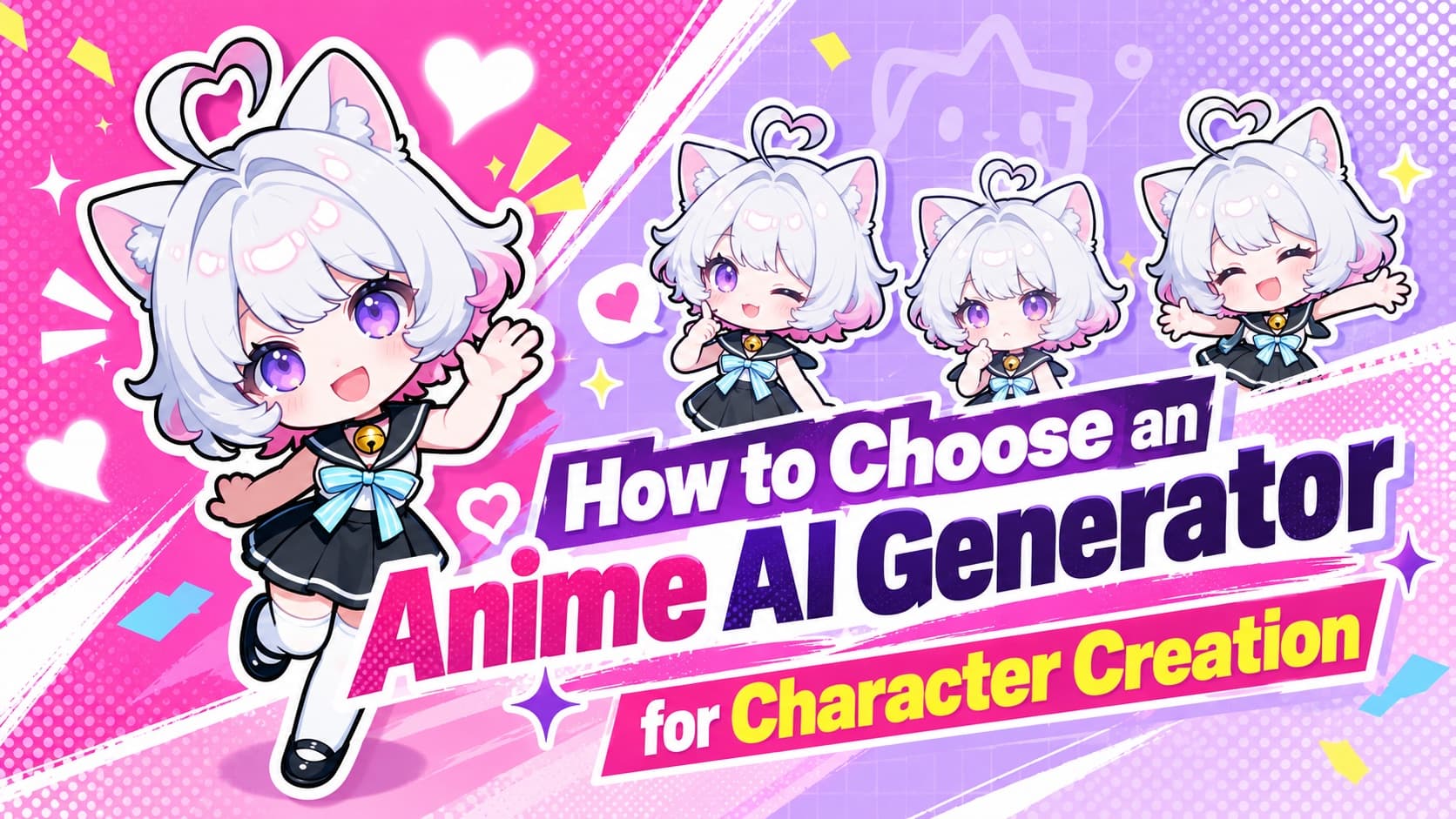
There's a specific kind of letdown that happens about a week into using a new anime AI generator. Your first image was gorgeous. You showed it to a friend, maybe posted it somewhere. Then you tried to make that same character again, same hair, same outfit, same vibe, and what came back was… someone else. Close, but not her. Not quite.
That gap is the whole reason this article exists. Making one great anime image and building an actual character are two different skills, and a tool can be excellent at one while quietly falling short on the other. It's an easy mistake to make, too, because the first impression a generator gives you is almost always a single image. You test a prompt, you get something striking back, and it's tempting to judge the whole tool off that one result. The problem only shows up later, once you try to build on what you made instead of just admiring it.
If you're an OC creator, a VTuber designer, or anyone who wants a character to exist across more than a single lucky generation, the criteria you should actually be judging a tool on look a little different than "does it make pretty pictures."
What Character Creators Should Look For
Before getting into specifics, here's the shortlist worth keeping in your head while you're testing any anime AI generator: character quality, consistency and repeatability, model choice, LoRA or reference support, and editing.
Notice none of those is "how impressive was the first image." That's on purpose. A tool can nail a single striking generation and still be a frustrating place to actually develop a character, because developing a character is fundamentally a repeat-and-refine process, not a one-shot event. The tools that serve that process well tend to be good at all five of these, not just the flashy first one.
It helps to think about the difference between generating and developing the same way you'd think about the difference between taking one great photo and actually directing a photoshoot. One good photo just needs decent lighting and a lucky moment. A full shoot needs continuity, planning, and the ability to adjust across many shots while keeping the same subject recognizable throughout. Character creation with AI is closer to the second thing, even though it often starts out feeling like the first.
Character Quality Is More Than a Pretty Face
Good lighting and clean composition catch your eye first, but they're not what makes a character feel real. Anatomy that holds up under a closer look, clothing details that actually match what you described instead of a vague approximation, and a design that stays recognizable rather than generic, that's the stuff that actually matters once you're past the "ooh, nice" reaction.
A useful gut check: does the tool follow specific instructions, or does it default to something safe and pretty regardless of what you asked for? A character with a very particular accessory, an unusual hairstyle, a specific color combination, is a much better test of a generator's actual character-creation chops than a simple "anime girl, blue hair" prompt. If a tool handles the specific stuff well, it's probably going to serve you better long-term than one that just makes everything look nice in a generic way.
It's worth running this test deliberately rather than assuming a tool is good just because your first few generations looked nice. Write a prompt with three or four specific, slightly unusual details, not just "long hair" but a precise color, not just "outfit" but a described accessory, and see how many of them actually survive into the image. A tool that drops half your instructions in favor of its own defaults might still make attractive art, but it's going to fight you constantly once you're trying to build a specific character rather than a general vibe.
Model Choice Changes the Character
Here's something that trips a lot of people up early on: the exact same character prompt can come out looking noticeably different depending on which model generates it. Different anime-focused models have their own defaults, some lean toward softer, rounder faces, some favor sharper linework, some handle detailed outfits more gracefully than others.
This isn't a flaw, it's just how these models are trained, but it does mean model choice is part of character creation, not a side setting you configure once and forget. If your character keeps coming out slightly off, it's worth testing a different model with the same prompt before assuming the problem is your wording. This is especially worth remembering if you've tried a tool once, been disappointed, and written it off entirely, sometimes the actual fix wasn't a better prompt, it was a different model within the same platform. PixAI's anime model guide is a decent starting point if you want a sense of how different anime-focused models tend to behave before you start testing them yourself.
LoRA and References Give More Control
At some point, describing your character in words stops being enough. Certain details, an exact face shape, a very specific color relationship in an outfit, the precise way a character's hair falls, are genuinely hard to nail down through text alone, no matter how carefully you phrase the prompt.
This is where LoRA support and reference-based generation start to matter a lot more than they might seem to at first. A LoRA can anchor a specific style, character trait, or design element without you re-describing it every single time. A reference image gives the model something concrete to work from instead of reconstructing your character from scratch on every generation. PixAI is a solid example of what this looks like in practice, its LoRA support lets you apply community styles or trained character LoRAs directly, and reference tools let a generation take visual cues from an existing image rather than relying purely on text. Worth being upfront that this doesn't guarantee a perfect match every time, but it closes a lot of the gap that text-only prompting struggles with.
Editing Matters Once You Like the Character
Say you've landed on a version of your character you're genuinely happy with. Now what? In a lot of tools, the answer is "generate again and hope," which means rerolling the whole image just to change one detail, a different expression, a new outfit, a slightly different pose, and risking that everything else about the character shifts along with it.
A tool that supports editing lets you go back into a result and adjust just the part that needs changing, instead of gambling the whole design on another full regeneration. That matters a lot more than it sounds like once you're actually managing an ongoing character rather than generating a single piece and moving on. Think about how a real character project actually unfolds: you don't make one image and stop, you make a dozen over months, a new outfit here, a different mood there, maybe a scene where she's reacting to something specific. Every one of those is a small adjustment on top of a design you already like, not a reason to start from a blank prompt again. It's the difference between a character you're building and a character you keep accidentally reinventing.
Where PixAI Fits
Taken together, these five criteria point toward the same conclusion: a good anime AI generator for character creation isn't really one feature, it's a combination of things working together. PixAI is a useful example of what that combination looks like in one place, anime-focused models tuned for stylized art, LoRA and reference support for anchoring a specific design, and editing tools for refining a result without starting over. If you're new to the platform, its general guide covers the basics of getting a workflow like this going.
That said, no anime AI generator, PixAI included, guarantees perfect consistency across every generation. Character work with AI is still an iterative process, and some drift between attempts is normal even with a well-chosen tool. The goal isn't flawless repetition, it's having enough control that you can steer the result back toward what you actually wanted instead of starting from zero each time.
Conclusion
The real test of an anime AI generator isn't the first image it makes for you, it's the tenth. Character quality, model choice, LoRA and reference support, and editing tools are what separate a tool that's good at one pretty picture from one that's actually good at building a character you can keep coming back to. Next time you're evaluating a new anime AI tool, skip the "wow" test and run the harder one instead: generate the same character twice, and see how close the second attempt actually lands.

Nick Guli
Nick Guli is the founder and editor-in-chief of Explosion.com, which he launched in February 2012. With over a decade of experience in digital publishing, Nick oversees editorial direction across entertainment, gaming, technology, and lifestyle content. He is an avid gamer and movie enthusiast who brings a critical eye to coverage of industry trends, game reviews, and entertainment news.