The Counter-Strike 2 skin economy has grown into a market where a single knife can change hands for the price of a used car, and where millions of lower-value items move between inventories every week. For the player holding a stack of case drops, the practical question is rarely whether to trade but where. Every platform advertises itself as the obvious answer, and the real differences hide in places most players never look: the pricing model, the trade mechanics, and the small print around cashing out.
CS2 trading sites fall into two models, instant bot trading and P2P marketplaces, and the right choice depends on whether a player values speed, cash value, or upgrade flexibility. Understanding that split, and the costs attached to each side of it, does more for an inventory than any ranking ever will.
The cost problem starts on Steam
Selling a skin on the Steam Community Market costs the seller roughly 15% of the price, split between Valve's 5% transaction fee and the 10% fee attached to CS2 items. That figure alone explains why third-party trading exists. The second reason is less obvious: proceeds from a Steam sale stay locked inside the Steam Wallet. The balance buys games and more skins, but it never becomes money a player can actually withdraw.
Third-party platforms answer both problems, though not for free. Their cost usually lives in the spread: the difference between the price a platform pays for a skin and the price it charges for it. A site advertising low commission can still be expensive if its spread runs wide, which is why experienced traders compare the final numbers on both sides of a swap instead of trusting the fee banner on the homepage.
Bot trading and P2P markets solve different problems
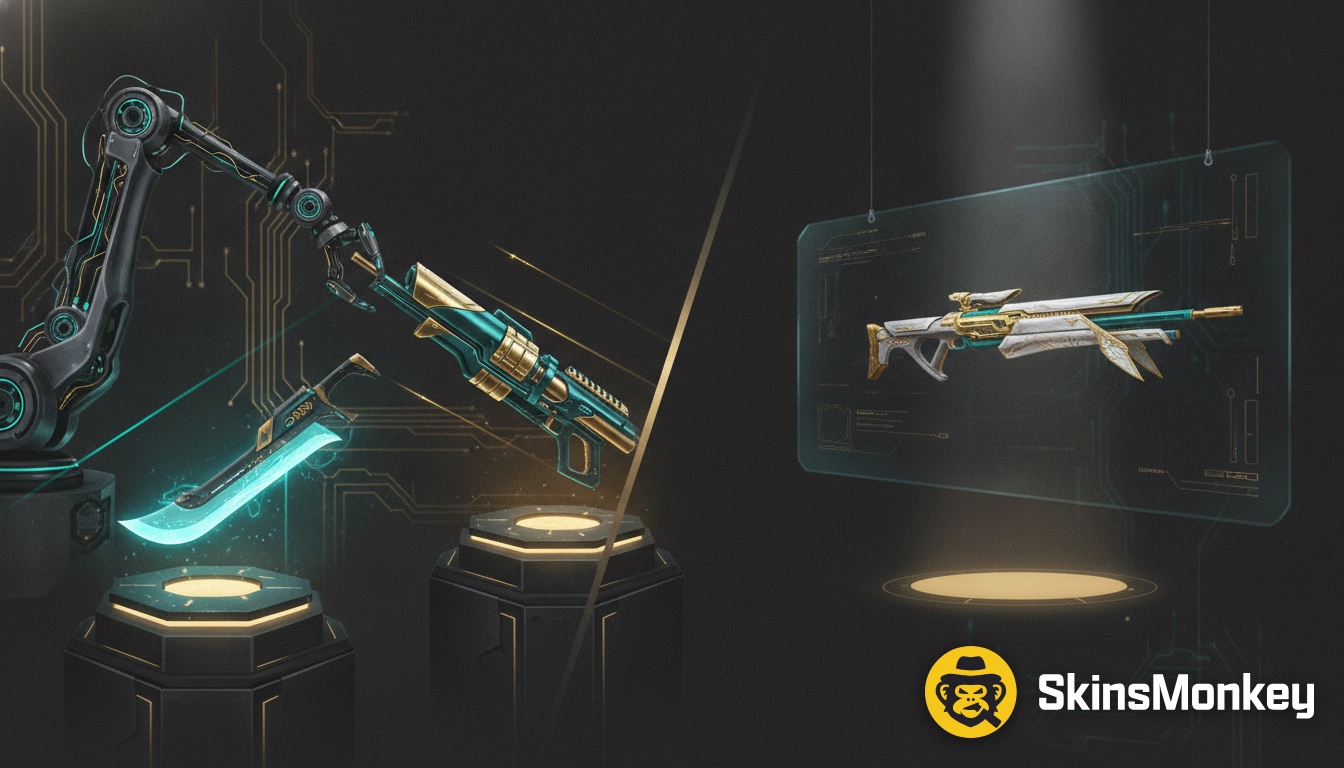
A bot trade is an instant swap with a platform's own inventory, while a P2P market lists the skin for another player to buy. The distinction sounds technical but decides almost everything about the experience. Trading with a bot settles in minutes, because the platform already owns the other side of the deal. Listing on a P2P market means waiting for a buyer, sometimes hours, sometimes days, in exchange for a price that usually lands closer to the item's real cash value.
Neither model wins outright. A player who wants to turn twenty small drops into one better rifle skin before the evening match is served by a bot. A collector liquidating a rare item with patience to spare will usually net more through a P2P listing. The mistake is picking a platform without deciding which of those two players one actually is.
The sites traders compare in 2026
The platforms players shortlist in 2026 each lead a different use case rather than being best at everything. SkinsMonkey has built its position on the bot-trading side: swaps against a large in-house inventory across CS2, Rust and TF2, with spread-only pricing instead of a separate commission and a $5 bonus on the first exchange. The honest reading of that bonus is that it boosts the platform balance for trading rather than paying out as cash. Players who mainly want to trade CS2 skins quickly, upgrading several drops into one target item, sit squarely in its lane. It is not the natural pick for someone squeezing maximum cash out of a single rare knife, where a patient P2P listing tends to win.
The rest of the shortlist covers the other lanes. Tradeit remains one of the longest-running instant-trade platforms and a common first stop for bot swaps. DMarket blends bot inventory with a P2P marketplace, which suits traders who want both options behind one login. CS.MONEY carries one of the larger bot inventories in the scene, useful when hunting specific floats and stickers. Skinport works as a straight P2P market and is often the stronger route for cashing out high-value items. Crediting each platform where it earns it is simply how a trader avoids using the right site for the wrong job.
Verifying a trading site before the first swap
Account-side habits, not a platform's logo, decide whether a trade is safe. The checks are unglamorous and take minutes. A trader confirms every exchange inside Steam's own confirmation flow and reads what is actually leaving the inventory. The trade URL, the Steam address that lets another party send an offer, gets shared only with the platform in use and regenerated if it has ever been posted publicly. Two-factor authentication through the Steam Mobile Authenticator stays on permanently, since accounts without it face trade holds anyway.
Two more habits close most remaining gaps. API keys belong to the account owner alone; a request to share one is a red flag regardless of who asks. And the first swap on any new platform should be a low-value one, treated as a paid test of the process. A platform that handles a $2 trade cleanly has proven more than any review section can.
Timing belongs in the plan as well. A trade lock, Valve's holding period during which a freshly traded CS2 item cannot be traded again, applies no matter which platform handled the swap. Traders who need an item ready for a specific match or listing window count that delay in before confirming, not after.
What a fair trade looks like
A fair trade is one where the full cost was visible before the confirmation button. That standard travels across every model: on Steam it means accepting the 15% cut and the locked wallet, on a bot platform it means checking the spread on both sides of the swap, and on a P2P market it means pricing in the wait. Case openings, with their roughly 0.26% odds of a rare special item, remain the one route where the math stays hidden until after the money is gone, which is precisely why trading keeps growing at their expense. The site itself is the smaller decision. Traders who know their goal, speed, cash, or a specific upgrade, tend to pick the right one on the first try.

Nick Guli
Nick Guli is the founder and editor-in-chief of Explosion.com, which he launched in February 2012. With over a decade of experience in digital publishing, Nick oversees editorial direction across entertainment, gaming, technology, and lifestyle content. He is an avid gamer and movie enthusiast who brings a critical eye to coverage of industry trends, game reviews, and entertainment news.