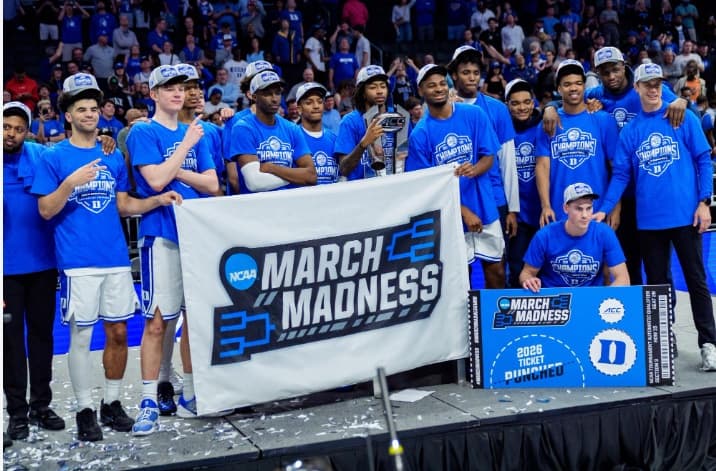
Each March, millions of Americans engage in a ritual, a familiar one; to fill out a bracket. The NCAA Tournament becomes a common national experience as office games, family games, and online polls all provide a chance for fans to make predictions and speculate on the upsets. The scale of this tradition is massive. The American Gaming Association (AGA) projected that Americans would legally wager $3.3 billion on the men's and women's NCAA basketball tournaments in 2026 alone, a 6% increase over the previous year, not even counting the additional billions circulating through informal office pools and friendly wagers nationwide. This tradition has been a natural springboard in the development of sports betting USA markets following a monumental legal development.
With millions switching from playing brackets to betting on the game,checking tips from expert basketball bettors is now a critical aspect of the contemporary college basketball experience. The path from prediction to regulated betting went through the process of creating a bracket culture, technology, and the 2018 ruling that shifted the course.
The bracket phenomenon: more than just a game
The March Madness bracket was invented because it took a very complex tournament and made it easy to comprehend for everyone. Fans wanted their take on the shows, their favorite teams, and who they were willing to go out on a limb for and call a show a six-rounder.
The bracket pools grew in the workplace, school, and online. Since its inception, millions of brackets have been submitted to ESPN's Tournament Challenge and participation in brackets is one of the greatest fan interactions in American sports. These were not really games of chance, but were usually social events. Many people were competing for little prizes, status or just for pride of making the best bracket.
But these pools also brought millions of fans to the concepts of sports analysis. The participants discussed teams, rankings, injuries and looked for potential underdogs. Those habits are similar to NCAA tournament betting decisions.
The game-changer: How a 2018 supreme court decision unlocked sports betting
Until 2018, when the U.S. Supreme Court overturned a federal law known as the Professional and Amateur Sports Protection Act (PASPA), legal sports betting in the U.S. was mostly confined to Nevada. Most states were banned from accepting betting. It changed on May 14, 2018, when the U.S. Supreme Court ruled 7-2 in Murphy v. NCAA that PASPA was unconstitutional, striking down the entire law and permitting states to legalize and regulate sports betting.
The decision revolutionized the industry. Legal sportsbooks were added to states and mobile betting apps made it possible for millions of adults to wager. Rather than have to head to Nevada, gamblers could wager through approved platforms in participating states. The outcome was a dramatic shift in the legal sports betting USA landscape, as dozens of states now have legal sportsbooks.
One area that did benefit was college basketball. March Madness was already a huge fan base, and sportsbooks offered some new wagering opportunities during the tournament. The same folks who pondered the brackets now had the opportunity to consider odds, predictions and matchups.
From brackets to bet slips: the psychological gateway
The link between brackets and betting is quite psychological. Creating a March Madness bracket is a great way for fans to learn to judge teams, make predictions and accept that there will be uncertainty in sports. Those skills make you familiar with the betting decision.
A top seed may wonder about his vulnerability, a smaller program may wonder about upsetting a top seed, or if there is a trend in the recent play. Before looking at college basketball odds, a bettor will pose some of the same questions. The difference is that traditional brackets concentrate on tournament development, whereas betting gives fans a chance to forecast the particular games and consequences.
Sportsbooks have also noted this correlation. In the month of March, many bettors are drawn into the contests and offers pushed by many betting sites, which are based on a theme, commonly a bracket style. The culture of the tournament makes it feel like sports betting is a continuation of a familiar thing.
Thinking beyond the bracket: an introduction to modern wagers
In today's world of college basketball betting, there are a number of wager types that are common. A moneyline bet is a wager on who will win a game. A point spread bet is when you place a wager on a team to win by the point spread. A totals (also called over/under) bet is based on the total of the scores of the two games.
For instance, a fan doesn't have to predict if the team will win the entire NCAA Tournament. They can bet on that team to win one particular game or the spread in one game. These options are shorter-lived and more flexible than waiting weeks for a bracket to see if it will still be there.
Ready to play? Smart strategies for the new bettor
Going from brackets to betting demands a responsible approach. It is important for new bettors to learn about odds, to establish a budget and not to try to recoup losses. Factors such as a favourite team, home ground, or emotional attachment can sway the mind, but decisions based on successful analysis must be made without letting personal loyalty or emotional attachment get in the way.
The NCAA Tournament features 68 teams competing across 67 total games, from the First Four play-in matchups through the National Championship, presenting numerous opportunities and challenges throughout the three-week run. Knowing a team and players is good, but research, statistics, trends, and analysis are needed to make informed decisions. Basketball picks and expert opinions from the pros can help new players better understand the variables that affect bets.
March Madness has evolved as a part of the broader reconfiguration of American sports culture. It started out as a friendly bracket competition but has grown into an industry that is tightly managed, integrated with technology, analysis and entertainment. If you are a fan of the game who is new to this market, first of all you have to understand how it works in order to make better decisions and to enjoy the excitement of college basketball without taking unnecessary risks or making bad choices.

Nick Guli
Nick Guli is the founder and editor-in-chief of Explosion.com, which he launched in February 2012. With over a decade of experience in digital publishing, Nick oversees editorial direction across entertainment, gaming, technology, and lifestyle content. He is an avid gamer and movie enthusiast who brings a critical eye to coverage of industry trends, game reviews, and entertainment news.