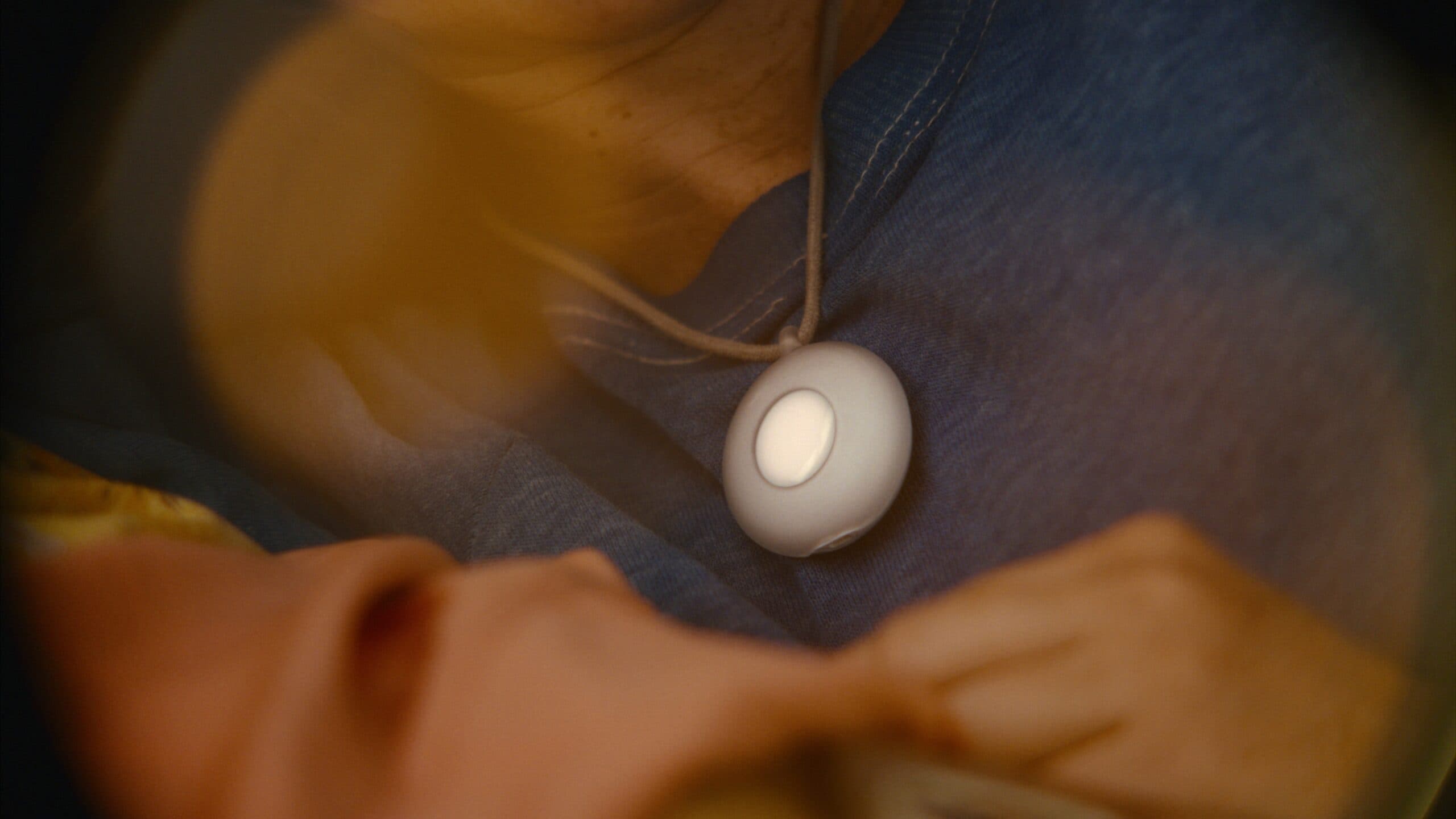
The AI companion startup Friend has relaunched its wearable pendant, now featuring a built-in speaker that can actually talk back to you. However, this upgrade comes at double the original price.
Friend, the company behind this clip-on AI pendant, introduced its second-generation device this week. While the original Friend pendant only listened, the new version—unofficially dubbed Friend 2—can speak out loud. This transforms it into a two-way conversation piece instead of just a silent listener that communicated via your phone.
What Is Friend, Exactly?
If you missed the initial launch, here’s a quick overview: Friend is a small AI-powered pendant created by developer Avi Schiffmann. The idea is simple: you wear it like a necklace, and it learns about your life by listening to your daily experiences. It then responds like a true companion—asking follow-up questions, offering encouragement, and genuinely showing interest in your activities. You can think of it as a digital pet from the 90s, like a Tamagotchi, mixed with a voice assistant. But instead of providing weather updates or setting timers, it focuses on emotional connection.
The original launch made waves for reasons beyond just the device itself. Friend spent $1.8 million of its $2.5 million funding just to secure the domain name friend.com. The company also flooded New York City subway stations with ads promoting artificial companionship, sparking a significant public debate about loneliness, AI, and what it means to consider a piece of software your friend.
What’s New in the Second Version
The main update is the speaker. The original pendant was primarily a listening device—it heard your surroundings and sent responses to your phone. The new version speaks back to you directly from the pendant, eliminating the phone as a middleman for responses.
According to Wired, this new version also removes the option to customize the AI’s personality. Unlike some AI companion apps that allow you to shape your digital friend’s behavior, Friend 2 locks in its personality. Schiffmann seems to believe that a consistent, fixed personality fosters a stronger sense of a real relationship over time.
The price has increased from about $99 for the original to $199 for the new model—a 100% jump. This puts it in line with other AI wearables like the Humane AI Pin (which has since shut down) and the Rabbit R1, both of which struggled to maintain a loyal user base.
| Metric | Detail |
|---|---|
| Original price | ~$99 |
| New price (Friend 2) | $199 |
| Price increase | 100% |
| Total funding raised | $2.5 million |
| Spent on domain (friend.com) | $1.8 million |
| New hardware feature | Built-in speaker for voice responses |
| Personality customization | Removed in Friend 2 |
Why a Speaker Changes Everything
The shift from reading a response on your phone to hearing it spoken aloud might seem minor, but it’s crucial to what Friend aims to achieve. Pulling out your phone to read a message from your AI pendant disrupts the conversation—it feels more like checking a notification than having an interaction. A speaker allows the pendant to respond in real-time, whether you’re walking down the street or sitting alone in a coffee shop. This brings it much closer to the experience of actual companionship.
The big question remains: does this innovation bridge the gap between a “clever gadget” and a “genuine emotional connection”?
What This Means for Everyday Users
If you’re feeling lonely, curious about AI companions, or just interested in cutting-edge tech, Friend 2 is a more complete product than its predecessor. The addition of the speaker means you won’t have to treat it like just a smart notification device—it functions more like a wearable conversational partner.
However, the $199 price tag puts it in a category where you’d expect reliability, a strong app ecosystem, and a company that’s likely to stick around. Friend’s financial history—spending 72% of its total funding on a domain name—raises concerns. Buyers are essentially betting that the company will remain operational long enough to keep the AI service running. If Friend shuts down its servers, the pendant could turn into an expensive piece of jewelry.
It’s also important to mention the removal of personality customization. Other AI companion apps like Character.ai and Replika gained large user bases partly because they allowed people to shape their AI companions. Locking in the personality is a design choice, but it may feel limiting to users who want more control over their digital friend’s behavior.
Community Reaction
“Spent $1.8M on a domain with $2.5M raised. That’s genuinely one of the wildest financial decisions I’ve ever seen from a startup. The product could be great and it wouldn’t matter if the lights go off next year.”
“I actually want this? Like, I know it’s weird, but having something that just… talks to me while I cook or whatever sounds kind of nice. The price is rough though.”
What To Watch
- Shipping timeline: Friend hasn’t confirmed a wide release date for the new pendant. Early interest and pre-order details are expected to be announced on the company’s website soon.
- Competitor moves: The AI wearable market is still evolving. Companies like Meta (with its Ray-Ban smart glasses) and Amazon (with its Echo Frames) are pushing audio-first AI wearables backed by larger support infrastructures. Friend needs to demonstrate why a dedicated companion pendant is better than just talking to an AI through earbuds you already own.
- Retention data: The bigger story for Friend 2 won’t be its launch week sales—it’ll be whether users continue to wear it once the novelty wears off. If the company shares engagement numbers in the months following launch, those figures will reveal much more than any product announcement.

Ava Mitchell
Ava Mitchell is a digital culture journalist at Explosion.com covering social media platforms, streaming services, and the creator economy. With 4 years reporting on TikTok, Instagram, YouTube, and the apps that shape daily life, Ava specializes in explaining platform policy changes and their impact on everyday users. She previously managed social media strategy for a tech startup, giving her firsthand experience with the platforms she now covers.