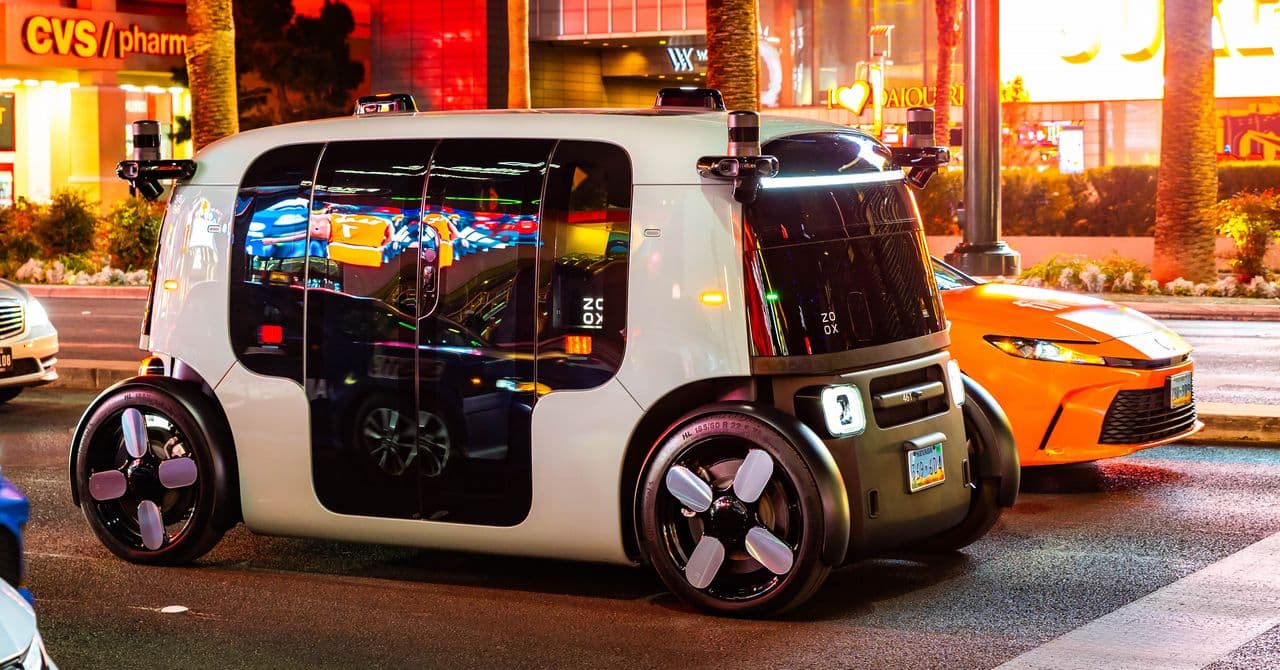
Zoox, a company owned by Amazon, has made history by becoming the first in the United States to charge passengers for rides in a vehicle that has no steering wheel, no pedals, and no human driver option. This milestone comes after federal regulators granted it a crucial exemption from standard safety regulations.
The National Highway Traffic Safety Administration (NHTSA), which sets vehicle safety standards, announced it has granted Zoox a temporary exemption. This allows the company to deploy up to 2,500 of its fully autonomous vehicles each year. Zoox plans to kick off its paid robotaxi service in Las Vegas.
Why This Matters
Most autonomous vehicles you see today, like those from Waymo and Cruise, began as regular cars equipped with self-driving technology. Zoox, on the other hand, took a fresh approach. They designed their vehicle from the ground up specifically to transport passengers without a human driver involved.
This unique design posed a challenge. U.S. federal safety standards were created with human-operated vehicles in mind, requiring features like steering wheels and foot pedals. A vehicle lacking these components doesn’t comply with existing regulations, even if it’s perfectly safe. So, Zoox had to seek a formal exemption, asking the government to recognize that its vehicle is fundamentally different.
Imagine constructing a bicycle elevator in a building designed solely for stairs. The fire code didn’t account for it, so you need special approval before letting the public use it.
Securing that approval and the ability to charge for rides puts Zoox in uncharted territory.
What Zoox’s Vehicle Looks Like
Zoox’s robotaxi is purpose-built and resembles nothing like a typical sedan. It’s a compact, symmetrical pod that can move in either direction without needing to turn around. Inside, passengers sit face-to-face, and there’s no distinct front or back. The vehicle relies on cameras, radar, and lidar—a laser-based sensor system that creates a 3D map of its surroundings—to navigate independently.
The company has tested its vehicles in Las Vegas and San Francisco for several years, but until now, it couldn’t charge fares.
| Zoox Robotaxi: By The Numbers | |
|---|---|
| Vehicles approved for deployment | Up to 2,500 per year |
| Exemption type | Temporary, from NHTSA federal safety standards |
| Launch city | Las Vegas, Nevada |
| Parent company | Amazon (acquired Zoox in 2020) |
| Vehicle design | No steering wheel, no pedals, bidirectional travel |
| Testing locations to date | Las Vegas and San Francisco |
How It Stacks Up Against Waymo and Others
Waymo, which currently has the most active paid robotaxi service in the U.S., operates in cities like San Francisco, Phoenix, and Austin. Its vehicles are modified Jaguar SUVs and Hyundai Ioniq 5s—conventional cars retrofitted with self-driving technology. They still feature steering wheels, even if no one uses them.
Zoox’s approval is significant because it clears a major regulatory hurdle. NHTSA had to explicitly approve a vehicle that was never designed with manual controls. This sets a benchmark for other companies developing autonomous vehicles from the ground up.
Amazon acquired Zoox in 2020 for about $1.2 billion, and since then, the company has been quietly advancing its technology. This approval marks the first real sign that this investment is moving toward a commercial product.
What This Means for Riders
If you’re in Las Vegas, you might soon be able to hail a ride in a vehicle that has no human driver—no safety driver in the front seat, no remote operator controlling it, just software. This experience will be different from what most Americans are used to, even in cities where robotaxis already operate.
For those living outside Las Vegas, the immediate impact might be limited. However, this approval hints that regulators are open to allowing vehicles designed for autonomy from the start, rather than just modified human-driven cars. This could pave the way for a new generation of purpose-built autonomous vehicles in more cities down the line.
Zoox hasn’t revealed pricing details yet.
Community Reaction
“The fact that NHTSA approved a car with literally no manual controls is huge. That’s the regulatory moat everyone else has been trying to cross for years.”
— u/AutonomousRoadGeek, Reddit r/SelfDrivingCars
“I’ll believe it when I can actually book one. These companies have been ‘launching’ for five years.”
— YouTube comment on The Verge’s coverage of the announcement
What To Watch
- Zoox fare pricing: The company hasn’t provided any details on what rides will cost in Las Vegas. Expect pricing information as the service launches.
- Scale of deployment: The exemption allows for up to 2,500 vehicles annually, but Zoox hasn’t disclosed how many it plans to deploy initially or its timeline.
- NHTSA’s next steps: This exemption is temporary. Keep an eye on whether NHTSA will update its federal safety standards to permanently accommodate vehicles without manual controls, which would impact all companies in this space.
- San Francisco expansion: Zoox has tested its vehicles in San Francisco as well. A launch in Las Vegas might lead to expansion into other cities.
- Amazon’s broader strategy: Amazon operates delivery robots and autonomous freight too. How Zoox fits into Amazon’s larger logistics or transportation strategy will be interesting to watch.

Maya Torres
Maya Torres is the Consumer Tech Editor at Explosion.com with 7 years covering product launches for major technology publications. She has reviewed over 300 devices across smartphones, laptops, wearables, and smart home products. Maya specializes in translating spec sheets into real-world buying advice and attends CES, MWC, and Apple keynotes as press. Her reviews focus on helping readers decide what to buy, not just what specs look good on paper.