
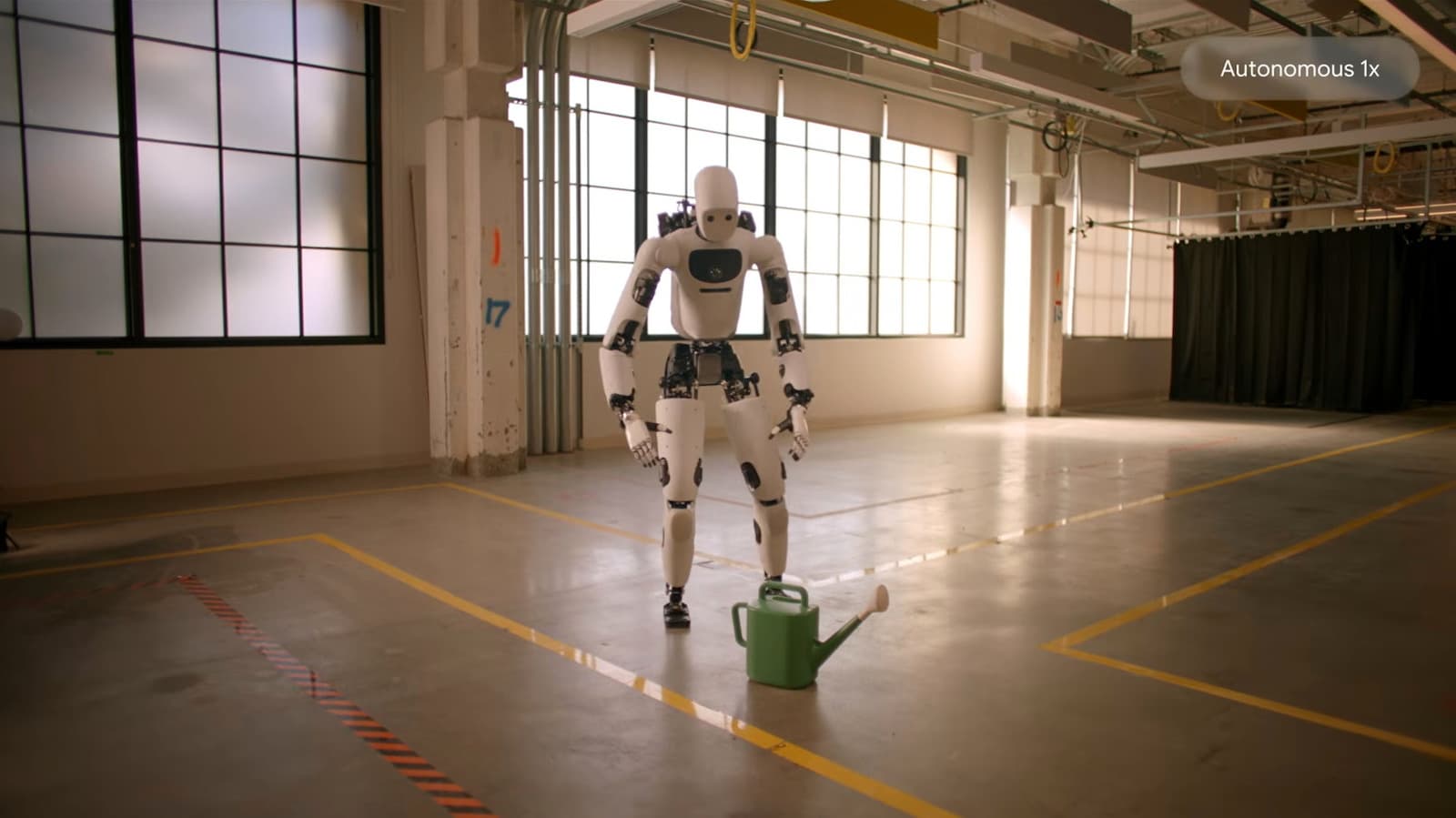
Google has introduced Gemini Robotics 2, a fresh AI platform aimed at giving humanoid robots coordinated, full-body movement. This technology allows robots to perform tasks like picking up a watering can without tipping it over or bagging trash without dropping anything.
This announcement from Google DeepMind marks one of the company’s boldest steps into what researchers call “physical AGI.” This term refers to artificial general intelligence applied to real-world scenarios, not just software tasks. In other words, Google wants its AI to move beyond chatbots and start controlling arms, legs, and torsos in actual environments.
What Is Gemini Robotics 2?
Gemini Robotics 2 is a robotics-focused version of Google’s Gemini AI model, specifically built to control humanoid robots—machines resembling humans with two arms, two legs, and a torso. The platform allows for what Google describes as “intelligent whole-body control.” This means the robot can coordinate all its limbs at once, unlike older robotic systems that move one part at a time.
Think of it this way: a beginner piano player might only use one hand at a time, while a concert pianist has their hands, fingers, and even body posture working together seamlessly. Earlier robots operated more like beginners. Gemini Robotics 2 aims to reach the level of the concert pianist.
Google shared a demonstration video featuring robots tackling tasks such as cleaning up trash, picking up watering cans, and navigating everyday environments. These aren’t controlled lab demos with perfectly arranged objects; they show robots adapting to real-world chaos.
Why This Is a Bigger Deal Than It Looks
Sure, getting an AI to write an email or create an image is one thing. But getting it to physically engage with the world is a whole different ballgame. In software, mistakes can be easily fixed. However, in the physical world, misjudging a grip can lead to a broken vase or, in industrial settings, serious safety issues.
Wired points out that Google DeepMind views this as a major leap toward physical AGI. This means creating machines that can reason and act in the physical world using general-purpose intelligence, rather than being programmed for a single task. For example, while current industrial robots excel at screwing bolts in a car factory, they struggle with anything else. Gemini Robotics 2 aims to be more versatile.
This adaptability stems from the same large language model (LLM) that powers Google’s AI assistants but is enhanced with spatial reasoning, object recognition, and real-time motor control. The robot isn’t simply following pre-written commands; it’s actively deciding how to move based on what it sees and senses.
The Real-World Risks
Wired also highlights that putting AI in physical environments comes with risks that don’t affect purely digital AI. If a chatbot provides an incorrect answer, it can be corrected. But if a robot misinterprets a situation, it can harm people, property, or itself.
Google hasn’t yet shared specific safety protocols for Gemini Robotics 2 in public settings. For now, the platform seems to be in the demonstration and research stages rather than commercial use. However, it’s clear that this technology is being developed for real-world applications.
| Detail | Data |
|---|---|
| Company | Alphabet (Google) |
| Stock Ticker | GOOGL |
| Stock Price | $354.30 (-0.96%) |
| CEO | Sundar Pichai |
| Headquarters | Mountain View, CA |
| Founded | 1998 |
| Platform | Gemini Robotics 2 |
| Robot Type Demonstrated | Humanoid (full-body) |
| Demo Tasks Shown | Trash cleanup, object handling, navigation |
What This Means For Everyday Users
In the short term, most people won’t see any changes. Gemini Robotics 2 isn’t coming to your doorstep this year.
But looking ahead, the potential impact is significant. If Google can make this technology reliable and scalable, we could see robots taking on physically demanding or repetitive tasks in warehouses, hospitals, elder care facilities, and eventually homes. Think about robots restocking shelves, assisting those with mobility challenges, or managing household chores. Google is now a major contender in this race, alongside companies like Figure, Agility Robotics, and Tesla’s Optimus program.
For consumers, the immediate takeaway is that Google’s AI is getting better at understanding and interacting with physical contexts. This could enhance products like Google Maps, smart home devices, and augmented reality tools, even before a robot enters the scene.
Community Reactions
“The trash cleanup demo is impressive, but I want to see how it handles edge cases — what happens when the trash bag is heavier than expected or the floor is wet? That’s where these things fall apart.”
“So Google is basically trying to put Gemini into a body. The question is whether the AI is actually making real-time decisions or if a lot of that is still scripted. Huge difference.”
What To Watch
- Partner announcements: Google DeepMind will likely reveal robot hardware partners—companies that create the physical humanoid bodies that Gemini Robotics 2 would operate on. Keep an eye out for those in the coming months.
- Safety and governance details: As this technology approaches commercial use, expect scrutiny from regulators and researchers regarding how failures in physical AI are managed.
- Competitor responses: Tesla’s Optimus, Figure’s humanoid platform, and Boston Dynamics are all active in this area. Google’s move will likely prompt announcements from rivals.
- Extended demos: Google usually follows major AI announcements with detailed developer previews. A deeper technical look at Gemini Robotics 2 is likely before the end of 2025.
Sources: Engadget — Google’s new Gemini Robotics 2 platform | Wired — Gemini Robotics 2 Brings Google’s AI Into the Physical World

Maya Torres
Maya Torres is the Consumer Tech Editor at Explosion.com with 7 years covering product launches for major technology publications. She has reviewed over 300 devices across smartphones, laptops, wearables, and smart home products. Maya specializes in translating spec sheets into real-world buying advice and attends CES, MWC, and Apple keynotes as press. Her reviews focus on helping readers decide what to buy, not just what specs look good on paper.


