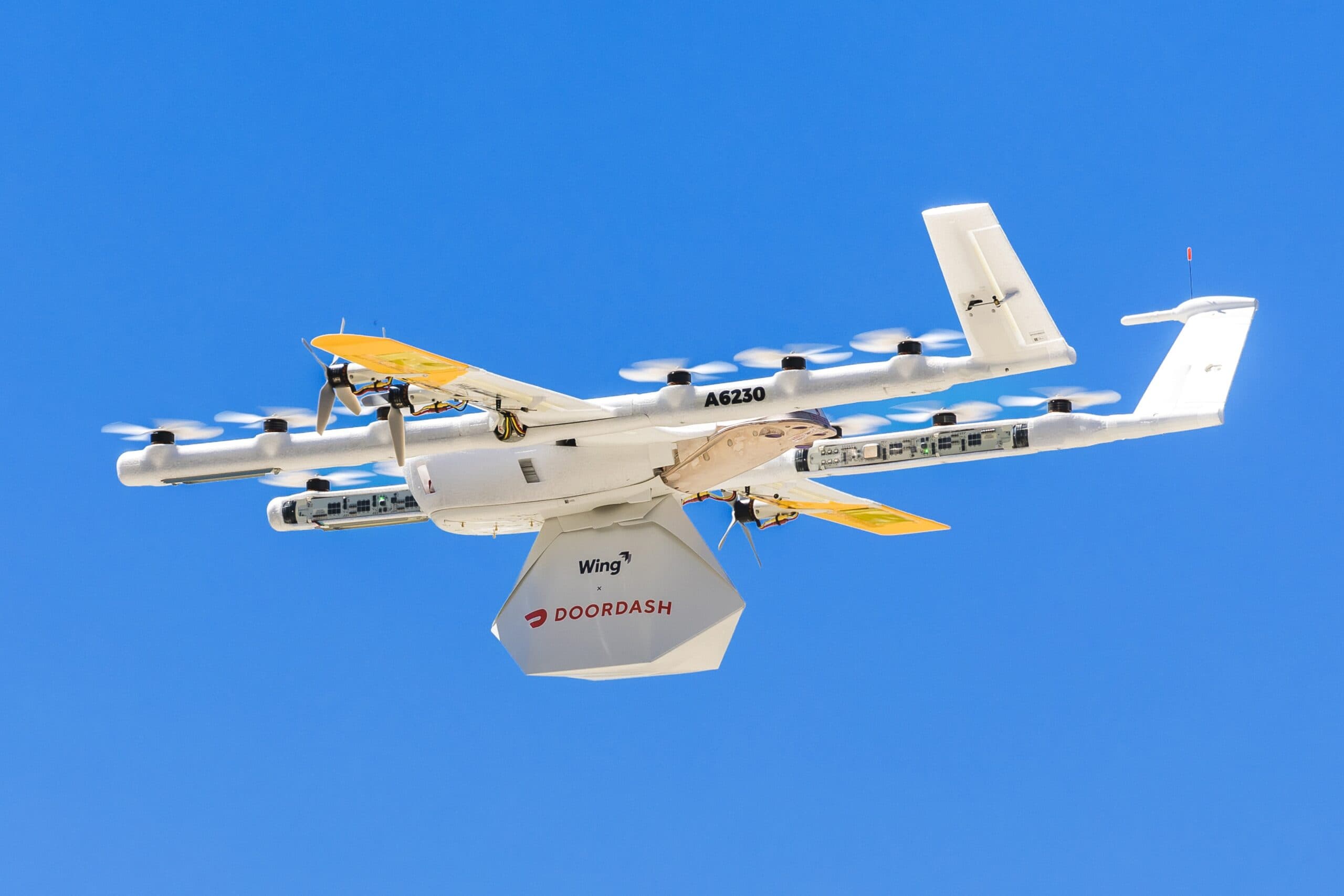
DoorDash has officially gotten the green light from the Federal Aviation Administration to launch a commercial drone delivery service in the United States. This new venture is called DoorDash Air.
As the largest food delivery app in the US, DoorDash has secured a Part 135 air carrier certificate. This FAA authorization is necessary for running a commercial air delivery operation, similar to what small regional airlines require. Now, DoorDash can move forward with actual drone deliveries, shifting from concept to a fully regulated operation.
What DoorDash Air Is All About
DoorDash Air is the company’s dedicated drone delivery division, designed to make deliveries by air instead of by car or bike. Instead of a driver stuck in traffic picking up your burrito, a drone will fly it straight to you. Imagine it as the difference between driving on the highway and soaring above it — delivery times should shrink significantly for shorter distances.
The Part 135 certificate is crucial. Most drone delivery initiatives in the US work under more limited exemptions, which restrict where and how they can operate. With a Part 135 certificate, DoorDash gains full commercial air carrier status, offering them much more operational flexibility than standard drone hobbyists or even several rivals testing similar programs.
DoorDash Is Building Its Own Infrastructure
Unlike some food delivery services that collaborate with third-party drone operators, DoorDash is developing this division in-house. This choice is a strategic advantage. By owning the drone operations, DoorDash maintains control over technology, data, and costs — they won’t have to pay a partner every time a drone is dispatched.
This strategy is similar to what Amazon has done with its Prime Air program. Amazon has pursued its own FAA certification instead of outsourcing to drone companies. Wing, owned by Google’s parent company Alphabet, operates on a similar model and has been delivering items in parts of the US, Australia, and Finland for several years.
| Metric | Detail |
|---|---|
| FAA Certification Type | Part 135 Air Carrier Certificate |
| DoorDash US Market Position | Largest food delivery app in the United States |
| Division Name | DoorDash Air |
| Operational Status | Approved, deliveries expected in near future |
The Competition Is Already Flying
DoorDash is stepping into a space with existing competitors. Wing has been delivering coffee, food, and small packages via drone in select US cities. Amazon Prime Air is gradually expanding after facing years of regulatory challenges. Walmart has teamed up with drone companies to offer delivery in parts of Texas and other states.
DoorDash’s entry is significant because of its existing scale. The company already partners with hundreds of thousands of restaurants and serves millions of customers. Adding a drone delivery option to that network is a different situation than a startup trying to generate demand from the ground up.
What This Means For Everyday Users
For most DoorDash customers, nothing will change immediately. Drone delivery will likely start in limited areas first, probably in suburbs with fewer airspace restrictions, before expanding into busier urban regions.
When drone delivery reaches your neighborhood, you can expect faster delivery times for smaller orders — like a single meal, drinks, or convenience items. Drones are best suited for lighter loads over shorter distances. So, don’t expect a drone to deliver your Costco haul.
There’s also the issue of noise and privacy. Drone deliveries would mean small aircraft flying over residential areas, which has prompted concerns from communities during early rollouts elsewhere. DoorDash will need to address these issues, along with figuring out where drones can land or lower packages.
Community Reactions
“I honestly don’t hate this idea for suburbs. Traffic here is a nightmare and a drone could probably get food to me in 10 minutes instead of 45. My concern is noise though — my neighborhood is quiet and I don’t want a constant buzz overhead.”
“This is just Amazon Prime Air but for DoorDash. Still waiting for any of these companies to actually scale it past a few test zip codes. Wake me up when it works in a real city.”
What To Watch
- Launch location announcements: DoorDash hasn’t specified cities or regions yet. Keep an eye out for pilot program city announcements, likely favoring suburban markets in states with drone-friendly regulations.
- Restaurant partnerships: The restaurant chains that partner for drone fulfillment will impact the service’s appeal at launch.
- Competitor responses: Uber Eats and Instacart don’t have equivalent drone programs right now. If DoorDash Air gains traction, competitors may feel pressured to announce their own plans.
- FAA rulemaking updates: The FAA is still working on broader regulations for drone delivery operations over populated areas. Any changes could either speed up or slow down DoorDash Air’s expansion timeline.
Sources: The Verge, TechCrunch

Maya Torres
Maya Torres is the Consumer Tech Editor at Explosion.com with 7 years covering product launches for major technology publications. She has reviewed over 300 devices across smartphones, laptops, wearables, and smart home products. Maya specializes in translating spec sheets into real-world buying advice and attends CES, MWC, and Apple keynotes as press. Her reviews focus on helping readers decide what to buy, not just what specs look good on paper.