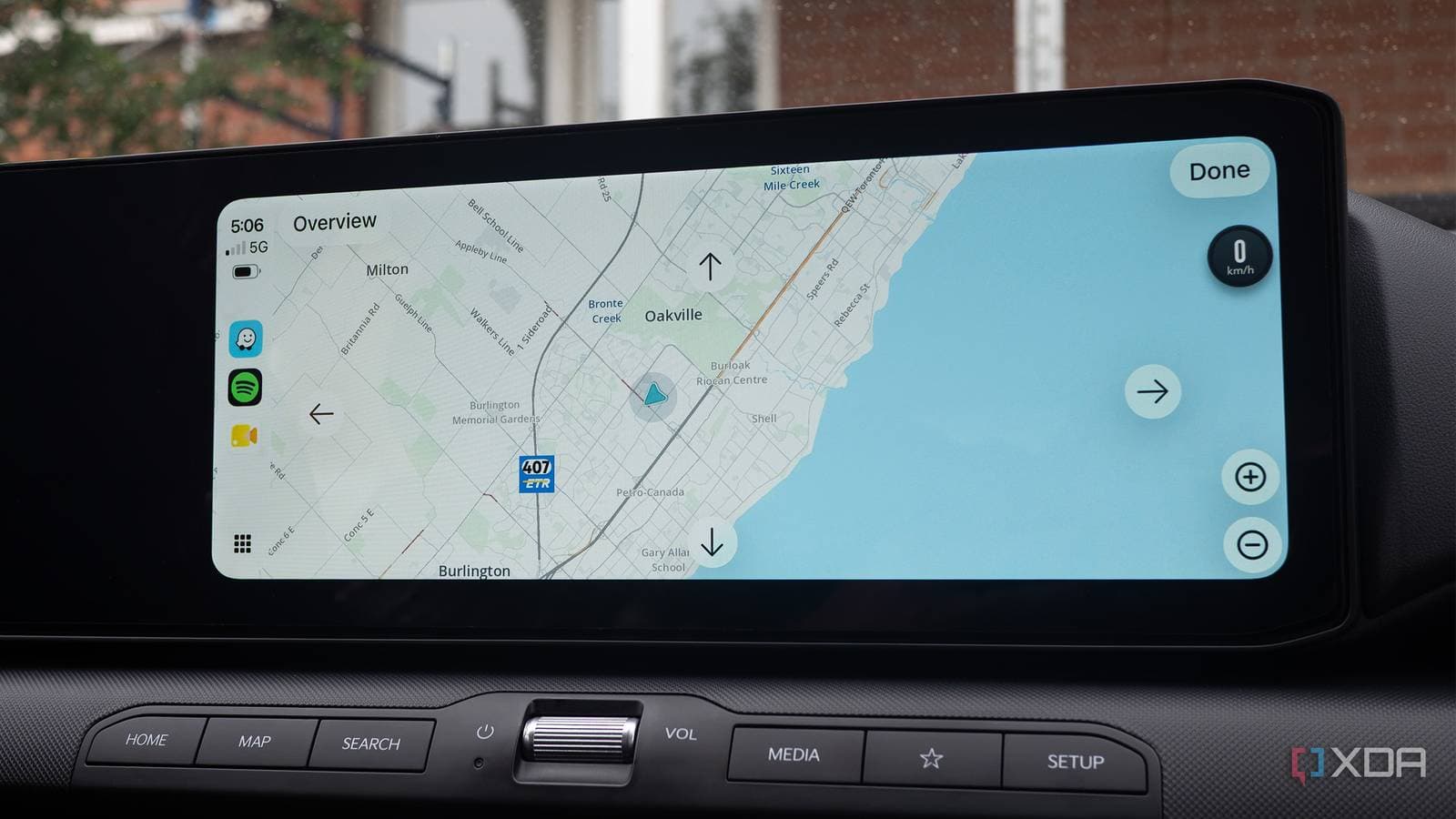
Built-in car navigation systems are slowly vanishing from new vehicles, and many drivers are realizing they don’t really need them. A recent experience from a new Kia K4 Hatchback owner illustrates this trend: smartphones paired with Android Auto or Apple CarPlay simply outperform the navigation systems automakers spent years developing for their dashboards.
The Car With No Map
When XDA Developers writer Adam Conway got his new Kia K4 Hatchback, he noticed something was missing: a built-in navigation system. No pre-loaded maps or manufacturer GPS. For many drivers, that might be a dealbreaker. But for Conway, plugging in his phone and launching Android Auto made it a non-issue.
Android Auto (Google’s system that mirrors your phone’s apps onto your car’s touchscreen) and Apple CarPlay (Apple’s equivalent for iPhones) have improved so much that comparing them to factory navigation systems is no longer fair. You get real-time traffic updates, live rerouting, Google Maps or Waze with the latest information, and a familiar interface you already know how to navigate.
In contrast, factory navigation systems often rely on maps that were accurate at the time of purchase but quickly become outdated. Updating them can be expensive, requiring a USB stick or a trip to the dealer, and might still leave you behind the current data that your phone already has.
Why Automakers Are Dropping Built-In Nav
This isn’t just Kia looking to save money. Manufacturers across the industry are reassessing what features need to be built into the car and what a connected phone can handle more effectively. The reasoning is simple: Google and Apple continually update their maps, invest billions in location data, and have their apps on hundreds of millions of phones. Creating a competing navigation system from scratch is becoming hard to justify.
You can see this trade-off in the price too. Navigation packages on new vehicles can add anywhere from $500 to $1,500 to the sticker price, depending on the brand. If Android Auto and CarPlay offer a better experience for free, the choice is clear.
| Stat | Detail |
|---|---|
| Android Auto compatibility | Available in over 500 vehicle models globally |
| Apple CarPlay availability | Supported in approximately 98% of new U.S. vehicles sold in 2024 |
| Factory nav update cost | Typically $150–$300 per update at a dealership |
| Google Maps update frequency | Continuous, with major data refreshes every few weeks |
| Kia K4 Hatchback starting price (U.S.) | Approximately $22,000 |
What Makes Phone Navigation Actually Better
Think of factory navigation like a printed road atlas that came with your car. It was accurate when printed, but roads change, new places open, and traffic patterns shift. Your phone’s maps are more like a live satellite feed that updates while you drive.
Here are some specific advantages that phone-based navigation has over most built-in systems:
Real-Time Traffic Rerouting
Google Maps and Waze use live data from millions of active users and sensors to reroute you around accidents and traffic jams in real-time. Most factory systems lack this feature altogether or require a subscription to outdated traffic data services.
Current Points of Interest
New restaurant opened last month? Your phone knows. A business closed down? Your phone knows that too, often within weeks. Factory maps can lag behind by a year or more on this kind of information.
Voice Integration
Asking Google Maps “take me to the nearest open pharmacy” while keeping your eyes on the road is something built-in systems struggle to match. Google Assistant and Siri handle natural language commands much more effectively than most factory voice systems.
The One Thing Built-In Nav Still Does Better
There is one scenario where factory navigation wins: when there’s no cell signal. If you’re driving through a remote area without data, your phone’s navigation can struggle unless you’ve downloaded offline maps beforehand. Factory systems store everything locally, so they don’t need a signal at all.
This situation rarely affects most urban and suburban drivers. However, it’s good to know, especially for road trips in rural areas.
What This Means for Everyday Drivers
If you’re in the market for a new car and navigation is high on your priority list, ask yourself whether the factory system really offers anything better than what your phone does. In most cases, it doesn’t. Before shelling out extra for a navigation package, check if the vehicle supports Android Auto or CarPlay (most new cars do) and see if that meets your needs.
If you’re already driving a car without a built-in nav system, you’re probably just fine. Plug in your phone, choose your preferred app, and you’re likely getting a more up-to-date experience than the driver next to you who paid $1,200 for the premium navigation option.
Community Reactions
“I tested the built-in navigation on my last car vs. Google Maps on Android Auto side by side. Google got me there 12 minutes faster because it caught an accident the factory system had no idea about. I never used the built-in nav again.”
— u/DrivewayDrifter_88, Reddit r/AndroidAuto
“The only time I’ve ever wanted factory nav is when I’m somewhere with no service and forgot to download offline maps. That’s a me problem, not a Maps problem.”
— YouTube comment on XDA Developers video review, user TarmacTraveller
What To Watch
- Google’s next Android Auto update is expected to add AI-powered features, including smarter route suggestions based on your calendar and habits.
- Apple CarPlay 2.0 (the version that takes over more of the dashboard, including instrument clusters) is still rolling out slowly. More vehicle compatibility announcements are expected later in 2026.
- Automaker pushback is worth keeping an eye on. Some manufacturers, including GM, have reduced CarPlay support in newer electric vehicles to promote their own connected services. Whether this trend spreads to other brands will impact how useful your phone remains in the car over the next few years.
Sources: XDA Developers: My new car doesn’t have built-in navigation, and I don’t miss it | VentureBeat: When a bug becomes a feature

Ava Mitchell
Ava Mitchell is a digital culture journalist at Explosion.com covering social media platforms, streaming services, and the creator economy. With 4 years reporting on TikTok, Instagram, YouTube, and the apps that shape daily life, Ava specializes in explaining platform policy changes and their impact on everyday users. She previously managed social media strategy for a tech startup, giving her firsthand experience with the platforms she now covers.