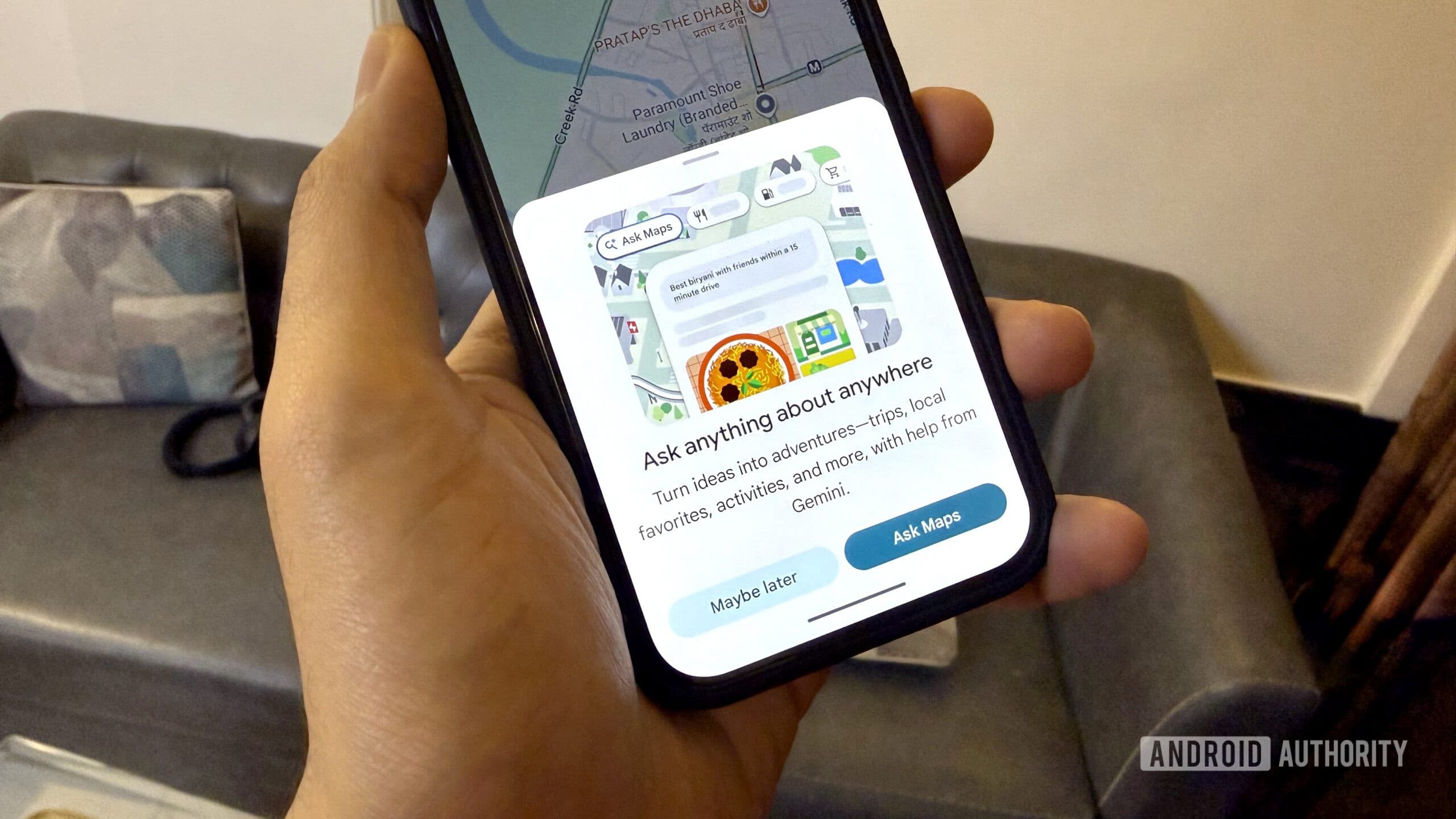
Google Maps can now place food orders for you, eliminating the need to switch between different apps. This feature is currently rolling out as part of a larger suite of AI enhancements to the app’s “Ask Maps” tool. These upgrades also include hotel bookings, personalized suggestions, Gmail and Calendar integration, and a live transit widget.
What’s Actually New Here
“Ask Maps” is Google’s conversational AI assistant embedded in Google Maps. You can think of it as a chatbot that lives in the map, capable of understanding queries like, “find me a good ramen place near my 7pm meeting,” rather than just searching for “ramen near me.”
Previously, Ask Maps could suggest locations and provide directions. Now, the update makes it what Google describes as “agentic.” This means it can take actions on your behalf instead of just providing information. Ordering food is the key feature, but the same principle applies to booking hotels. You describe what you need, and the AI manages the transaction without redirecting you to another site or app.
According to The Verge, Ask Maps can consider your existing plans while making suggestions. If you have a dinner reservation or an early morning flight, the AI incorporates those details when recommending a hotel or restaurant.
Personal Intelligence: Your Gmail and Calendar, Inside Maps
The integration of Calendar and Gmail operates under a concept Google calls “Personal Intelligence.” This term refers to AI features that draw context from your personal Google data—emails, calendar events, and previous searches—to create more relevant recommendations.
In practical terms, if you have a work trip booked via email, Google Maps could potentially show hotel options near your meeting venue without requiring you to enter any information. Android Authority mentions that this feature launches alongside the food ordering capabilities as part of the same update wave.
Live Transit Widget
The update introduces a live transit widget—a small display you can pin to your phone’s home screen. This widget shows real-time updates for your usual bus or train routes. If you rely on public transit for your commute, you can now check current departure times without needing to open Maps first.
The Bigger Picture
Google’s goals extend far beyond simple navigation. TechCrunch highlights that Google is actively transforming Maps from a “where is it” tool into a “handle this for me” assistant. This strategic shift places Maps in direct competition with services like DoorDash, OpenTable, and even general-purpose AI assistants like ChatGPT and Gemini.
The food ordering feature, in particular, puts Google in the middle of transactions, where the real business potential lies. Referral fees and booking commissions are crucial revenue sources for travel and food apps. If Maps becomes the go-to platform for these purchases, Google could capture a significant share of that market.
| By The Numbers: Alphabet / Google | |
|---|---|
| Stock (GOOGL) | $362.43 (-4.03%) |
| CEO | Sundar Pichai |
| Founded | 1998 |
| Headquarters | Mountain View, CA |
| Sector | Big Tech |
What This Means
For everyday users, the biggest takeaway is less app-switching. Instead of opening Maps to find a restaurant and then switching to DoorDash or Uber Eats to place an order, you can do it all in one place. If the AI context features work well, you’ll also spend less time typing. The app can suggest lunch spots based on your 2pm meeting downtown.
However, this means more of your Google data is being utilized. Personal Intelligence only works if Maps has access to your Gmail and Calendar. For those already invested in the Google ecosystem, this may feel seamless. But for anyone concerned about data privacy, this adds another layer of information Google processes to serve ads and recommendations.
There’s also the question of whether the AI is actually effective. Agentic AI—AI that performs real-world actions like placing orders—has had mixed results in early implementations. A wrong order or a double-booked hotel can be more frustrating than a bad search result.
Community Reactions
“Honestly I don’t hate this? I already use Maps to find food; having it just order feels like a natural next step. But I want to see the receipt before it confirms anything.”
“Google already knows everything about me lol, at this point if it can just handle my lunch I’m fine with it.”
What To Watch
- Rollout timeline: Google hasn’t confirmed when all users will see these features. Early access appears to be rolling out in waves starting this week.
- Restaurant and delivery partners: The integration of food services into the ordering feature is crucial. Expect Google to reveal specific partnerships in the coming weeks.
- Competitor response: Apple Maps has been steadily adding features. A push toward agentic AI from Google Maps may prompt similar actions from Apple, and possibly from Yelp and TripAdvisor.
- Privacy policy updates: Keep an eye out for changes in how Google explains the use of Personal Intelligence data, especially in regions with stricter data regulations like the EU.

Daniel Park
Daniel Park covers AI, cloud infrastructure, and enterprise software for Explosion.com. A former software engineer who transitioned to technology journalism 5 years ago, Daniel brings technical depth to his reporting on artificial intelligence, startup funding rounds, and the companies building the future of computing. He breaks down complex AI developments and business strategies into clear, actionable insights for readers who want to understand how technology is reshaping industries.