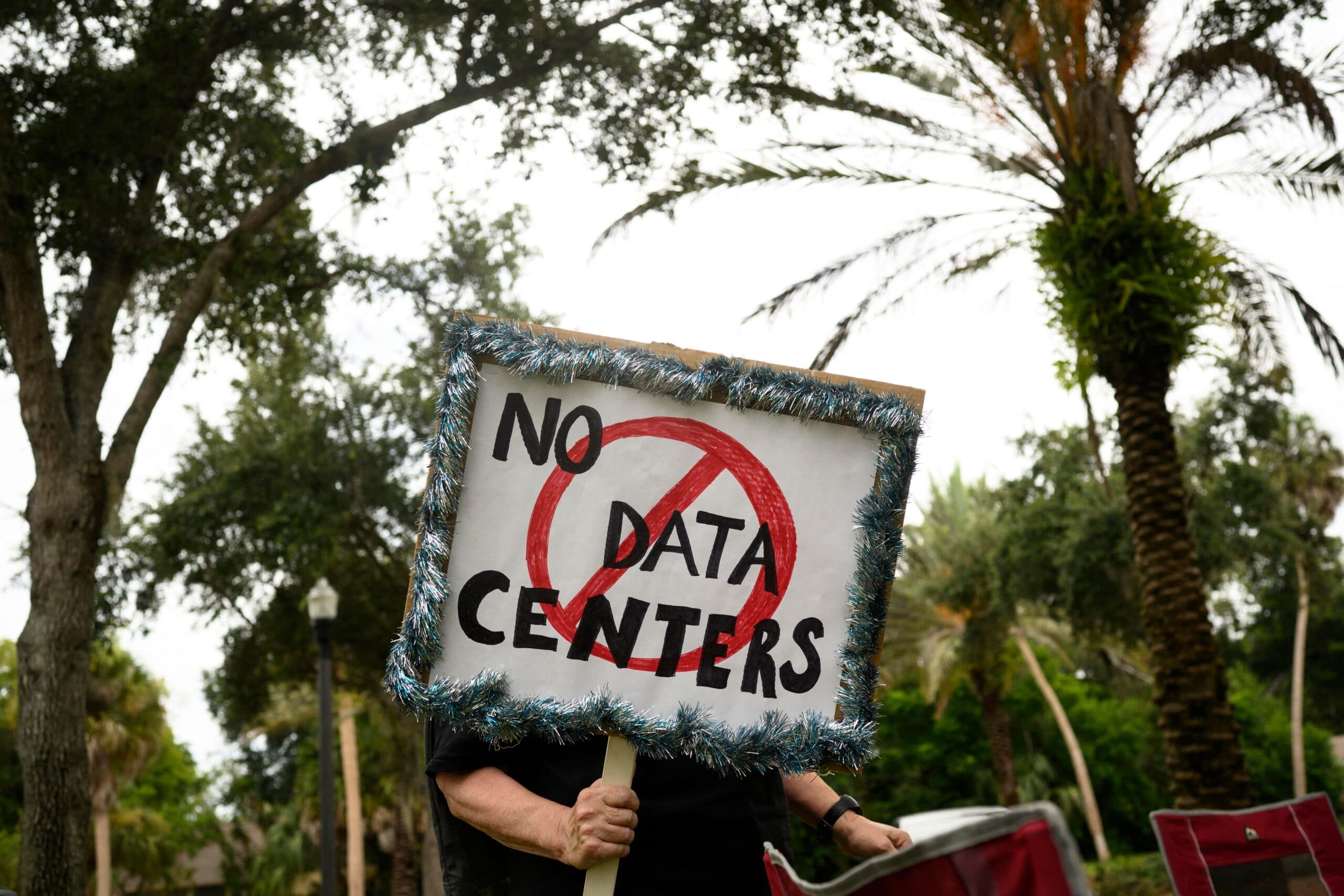
A group of conservative residents in Florida is banding together to oppose a massive data center planned for their community. Their concerns echo those raised by progressive activists across the nation.
On a recent Saturday morning in Spring Hill, Florida, fewer than a dozen people gathered outside the Hernando County Branch Library. They protested a hyperscale data center, a large facility that powers cloud computing and AI services for millions of users, which had already received unanimous approval from the Hernando County commission. Despite the project being greenlit, the protesters showed up to voice their concerns.
Strange Bedfellows Against Big Tech Infrastructure
The group, known as Humans First, consists primarily of older, conservative individuals. This isn’t the typical demographic you’d expect to see opposing tech developments. Yet, their complaints mirror those of left-leaning activists in Virginia, Texas, and the Netherlands. They argue that data centers consume excessive amounts of water, strain local power grids, create noise and light pollution, and provide minimal local jobs despite significant public subsidies.
This kind of bipartisan agreement on a tech issue is rare. Most tech policy discussions often fall along party lines. However, data centers pose unique challenges. The problems they generate are tangible and local. They affect specific neighborhoods, draw from particular aquifers, and connect to designated power lines.
It’s like a highway being built through your community. Regardless of your political affiliation, you’ll still hear the trucks.
Why Data Centers Are Exploding in Size and Number
The surge in AI services has skyrocketed the demand for data center capacity. Training and operating large AI models requires massive computing power, which in turn demands significant electricity and cooling water. Companies like Microsoft, Google, Amazon, and Meta have all rolled out multi-billion dollar data center expansion plans in the last two years.
To attract these facilities, many states and counties offer tax incentives, faster permitting, and guaranteed utility access. Critics from both sides agree on this point: local governments seem to cater to corporations while residents bear the burden.
| Metric | Figure |
|---|---|
| Average hyperscale data center power draw | 100–500 megawatts |
| Water used daily by a large facility (cooling) | Up to 5 million gallons |
| Projected US data center electricity share by 2030 | ~9% of total national consumption |
| Direct jobs created per large facility | Typically 30–50 permanent roles |
| Global data center count (approx.) | Over 10,000 |
The Local Impact Nobody Warns You About
When companies propose data centers, they typically highlight tax revenue and economic growth. However, they often overlook the downstream effects on the infrastructure that local residents rely on daily.
In areas densely populated with data centers, like Northern Virginia, utility companies have warned about capacity issues. This could lead to higher rates and reliability concerns for homes and small businesses far from the facilities.
Water usage is another major concern. Data centers use evaporative cooling systems, akin to massive swamp coolers, to prevent servers from overheating. In regions prone to drought, this consumption directly competes with agriculture and residential needs.
What This Means for Everyday Users
If you use cloud storage, stream videos, run AI tools, or engage in any online activity, you’re benefiting from the infrastructure these residents are contesting. This isn’t an argument for or against the protests — just context for understanding the trade-offs involved.
The services most people rely on exist thanks to data centers. The pressing question is: who decides where these facilities go, and who truly pays the cost? Currently, those decisions mainly happen at the county commission level, in meetings that most residents skip until after approvals are granted.
However, things are starting to shift. Virginia has enacted legislation giving localities more power to limit data center placements. Ireland has imposed a moratorium on new data centers in Dublin due to grid concerns. While the Florida protest may not have halted anything in Hernando County, similar protests are contributing to a broader policy dialogue that’s evolving rapidly.
Community Reactions
“I’ve voted Republican my whole life, and I’m out here with people who probably voted the opposite of me on every issue. Doesn’t matter. This affects all of us.”
— Comment thread on r/Florida, user u/HernandoLocal (paraphrasing sentiments reported by The Verge attendees)
“The jobs argument is a joke. 30 jobs for a building that drinks our water and maxes out the substation? Pass.”
— YouTube comment on a local news segment covering the Spring Hill protest
What To Watch
- Hernando County Commission: No reversal is expected on the approved project, but advocates are pushing for stricter conditions on water and power use disclosures in future approvals.
- State-level legislation: Florida lawmakers may feel pressure to follow Virginia’s lead and grant counties more authority over data center siting.
- National organizing: Groups like Humans First are working to connect local chapters across states, potentially giving fragmented local opposition more political strength over the next 12 to 18 months.
- Utility rate decisions: Keep an eye on power company filings in data center-heavy regions in late 2025 — those filings will reveal whether grid strain leads to higher bills for regular customers.
Sources: The Verge — Right-wing boomers protesting data centers

Daniel Park
Daniel Park covers AI, cloud infrastructure, and enterprise software for Explosion.com. A former software engineer who transitioned to technology journalism 5 years ago, Daniel brings technical depth to his reporting on artificial intelligence, startup funding rounds, and the companies building the future of computing. He breaks down complex AI developments and business strategies into clear, actionable insights for readers who want to understand how technology is reshaping industries.