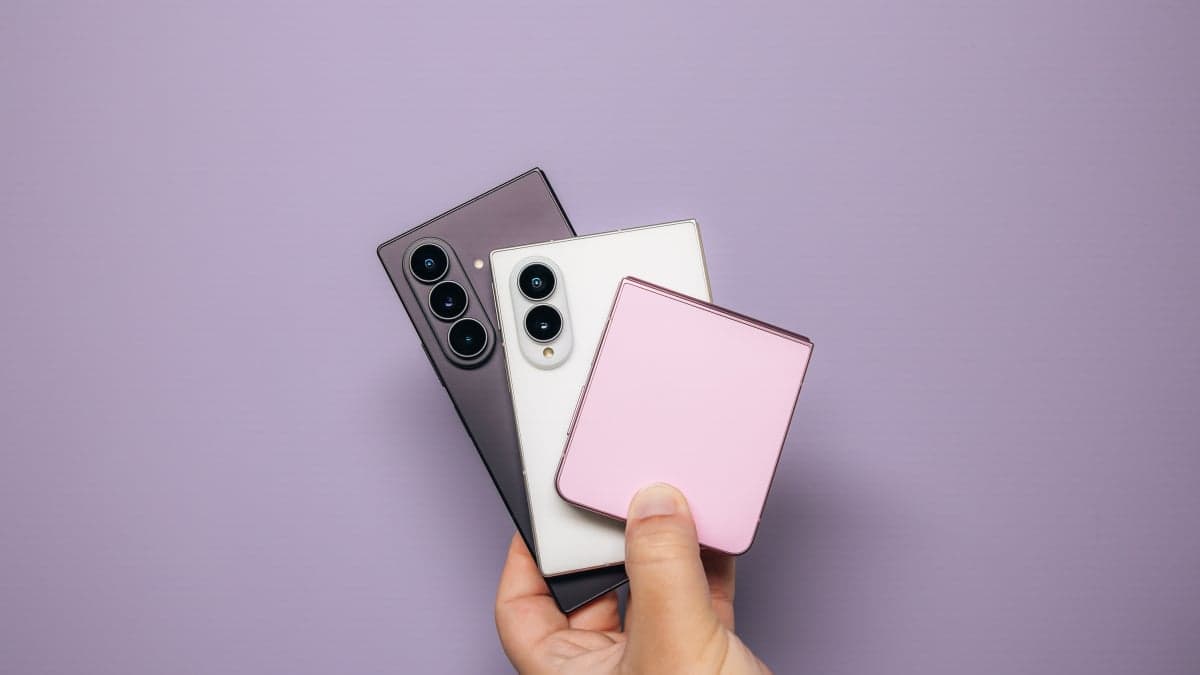
Samsung’s Galaxy Z Flip 8, Z Fold 8, and Z Fold 8 Ultra are the first Galaxy phones to feature silicon-carbon batteries. This chemistry upgrade allows for larger battery capacity in the same physical space as older designs.
This announcement came during Samsung’s Galaxy Unpacked event, where the company also showcased hands-on previews for the press. Mashable’s tech editor, who got early access to all three devices, noted that the lineup has a “cool factor the iPhone can’t match.”
What Is a Silicon-Carbon Battery?
A silicon-carbon battery, or Si-C battery, replaces part of the graphite material in a traditional lithium-ion battery’s anode with silicon. Silicon can hold about 10 times more lithium ions than graphite, which means it packs more energy into the same size cell.
Imagine upgrading from a standard suitcase to a compression-packed version: the outside remains the same size, but there’s much more room inside.
The challenge has always been that silicon expands while charging and contracts while discharging, which can crack the material over time. Mixing silicon with carbon stabilizes it, explaining why the “carbon” part of the name is important. Manufacturers have been working on this chemistry for years, and Chinese phone makers like Xiaomi and OnePlus adopted it earlier. Now, Samsung is the first major Korean manufacturer to incorporate it into its flagship foldable line.
Why This Matters for Foldables Specifically
Foldable phones have a unique engineering challenge. The hinge mechanism, dual screens, and folding structure limit the internal space available for a battery. This often results in foldables having smaller batteries compared to flat phones, leading to disappointing battery life.
With silicon-carbon chemistry, Samsung’s engineers gain more energy density—more power per cubic centimeter—without adding thickness or weight to the phone. This improvement is essential for a form factor where every millimeter counts.
| Metric | Detail |
|---|---|
| Company | Samsung Electronics |
| Ticker | 005930.KS |
| Stock Price | ₩262,500 (+26.81%) |
| CEO | Jong-Hee Han |
| Headquarters | Seoul, South Korea |
| Founded | 1938 |
| Sector | Hardware |
| New Foldable Models | Galaxy Z Flip 8, Z Fold 8, Z Fold 8 Ultra |
| Battery Technology | Silicon-carbon (first in Galaxy lineup) |
The Full Z Fold and Z Flip 8 Lineup
Samsung is launching three new devices. The Galaxy Z Flip 8 is the clamshell-style folder, flipping closed like a classic flip phone. The Galaxy Z Fold 8 is the book-style folder that opens to reveal a larger tablet-sized screen. The Galaxy Z Fold 8 Ultra is a new premium tier, aimed at users who want the best foldable experience Samsung can provide.
All three models come with Google Gemini AI integrations, giving Samsung’s devices early access to Google’s latest AI assistant features before other Android manufacturers.
What This Means for Everyday Users
If you’ve hesitated to try foldable phones due to battery concerns, this is a solid reason to rethink that. The improved battery chemistry means Samsung can offer more capacity without sacrificing the sleek design that makes foldables appealing.
For existing Galaxy owners, this hints at the future direction of the platform. Silicon-carbon batteries will likely make their way into Samsung’s flat Galaxy S and A series phones in future generations, offering a preview of what mainstream Samsung devices will eventually include.
As for iPhone users, Apple hasn’t announced any silicon-carbon batteries for its devices yet. The iPhone 18 Pro recently entered mass production ahead of a September launch, but Apple hasn’t confirmed any changes to battery chemistry for that model.
Community Reaction
“Finally. Si-C in a Samsung flagship is huge. Chinese OEMs have had this for a couple of years and people kept asking when Samsung would catch up.”
“The battery upgrade is cool but I want to see real-world tests. Capacity numbers on paper don’t always match how a phone actually performs through a day.”
What To Watch
- Full reviews: Hands-on impressions from Mashable and others are positive, but thorough battery life tests will be the real indicator of how the silicon-carbon upgrade performs daily.
- Apple’s response: The iPhone 18 Pro is expected in September. Whether Apple will introduce its own battery chemistry upgrade or a larger cell remains one of the key hardware questions this fall.
- Broader Galaxy rollout: Keep an eye out for Samsung to confirm whether silicon-carbon batteries will feature in the Galaxy S26 series, which typically launches in early 2027.
- Pricing and availability: Samsung hasn’t confirmed final retail pricing for the Z Fold 8 Ultra yet. Expect those details in the weeks following Unpacked.
Sources: Android Authority: Samsung’s new foldables are the first Galaxy phones with silicon-carbon batteries | Mashable: I tried Samsung’s new foldable phones

Maya Torres
Maya Torres is the Consumer Tech Editor at Explosion.com with 7 years covering product launches for major technology publications. She has reviewed over 300 devices across smartphones, laptops, wearables, and smart home products. Maya specializes in translating spec sheets into real-world buying advice and attends CES, MWC, and Apple keynotes as press. Her reviews focus on helping readers decide what to buy, not just what specs look good on paper.