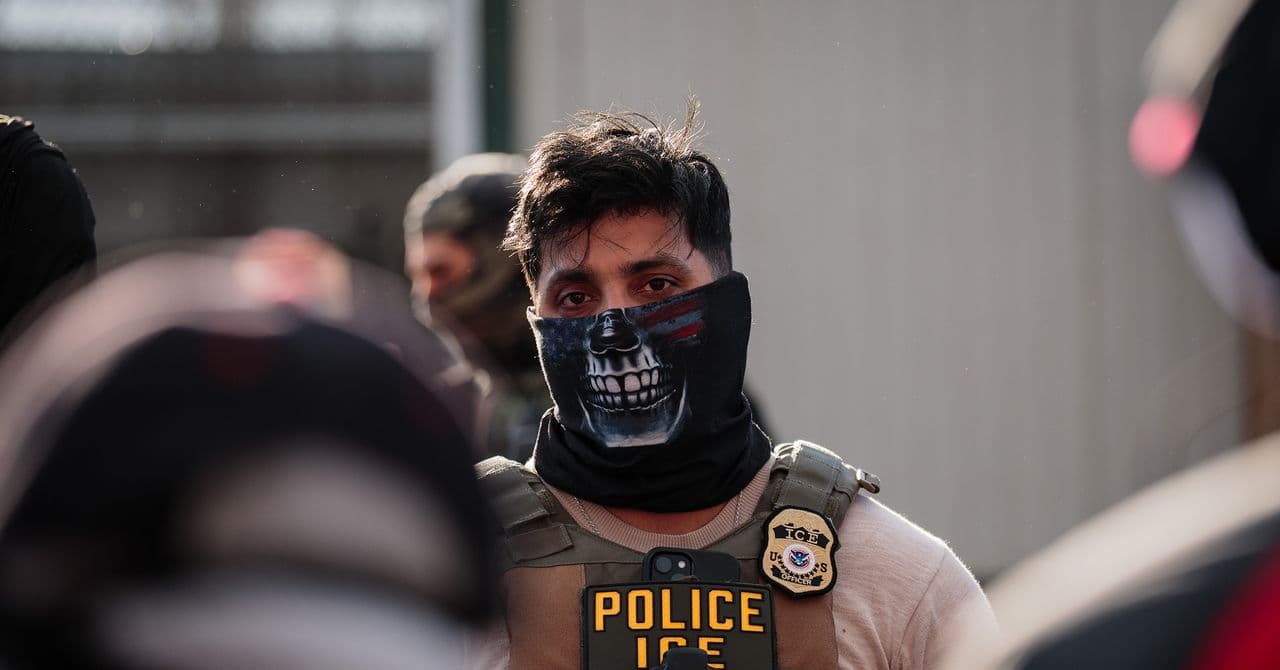
Several U.S. states are pushing for laws that require federal immigration agents to show their faces during arrests and raids. The Trump administration is taking legal action to stop these measures.
This situation highlights two conflicting concerns: the right of individuals to know who is detaining them versus the federal government’s claim that unmasked ICE (Immigration and Customs Enforcement) agents could face real dangers if their identities are revealed.
What’s Actually Happening
States like New York have passed or proposed legislation mandating that immigration officers remove face coverings during enforcement activities. The reasoning is simple: if a federal agent is arresting you, you should be able to see their face, verify their identity, and hold them accountable if something goes wrong.
Federal lawyers have filed to block these laws, arguing they put agents at risk. They cited a face-recognition art project claiming to identify ICE agents by their faces. However, there’s a significant issue with that argument, according to reporting by Wired: the project isn’t a functional identification tool.
The art project aimed to make a political statement about surveillance, not serve as a real database for targeting agents. Critics argue that using it as evidence of a credible threat to agent safety is quite a stretch.
The Tech Angle: Face Recognition as a Legal Argument
Face recognition technology, which identifies people by analyzing facial geometry (similar to how your phone unlocks with your face), has become a hot topic in this debate.
States advocating for transparency argue that the public deserves accountability, especially since body cameras and badge numbers already create identification trails for local police. The federal government counters that because face recognition technology exists and is widely accessible, showing an agent’s face during a raid could allow malicious individuals to target that agent later.
The problem is that the specific example the government cited—the art project—seems more conceptual than practical. Experts who reviewed it found it doesn’t reliably identify agents in any useful way. Challenging its use as a legal basis for blocking state law, critics call it a weak foundation for a major constitutional argument.
Why States Passed These Laws in the First Place
The push for anti-mask laws (which require law enforcement to be identifiable during official operations) didn’t come out of nowhere. In recent years, videos of immigration enforcement actions have circulated online, showing agents in tactical gear with their faces covered. These agents conducted arrests without clear identification, leaving bystanders and those being detained unsure if they were legitimate federal agents.
This uncertainty is why states say these laws are necessary. Requiring agents to show their faces or at least display verifiable credentials is seen as a basic accountability measure—the same standard most local police officers follow.
What This Means for Everyday People
If you live in a state with one of these laws, the court battle will determine if that law ever takes effect. If states win, individuals facing immigration enforcement would have the legal right to see the faces of the agents detaining them. On the other hand, if the federal government wins, those state laws will be blocked, allowing masked enforcement operations to continue regardless of what state legislatures passed.
There’s also a larger precedent at stake. A federal court ruling that states can’t regulate how federal agents present themselves during operations could restrict state power in other areas of law enforcement accountability, not just immigration.
For anyone who records law enforcement—something millions of Americans do routinely—the outcome will affect whether those captured in the footage can be identified or held accountable.
| Detail | Figure |
|---|---|
| States pursuing anti-mask or ID transparency legislation for federal agents | Multiple, including New York |
| Legal basis cited by feds for danger to agents | 1 art project (non-functional as ID tool) |
| ICE enforcement operations in 2025 | Increased under Trump administration directives |
Community Reactions
“If a cop in my city has to wear a badge and show their face, I don’t understand why a federal agent arresting someone gets more anonymity, not less.”
— u/Civil_Accountability_Now, Reddit r/politics
“The fact that they cited an art project that doesn’t even work as their key evidence tells you everything about how solid this legal argument actually is.”
— YouTube comment on Wired’s coverage, user @TechLawWatcher
What To Watch
- Court rulings on state anti-mask laws: Federal judges will decide whether these state laws can take effect. Early rulings could indicate how higher courts view state authority over federal agent conduct.
- Congressional response: Lawmakers from both parties have commented on immigration enforcement transparency. Watch for any federal legislation that could either support masking protections for agents or establish identification standards nationwide.
- The face recognition debate: As this technology becomes cheaper and more accurate, expect to see it in more legal arguments on both sides of law enforcement accountability cases, not just immigration.

Daniel Park
Daniel Park covers AI, cloud infrastructure, and enterprise software for Explosion.com. A former software engineer who transitioned to technology journalism 5 years ago, Daniel brings technical depth to his reporting on artificial intelligence, startup funding rounds, and the companies building the future of computing. He breaks down complex AI developments and business strategies into clear, actionable insights for readers who want to understand how technology is reshaping industries.