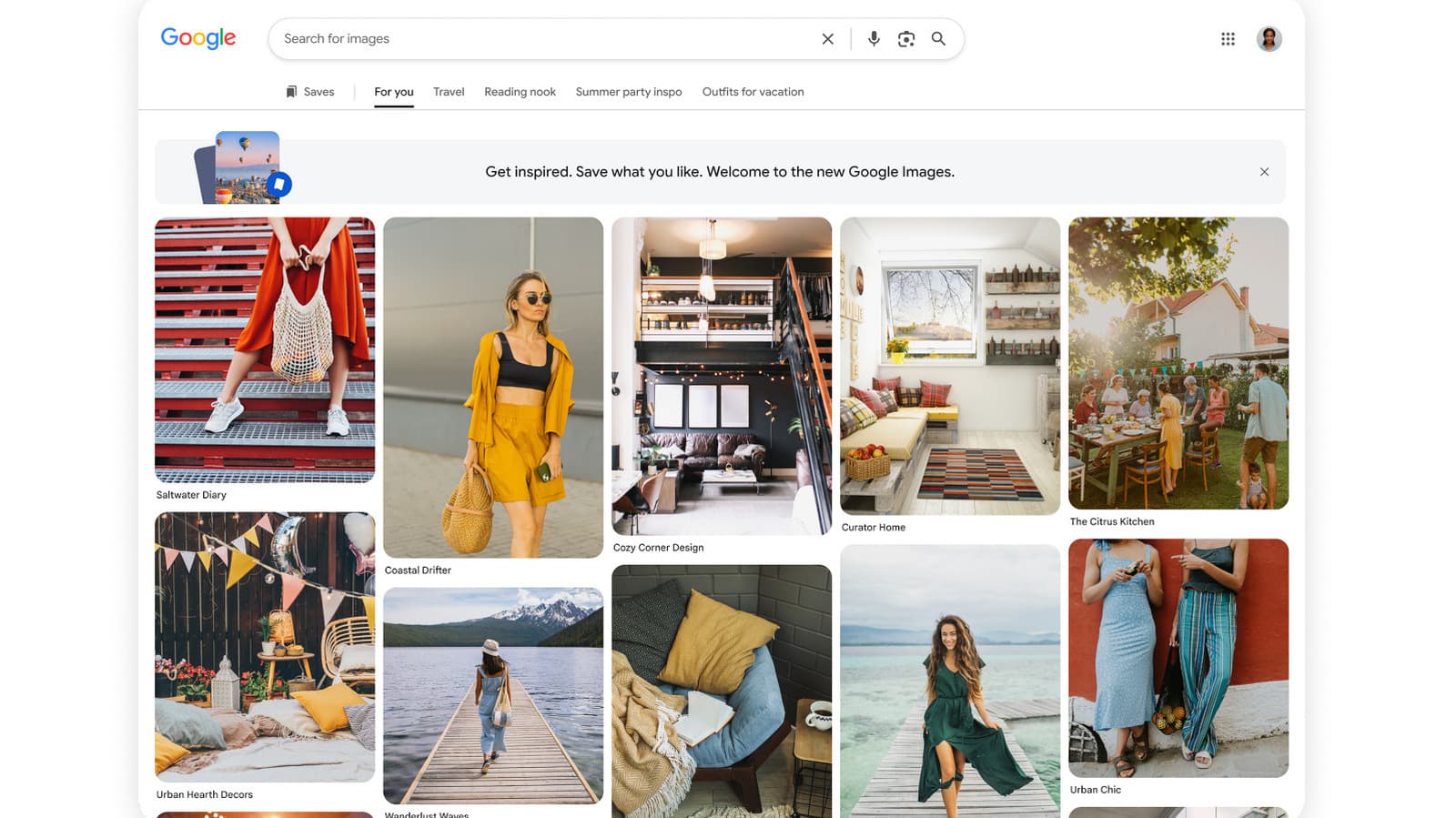
This week marks the 25th anniversary of Google Images. To celebrate, the company has revamped its image search homepage, focusing on personalization to show results tailored to what it thinks you’ll want to see.
| By The Numbers: Alphabet / Google | |
|---|---|
| Stock (GOOGL) | $347.15 (‑1.38%) |
| CEO | Sundar Pichai |
| Headquarters | Mountain View, CA |
| Founded | 1998 |
| Google Images Launch | 2001 (25 years ago) |
What’s Actually Changing
The updated Google Images homepage no longer presents the same generic grid of trending photos for everyone. Google claims it will now display results “intelligently tailored to your unique interests.” This means two users opening Google Images on the same day could see entirely different starting points based on their search history and activity.
Imagine walking into a bookstore. One has a generic “Staff Picks” display, while the other rearranges itself based on your past purchases. The personalized experience is much more relevant. But it raises questions about how much data Google uses to make these decisions.
The visual design has gotten a refresh too. According to 9to5Google, the homepage features a cleaner layout paired with the personalization engine. This gives the whole product a modern touch, likely part of a broader effort to keep users engaged within Google’s ecosystem instead of turning to competitors.
A Brief History of Google Images
Google Images debuted in 2001, inspired by the huge traffic spike after Jennifer Lopez wore that iconic green Versace dress at the 2000 Grammy Awards. People wanted to find that photo, but Google’s text-based search couldn’t meet the demand. The image search tool that emerged became one of the most popular features online, handling billions of queries daily at its peak.
Over 25 years, the product has introduced reverse image search (uploading a photo to find its online presence), Google Lens (using your camera for visual searches), and AI-driven results identifying objects, plants, and products in images. The new personalized homepage is the latest update, and it’s the first time Google has changed what you see before you even type anything.
What This Means for Everyday Users
If you’re logged into your Google account while using Images, your homepage will automatically reflect your interests. For example, someone who often searches for architecture photos will see a different feed than someone looking for recipes or sneakers.
For users who aren’t logged in or have limited search history, the experience will resemble the old version, featuring a more generic selection of trending or popular images.
There’s also a privacy concern here. This personalization works because Google tracks your searches and uses that data to curate what you see. If you’re uncomfortable with this, you can adjust your Google account privacy settings. Disabling “Web & App Activity” will limit how much Google personalizes your results, but it will also affect other features.
According to Engadget, Google presents this update as a way to make Images feel relevant as soon as you open it, rather than waiting for users to search to find value.
Community Reaction
Online reactions have been mixed. Some users appreciate the idea of a smarter starting screen, while others are wary about another Google product that relies heavily on personal data.
“Genuinely curious what my Google Images homepage looks like vs. my wife’s. Might actually be useful if they got the signals right.”
“Cool, so now instead of showing me random stuff, it’ll show me random stuff based on my data. Progress.”
What To Watch
- Rollout timeline: Google hasn’t said exactly when all users will see the new homepage. Keep an eye on your Images experience over the next few days and weeks as updates typically roll out gradually.
- AI integration: Google is pushing its Gemini AI (similar to ChatGPT) across its products. It’d be surprising if Images doesn’t get deeper AI features related to this redesign soon.
- Privacy scrutiny: Personalized feeds in search products often draw attention from regulators in the EU, where Google has faced scrutiny over data practices. Watch for any responses from European privacy authorities.
- Broader Google hardware news: With Pixel 11 pricing leaks and Pixel Watch 5 details coming out, Google seems to be gearing up for a fall hardware event. Software features like this redesign might get more attention then.

Ava Mitchell
Ava Mitchell is a digital culture journalist at Explosion.com covering social media platforms, streaming services, and the creator economy. With 4 years reporting on TikTok, Instagram, YouTube, and the apps that shape daily life, Ava specializes in explaining platform policy changes and their impact on everyday users. She previously managed social media strategy for a tech startup, giving her firsthand experience with the platforms she now covers.