
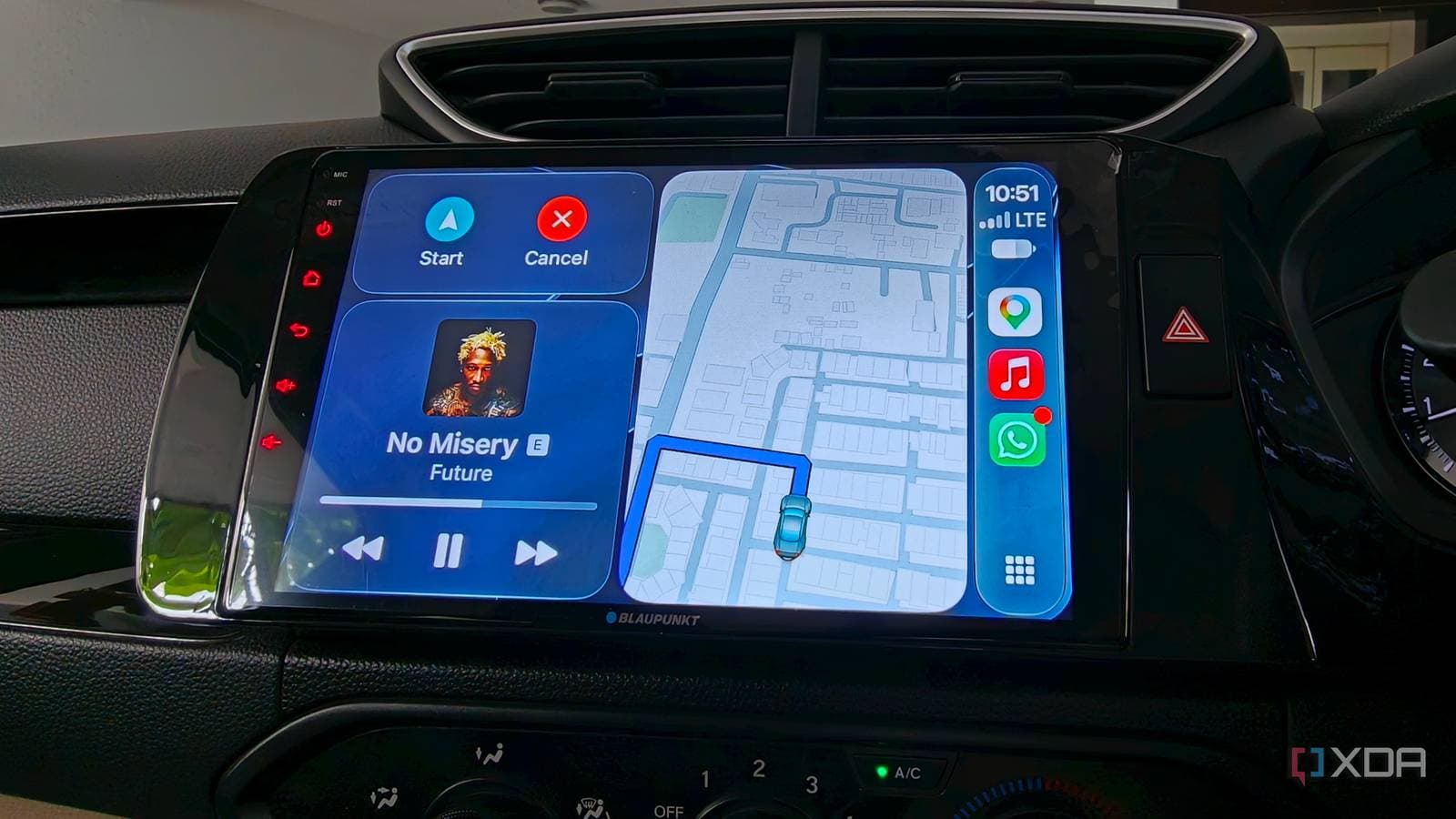
After trying out Apple CarPlay for a week instead of Android Auto, a long-time Android user reached a clear verdict: CarPlay is more reliable, but Android Auto proves to be more useful. For many people, usefulness takes the top spot.
This experiment, shared by XDA Developers, sheds light on a dilemma that countless drivers face when buying a new car or changing phones. Both systems aim to do the same thing — display your phone’s apps on your car’s touchscreen — but they each come with different strengths and weaknesses.
What CarPlay Does Well
CarPlay has received a lot of praise for one main reason: it just works. You connect your iPhone, and within moments, you have a neat, consistent interface that rarely crashes or disconnects. Since Apple oversees both the hardware (iPhone) and software, compatibility issues are minimal.
The interface is simpler, which can feel limiting. But when you’re driving at 70 mph, having fewer options actually enhances safety by reducing decision-making. Siri, Apple’s voice assistant, manages in-car commands without needing the driver to touch the screen.
Where Android Auto Excels
CarPlay’s simplicity does come with its downsides. Apple tightly controls which apps can run on CarPlay, so many popular Android-exclusive navigation tools and third-party audio apps are either absent or have stripped-down versions on CarPlay.
On the other hand, Android Auto allows developers more freedom to create fully-featured car apps. Google Maps and Waze — the latter just got a major update that removed several annoying interruptions — operate more fully on Android Auto. Spotify, podcast apps, and messaging apps function much like their phone versions.
Google Assistant, integrated into Android Auto, can handle multi-step requests smoothly. For instance, asking it to “send a message and then find the nearest gas station” works seamlessly. During testing, CarPlay’s Siri needed separate commands for each task.
The Wireless Connection Issue
Wireless Android Auto, which lets you connect without a USB cable, has had a history of inconsistency, with connections dropping mid-drive or requiring manual reconnection. CarPlay’s wireless version tends to be more stable.
This reliability gap is noticeable, but it’s closing. Google has rolled out updates to boost wireless stability, and newer Android phones manage connections much better than older models from two or three years ago.
What This Means for Daily Drivers
If you own an iPhone and enjoy Apple’s app ecosystem, CarPlay likely works better for you. The experience is polished and consistent, so you won’t feel like you’re missing features since you’re already accustomed to Apple’s style.
However, if you’re an Android user — especially one who relies on Google Maps, Waze, or certain third-party apps — switching to CarPlay means dealing with less effective versions of tools you already utilize. For most people, that reliability trade-off isn’t worth it.
In short, CarPlay excels as a car system, while Android Auto shines as an extension of your phone. Since most people buy a phone first and a car second, Android Auto’s flexibility better aligns with how users typically engage with these systems.
| Metric | Android Auto | Apple CarPlay |
|---|---|---|
| Compatible vehicles (approx.) | 500+ car models | 800+ car models |
| Wireless support | Yes (Android 11+) | Yes (select models) |
| Third-party navigation apps | Google Maps, Waze, TomTom, and more | Google Maps, Waze (limited) |
| Voice assistant | Google Assistant | Siri |
| App ecosystem control | More open | Tightly curated |
Community Reactions
“CarPlay feels like driving a rental car. Everything works, but nothing is where you put it.”
“The wireless connection on Android Auto used to drive me insane. Since the last couple of updates, it’s been rock solid though. Can’t remember the last time it dropped.”
Sources
What To Watch
- Google I/O updates rolling out: Google has been steadily improving Android Auto’s wireless stability through incremental updates. Keep an eye out for changelog notes on connection reliability in the coming months.
- Apple’s next CarPlay overhaul: Apple announced a deeper CarPlay integration (sometimes called “next-generation CarPlay”) that would control car instrument clusters directly. Automaker adoption has been slow, but any new rollouts will significantly impact this comparison.
- Waze on both platforms: Waze’s latest update cleaned up its notification habits considerably. How both systems handle the updated app moving forward will be a practical test of each platform’s app flexibility.

Maya Torres
Maya Torres is the Consumer Tech Editor at Explosion.com with 7 years covering product launches for major technology publications. She has reviewed over 300 devices across smartphones, laptops, wearables, and smart home products. Maya specializes in translating spec sheets into real-world buying advice and attends CES, MWC, and Apple keynotes as press. Her reviews focus on helping readers decide what to buy, not just what specs look good on paper.


