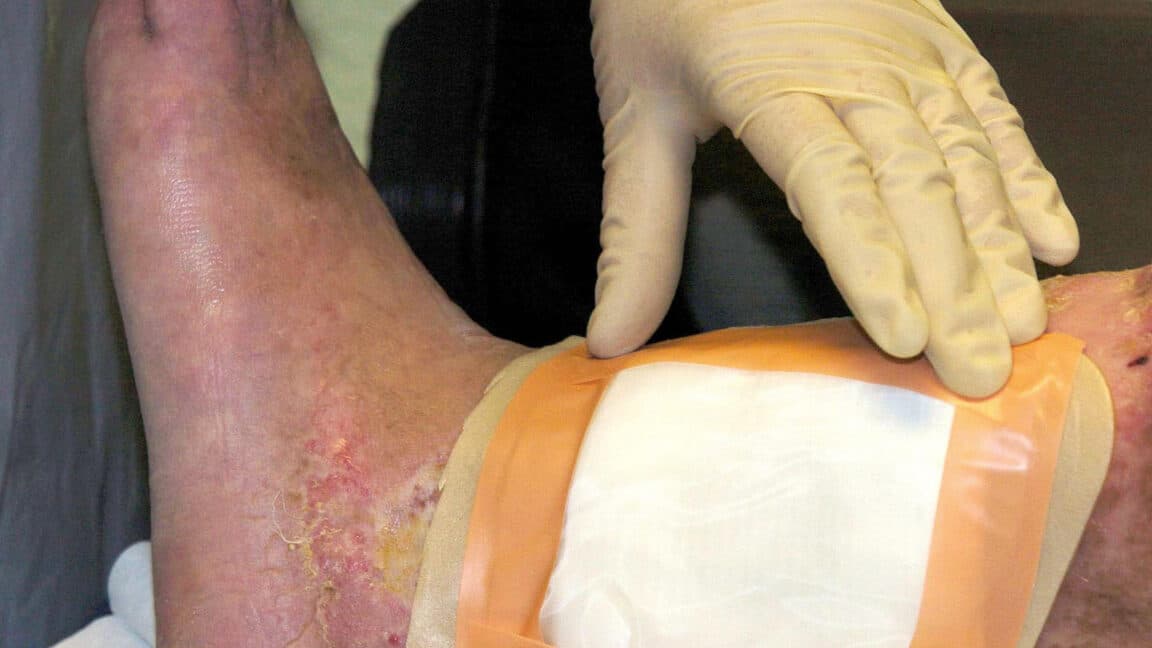
The FDA has approved a second species of maggot for use in medical therapy, enhancing a treatment that employs live larvae to clean infected wounds that aren’t healing properly.
The newly approved species is Lucilia cuprina, a blowfly that typically feeds on decaying tissue and is often found on animal carcasses. This species joins Lucilia sericata, the green bottle fly, which has been FDA-approved for medical use since 2004. Both species are now classified as medical devices by regulators.
How Maggot Therapy Works
Maggot debridement therapy (MDT) involves using live fly larvae to treat wounds. Doctors place sterile, lab-raised maggots directly into wounds that contain dead or infected tissue and aren’t responding to standard treatments. The maggots consume only the dead tissue, leaving the healthy tissue intact. They also release compounds that can kill bacteria and may help promote healing.
Think of it this way: instead of a surgeon scraping away dead tissue with a scalpel, you’re using tiny biological tools that can reach areas a scalpel can’t and work continuously over 48 to 72 hours.
Wound-care specialists have embraced this therapy for patients with diabetic foot ulcers, pressure sores, and wounds resistant to antibiotics. With antibiotic-resistant infections on the rise, having non-drug options is crucial.
The Data Challenge — and the “Bacon Therapy” Backup Plan
Here’s the reality: maggot therapy lacks the large, rigorous clinical trial data that most modern medical treatments rely on. Ars Technica’s reporting highlights that the evidence base is limited. Researchers admit that while the treatment has enthusiastic supporters, there aren’t many controlled studies backing it.
Interestingly, there’s a documented fail-safe method informally called “bacon therapy.” If maggots stray from the wound during treatment, wrapping nearby skin with bacon can draw them back. This shows the creativity in wound-care medicine and the somewhat improvised nature of some MDT protocols.
However, just because there’s a lack of extensive data doesn’t mean it doesn’t work. Maggot therapy has been around for centuries. During the Civil War, battlefield surgeons observed that soldiers with fly larvae in their wounds often fared better than those without. The FDA’s approval of a second species reflects ongoing regulatory confidence in the treatment’s benefits versus risks.
Why a Second Species Matters
Lucilia cuprina is more widely distributed than L. sericata, making it easier to produce and supply in areas where the green bottle fly is less accessible. Having two approved species also provides medical suppliers with a backup option if one faces production shortages. This consideration became especially relevant after the disruptions in medical supply during the pandemic.
Both species must be lab-raised in sterile conditions for medical use. Wild maggots aren’t suitable and could introduce bacterial contamination.
| Detail | Figure |
|---|---|
| First FDA clearance (L. sericata) | 2004 |
| Newly cleared species | Lucilia cuprina |
| Typical treatment duration | 48–72 hours per application |
| Classification | FDA medical device |
| Primary use cases | Diabetic ulcers, pressure sores, antibiotic-resistant wounds |
What This Means
For most people, this news probably won’t change their daily healthcare routines. But if you or someone you know has a chronic wound—like a diabetic foot ulcer, a deep pressure sore, or an infection that antibiotics haven’t cleared—this information is important.
Maggot therapy is currently available at select wound-care centers and hospitals in the United States, though it’s not widely offered. The FDA’s approval of a second species could gradually boost supply and accessibility, making it easier for more wound-care specialists to provide this treatment without relying on a single supplier.
This move also reflects a broader trend in medicine—revisiting older, even ancient treatments with a modern scientific lens. Maggots, leeches (already FDA-approved), and bacteriophages (viruses that attack bacteria) are receiving renewed attention as antibiotic resistance challenges conventional treatments.
Community Reaction
“As someone who works in wound care, I’ve seen maggot therapy save limbs that were headed for amputation. The ‘ick factor’ is real, but patients change their minds fast when they see results.”
— u/WoundCareRN_PDX, r/medicine
“The bacon therapy detail is sending me. Medicine is wild.”
— YouTube comment on Ars Technica’s coverage
What To Watch
- Expanded availability: Keep an eye on whether the approval of a second species leads to more wound-care centers offering MDT in the next 12 to 24 months.
- Clinical trials: Researchers and regulators have pointed out the thin evidence base. Larger controlled trials comparing MDT to standard wound care could emerge from academic medical centers in the coming years.
- Antibiotic resistance context: The WHO and CDC are monitoring antibiotic-resistant wound infections as a growing public health issue. If resistance rates keep rising, non-antibiotic wound treatments like MDT could become mainstream more quickly than we expect.
- Insurance coverage: MDT is covered by Medicare and some private insurers, but coverage varies. Broader FDA recognition could support efforts to expand reimbursement.
Sources: Ars Technica — Second carcass-eating fly species cleared by FDA for maggot wound therapy

Daniel Park
Daniel Park covers AI, cloud infrastructure, and enterprise software for Explosion.com. A former software engineer who transitioned to technology journalism 5 years ago, Daniel brings technical depth to his reporting on artificial intelligence, startup funding rounds, and the companies building the future of computing. He breaks down complex AI developments and business strategies into clear, actionable insights for readers who want to understand how technology is reshaping industries.