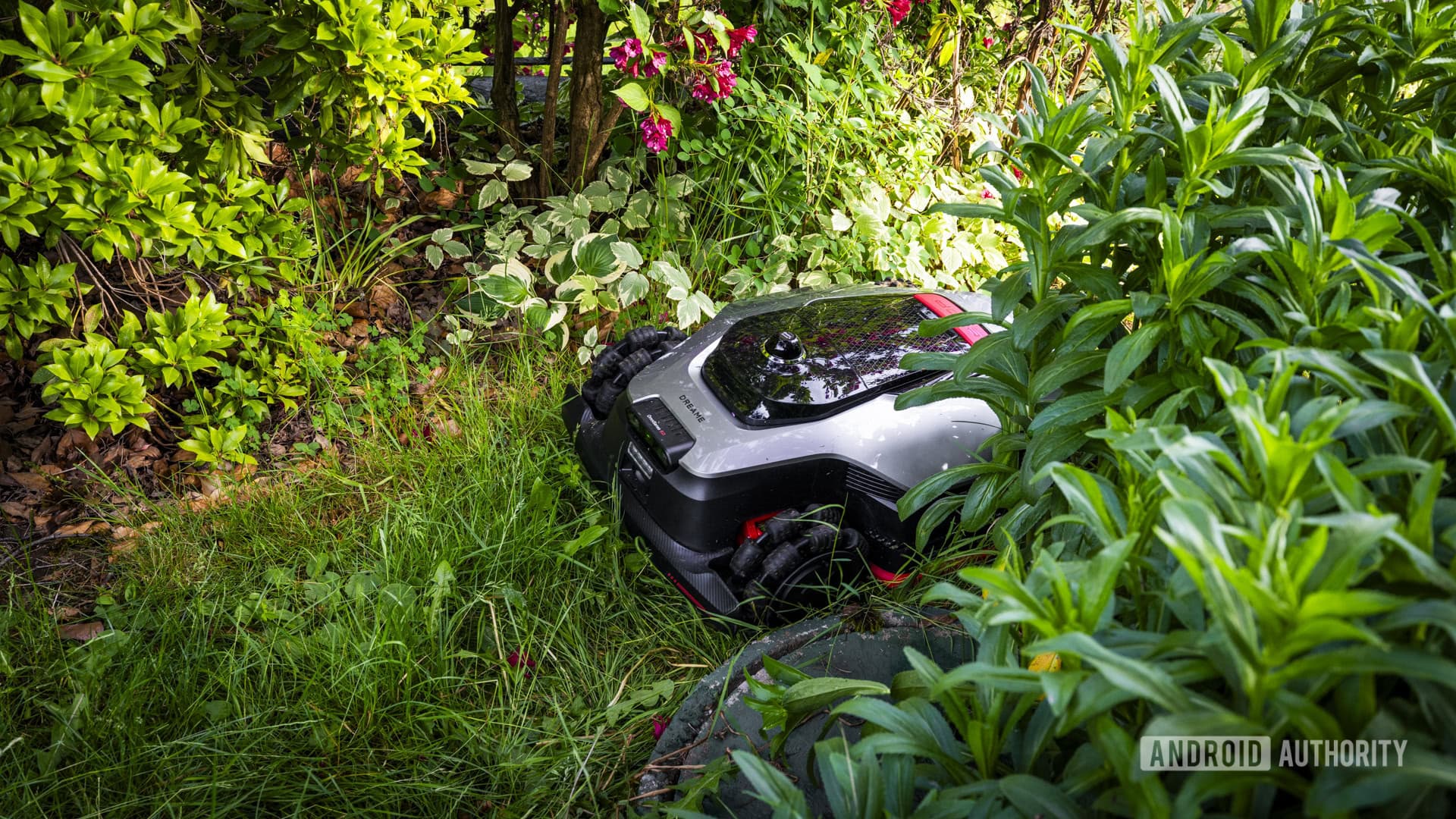
Robot lawn mowers have made the leap from pricey gadgets to truly useful tools. The lineup for 2026 features some of the best autonomous grass-cutters yet. No matter if you have a tiny suburban yard or a large half-acre property, there’s a robot mower that can take care of it all while you relax.
Why You Should Consider Robot Mowers Now
If you’ve dismissed robot mowers in the past as overpriced toys that struggle with flower beds, it’s time to take another look. The latest models utilize GPS for boundary mapping instead of messy perimeter wires. This means you can set them up in just minutes instead of spending an entire afternoon digging. Many of these mowers now connect to your smartphone, allowing you to schedule, reroute, or check in on them from anywhere.
Think of them as Roombas for your lawn. They follow a schedule, automatically return to their charging dock, and trim grass in small, frequent sessions instead of one big weekly cut. This method keeps your grass healthier, as it avoids the shock of a heavy cut and instead maintains the lawn gradually.
How Robot Mowers Function
Modern robot mowers primarily rely on one of two navigation systems. Older and budget-friendly models use a physical boundary wire, a thin cable that you bury just below the soil around your yard’s edge. The mower treats that wire as an invisible fence. Newer and more expensive models use RTK-GPS (Real-Time Kinematic GPS), which pinpoints locations within a few centimeters. You can simply draw your yard’s boundaries on your phone.
The cutting mechanism differs from traditional push mowers. Instead of a single spinning blade, robot mowers feature small, razor-like cutting discs that continually trim the grass tips. This results in a finer, cleaner cut, and the tiny clippings fall back onto the lawn, serving as natural fertilizer and eliminating the task of emptying a bag.
Top Picks for 2026
Best Overall: Dreame A3 AWD 3500
The Dreame A3 AWD 3500 stands out this year with its all-wheel-drive system. This gives it superior traction on slopes up to 75% grade, which is about a 37-degree incline—steeper than most residential yards. It can handle lawns up to 3,500 square meters (around 0.86 acres) and uses GPS navigation without wires. To set it up, just walk the mower around your yard’s perimeter once to map the space, and you’re all set.
Best for Small Yards: Husqvarna Automower 310 Mark II
Husqvarna has been a leader in the robot mower market, and the 310 Mark II is still a top choice for yards under 1,000 square meters (about a quarter acre). It employs the traditional boundary wire system, which works well in yards with various garden features, tight corners, or odd shapes. Husqvarna’s app integration is among the finest available.
Best Budget Option: Segway Navimow i105E
Segway’s foray into robot mowers has lowered prices significantly. The i105E can manage yards up to 500 square meters (about an eighth of an acre) with wire-free navigation. It covers the essentials without a hefty price tag, making it a great entry-level robot mower for those trying it out for the first time.
| Stat | Detail |
|---|---|
| Typical battery runtime per charge | 60–120 minutes |
| Recharge time | 45–90 minutes |
| Slope handling (top models) | Up to 75% grade |
| Max yard size (current top models) | Up to 5,000 sq meters (~1.2 acres) |
| Wire-free GPS accuracy (RTK) | Within 2–3 centimeters |
| Price range (2026 market) | $600 to $4,000+ |
What This Means for Everyday Users
If you currently mow your own lawn, a robot mower can save you around one to two hours each week during the growing season. Over a typical mowing season of 20 weeks, that adds up to 20 to 40 hours of your time each year. The upfront cost can be significant, with entry-level models starting around $600 and larger or more advanced models exceeding $2,000. Still, when you compare it to hiring a lawn service that charges $40 to $80 per visit, the math starts to make sense.
Keep in mind, though, that robot mowers work best in simpler yards. If your yard has many garden beds, trees, or tight spaces, cheaper models might get confused or require careful boundary setup. For yards with complex shapes, plan for extra time to set it up initially and think about choosing a model with wire-free GPS mapping, which handles quirky layouts better than traditional wire systems.
Rain isn’t as much of an issue as it used to be. Most models for 2026 have an IPX5 or higher water resistance rating, meaning they can handle a direct spray from any direction. Many also come with built-in rain sensors that pause mowing during bad weather and automatically resume when it’s clearer.
What Users Are Saying
“I’ve had my Husqvarna Automower for three years, and my lawn genuinely looks better than when I was mowing it myself. Those frequent small cuts really make a difference. The only hiccup was that the initial wire installation took a full Saturday.”
— u/suburbantech_dad, Reddit r/lawncare
“The Dreame A3 handles hills impressively. My backyard has a steep section, and it manages it without slipping. Setting up the GPS mapping took about 20 minutes, and it’s been spot on ever since.”
— YouTube comment on Dreame A3 AWD review, @LawnAndOrderTech
What To Keep an Eye On
- Fall 2026 pricing: Prices for robot mowers usually drop by 10–20% in late summer and fall as the mowing season winds down in the Northern Hemisphere. If you’re not in a hurry, waiting until August or September could save you $100 to $300.
- Wire-free adoption: More manufacturers are eliminating boundary wire requirements in their new models. Expect the remaining wire-based entry-level models to be phased out or discounted through 2026 and into 2027.
- Smart home integration: Several companies have announced upcoming firmware updates for better integration with Matter, a smart home connectivity standard. This will let robot mowers coordinate with weather apps and irrigation systems automatically.
- Source: For full model rankings and detailed reviews, check out Android Authority’s best robot mowers guide.

Daniel Park
Daniel Park covers AI, cloud infrastructure, and enterprise software for Explosion.com. A former software engineer who transitioned to technology journalism 5 years ago, Daniel brings technical depth to his reporting on artificial intelligence, startup funding rounds, and the companies building the future of computing. He breaks down complex AI developments and business strategies into clear, actionable insights for readers who want to understand how technology is reshaping industries.