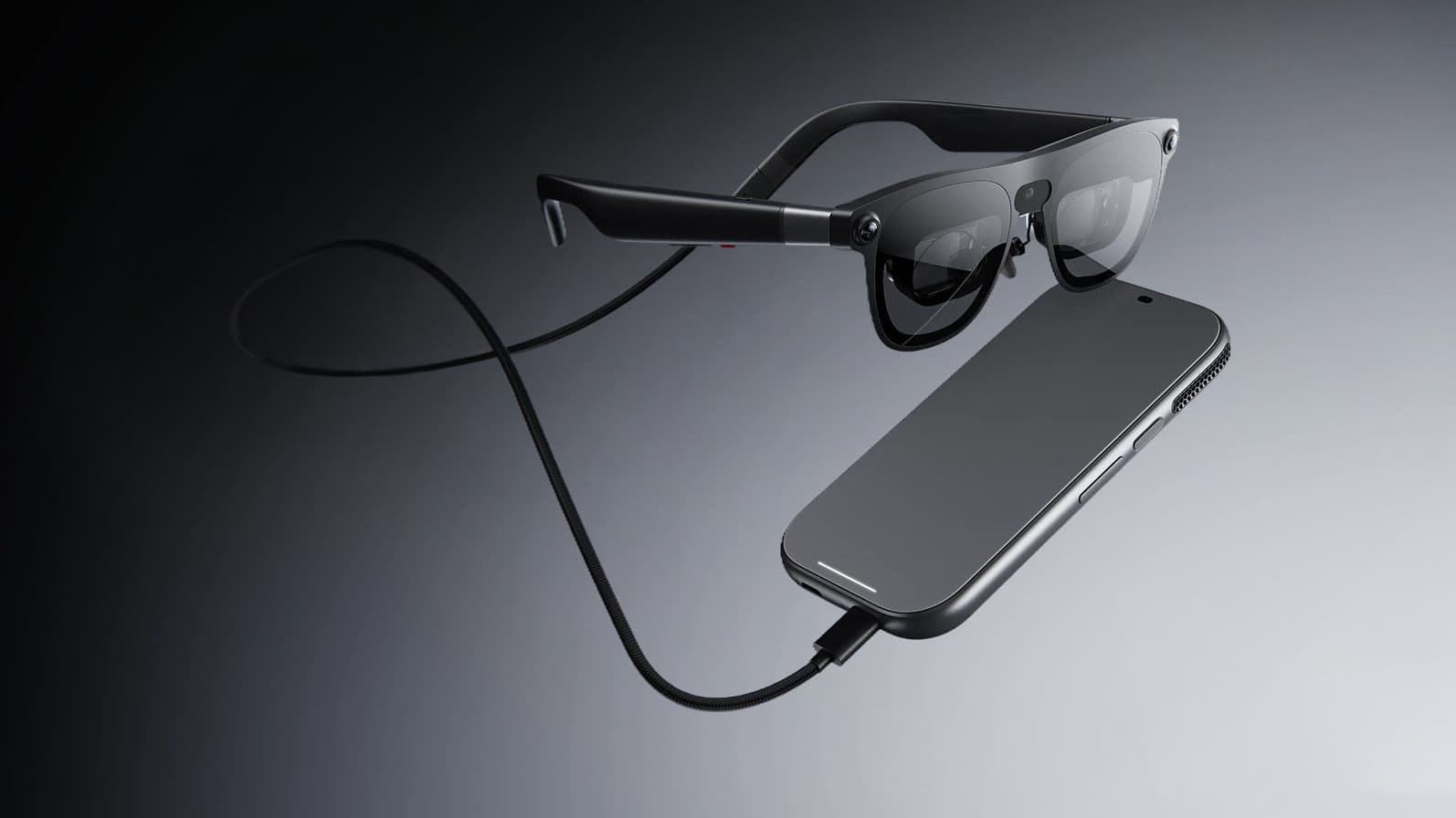
XREAL has officially introduced the Aura, its most ambitious XR glasses yet. These glasses operate on a dedicated chip rather than relying on a connected phone. However, the company hasn’t revealed the price yet, but we can expect details later this year.
What Makes the Aura Different
Most XR glasses on the market today act like a second screen. They connect to your phone or a separate computing device to handle processing. The Aura changes that. It runs on Qualcomm’s Snapdragon Reality Elite chip, which is integrated directly into the frame. This means the glasses function as a fully standalone device.
You can think of it like this: a Chromebook needs a constant internet connection, while a regular laptop works independently. The Aura is the laptop in that comparison.
The glasses operate on Android XR, Google’s OS made specifically for spatial computing. This software is designed for devices where digital content layers over or around the physical world. So, the Aura shares its software family with Samsung’s Galaxy XR headset, which also uses Android XR.
What XREAL Is Actually Telling Us
Along with the announcement, XREAL confirmed some key details. The Aura features the Snapdragon Reality Elite chip, Qualcomm’s latest technology for standalone XR devices. The company is already accepting paid reservations for the device, with a launch planned for later in 2026.
One significant detail is missing from the announcement: the price. This omission is notable for a product in this category. XR glasses can range from a few hundred dollars for basic models to several thousand for advanced spatial computing devices. The Aura’s price will determine if it appeals to a wide audience or remains a niche product.
| Detail | Info |
|---|---|
| Chip | Qualcomm Snapdragon Reality Elite |
| Operating System | Android XR |
| Connection Required | No — fully standalone |
| Price | Not announced |
| Reservations | Open now (paid) |
| Launch Window | Later in 2026 |
Why Android XR Matters Here
Google’s Android XR platform is still in its early stages, but it’s quickly becoming the go-to for non-Apple spatial computing hardware. By choosing Android XR, XREAL is banking on developers creating apps for this platform instead of building software just for XREAL’s ecosystem. This choice also means the Aura should work seamlessly with Google services like Maps, YouTube, and Assistant.
Samsung’s upcoming XR headset will also use the same software. This means any apps created for that device should be compatible with the Aura, and vice versa. This shared app library could be crucial for the practical usefulness of these glasses.
What This Means
If you’ve been following the XR glasses market, the Aura marks a significant move toward glasses that don’t need a phone in your pocket. For everyday users, this means fewer cables, fewer devices to juggle, and a more straightforward setup. Just put them on, and they work.
The downside? We still don’t know what “they work” will cost. Paid reservations are available, but committing before the final price is a bit of a risk. Most people might want to wait for the complete announcement, which XREAL has indicated is coming later this year, before making a reservation.
If the Aura is priced reasonably, it could compete well with phone-connected glasses like XREAL’s earlier models. It could also pressure Samsung’s Android XR headset to justify a higher price tag. On the other hand, if it comes in at a premium, it may join the ranks of impressive but unaffordable XR hardware.
Community Reactions
“The fact that it runs standalone is huge. My biggest complaint with my Air 2s is needing my phone or the beam. If the price is reasonable, this could actually be it.”
“No price at launch is either a really bad sign or they’re waiting to undercut Samsung. Either way, I’m not putting a reservation down blind.”
What To Watch
- The price reveal: XREAL has indicated full details will arrive later in 2026. This announcement will determine if the Aura is aimed at early adopters or has broader appeal.
- Android XR app library growth: The more developers create for Android XR, the more valuable the Aura will be at launch. Keep an eye out for follow-up announcements from Google I/O regarding developers.
- Samsung’s XR headset timeline: Samsung’s Android XR device is also expected in 2026. If it launches first, it could influence how XREAL prices the Aura to stay competitive.
- Reservation details: If you’re interested, paid reservations are open now. Just be sure to read the fine print on refund policies before committing without a confirmed price.
Sources: Android Authority | Engadget

Ava Mitchell
Ava Mitchell is a digital culture journalist at Explosion.com covering social media platforms, streaming services, and the creator economy. With 4 years reporting on TikTok, Instagram, YouTube, and the apps that shape daily life, Ava specializes in explaining platform policy changes and their impact on everyday users. She previously managed social media strategy for a tech startup, giving her firsthand experience with the platforms she now covers.