A new AI-powered sleep system named Kimba doesn’t just inform you about your sleep quality — it actively works to improve it by releasing personalized scents into your bedroom as you drift off. On a different note, a wearable called the Jaye Band is addressing the other half of the sleep issue: your smartphone.
What Is Kimba, Exactly?
Kimba is a bedside device that connects to a companion app, analyzing your sleep patterns and releasing specific fragrances at timed intervals throughout the night. Imagine it as a smart diffuser (a gadget that disperses scented mist into the air) that’s been equipped with a brain.
This idea stems from a legitimate area of sleep science known as olfactory conditioning — where your brain learns to associate specific smells with certain states, like relaxation or alertness. While lavender has long been recognized as a sleep aid, Kimba takes it further by using AI to tailor scent combinations that work best for you, based on how your body reacts over time.
The system learns from your sleep data each night, tweaking both the timing and the scent mix. If a particular fragrance helps you reach deep sleep faster, the AI emphasizes it. If something isn’t effective, it adjusts accordingly.
The Jaye Band: Tackling Sleep From the Other Direction
While Kimba optimizes what happens after you close your eyes, the Jaye Band focuses on what happens beforehand — specifically, the scrolling, notifications, and phone-related anxiety that keep many people awake.
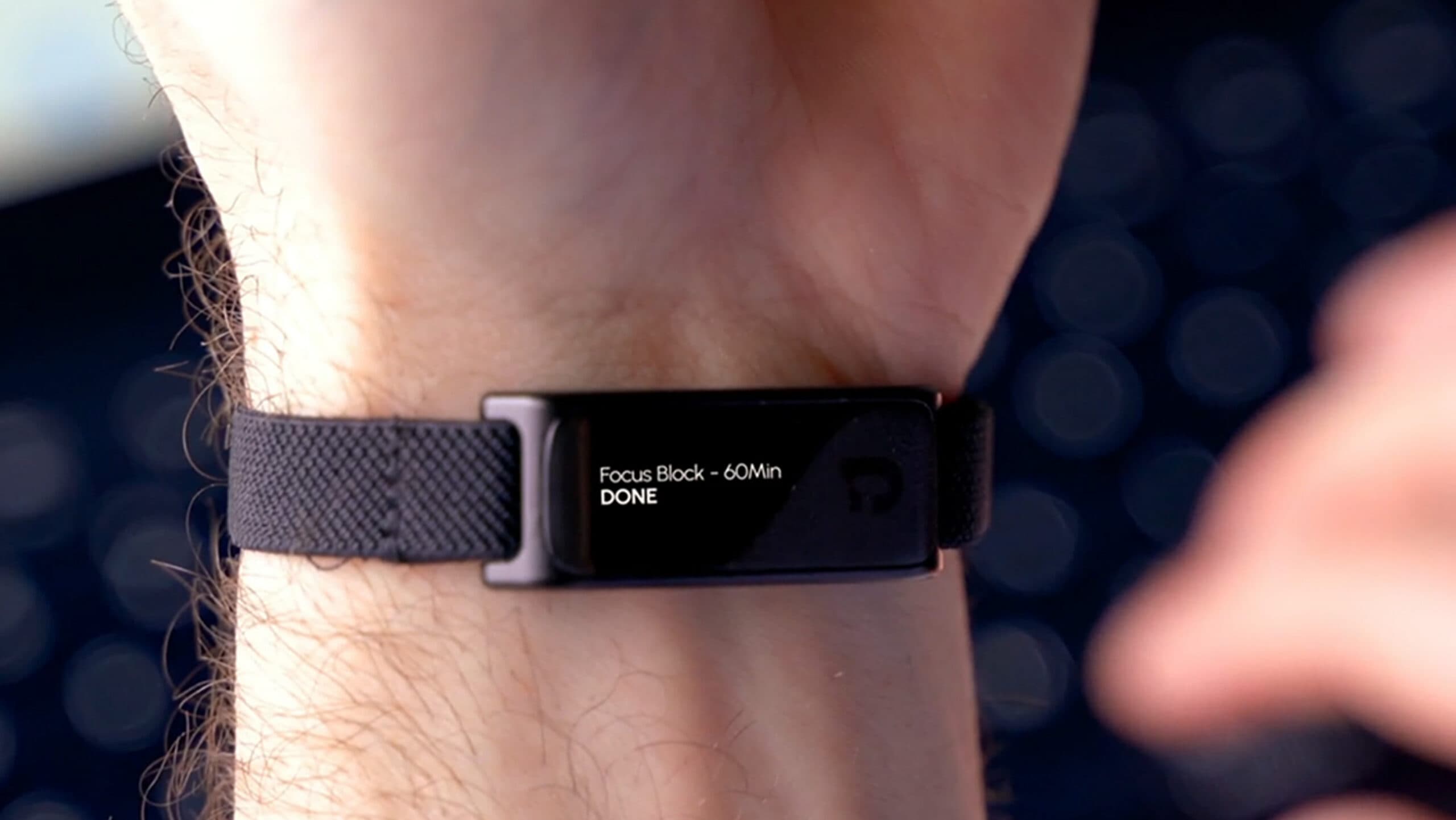
Launched in mid-June 2026, the Jaye Band is a wrist-worn device that filters notifications. Instead of syncing with every app on your phone and buzzing your wrist nonstop, it allows you to set specific “focus windows” and only displays alerts you’ve pre-approved as important. No social media notifications, no breaking news alerts, and no algorithmic interruptions.
This approach contrasts with how most smartwatches operate. While an Apple Watch or Galaxy Watch brings your phone to your wrist, the Jaye Band aims to create some distance. It doesn’t support third-party apps, doesn’t track fitness metrics beyond basic movement, and intentionally keeps its features limited.
According to Android Authority’s coverage of the launch, the product’s design philosophy can be summed up as “less is more.”
Why Two Products Are Tackling the Same Problem
Sleep deprivation is a growing public health concern. The CDC estimates about 1 in 3 American adults don’t get enough sleep regularly. Kimba and the Jaye Band stand out because they address different stages of the same issue: pre-sleep phone use disrupts your ability to fall asleep. Then, while you’re asleep, poor sleep architecture (how your sleep cycles are structured, including deep and REM sleep) means you don’t fully benefit, even when you do manage to fall asleep.
Kimba focuses on the second half. The Jaye Band covers the first.
| Stat | Detail |
|---|---|
| Adults with insufficient sleep (US) | ~1 in 3, per CDC data |
| Kimba launch | 2026, AI-personalized scent system |
| Jaye Band launch | June 16, 2026 |
| Jaye Band third-party apps | 0 — deliberately none supported |
| Kimba scent personalization | Adapts nightly based on sleep response data |
What This Means for Everyday Users
If you’ve ever woken up after eight hours and still felt tired, or found yourself reaching for your phone at midnight despite knowing better, these products are for you.
Kimba is the more experimental option. Scent-based sleep technology is still somewhat niche, and many people aren’t used to thinking of their bedroom air as something to optimize. However, the science behind it isn’t fringe — aromatherapy has clinical support for relaxation, and AI personalization is a real improvement over just plugging in a lavender diffuser and hoping for the best.
The Jaye Band, on the other hand, asks less from you conceptually but more behaviorally. Wearing a device designed to keep you away from certain information requires a commitment that some might find challenging. You’re essentially paying for a feature your phone could theoretically replicate with Focus Mode settings. The key difference is that the Jaye Band makes the friction physical and intentional.
Neither product guarantees a fix. Still, they indicate a change in how consumer tech views sleep: not just as something to measure but as something to actively engineer.
What People Are Saying
“Honestly if this scent thing actually works I’d try it. I’ve done everything else and my sleep is still terrible. Melatonin, white noise, blue light glasses — at this point, spray whatever you want at me.”
“The Jaye Band is interesting but you’re literally paying money to have fewer features. I get the philosophy but that’s a hard sell when a used Fitbit does more for $30.”
What To Watch
- Kimba pricing and availability — The product has been announced, but details about retail availability are still emerging. Keep an eye out for pre-order windows and whether scent refill subscriptions will become part of the business model.
- Jaye Band reviews — Early coverage from Android Authority launched June 16, 2026. Independent reviews from sleep-focused outlets will really test whether the notification filtering changes behavior.
- Clinical data — Both products would greatly benefit from third-party sleep study validation. Any peer-reviewed findings on scent-based AI sleep systems could significantly boost adoption.
- Competitor responses — If either product gains traction, expect Fitbit, Oura, and Samsung Health to look into similar features. Samsung’s Galaxy Ring already monitors sleep passively — adding environmental controls would be a natural next step.
Sources: Android Authority — Jaye Band Launch Coverage | CNET — Kimba AI Sleep System Explainer

Daniel Park
Daniel Park covers AI, cloud infrastructure, and enterprise software for Explosion.com. A former software engineer who transitioned to technology journalism 5 years ago, Daniel brings technical depth to his reporting on artificial intelligence, startup funding rounds, and the companies building the future of computing. He breaks down complex AI developments and business strategies into clear, actionable insights for readers who want to understand how technology is reshaping industries.