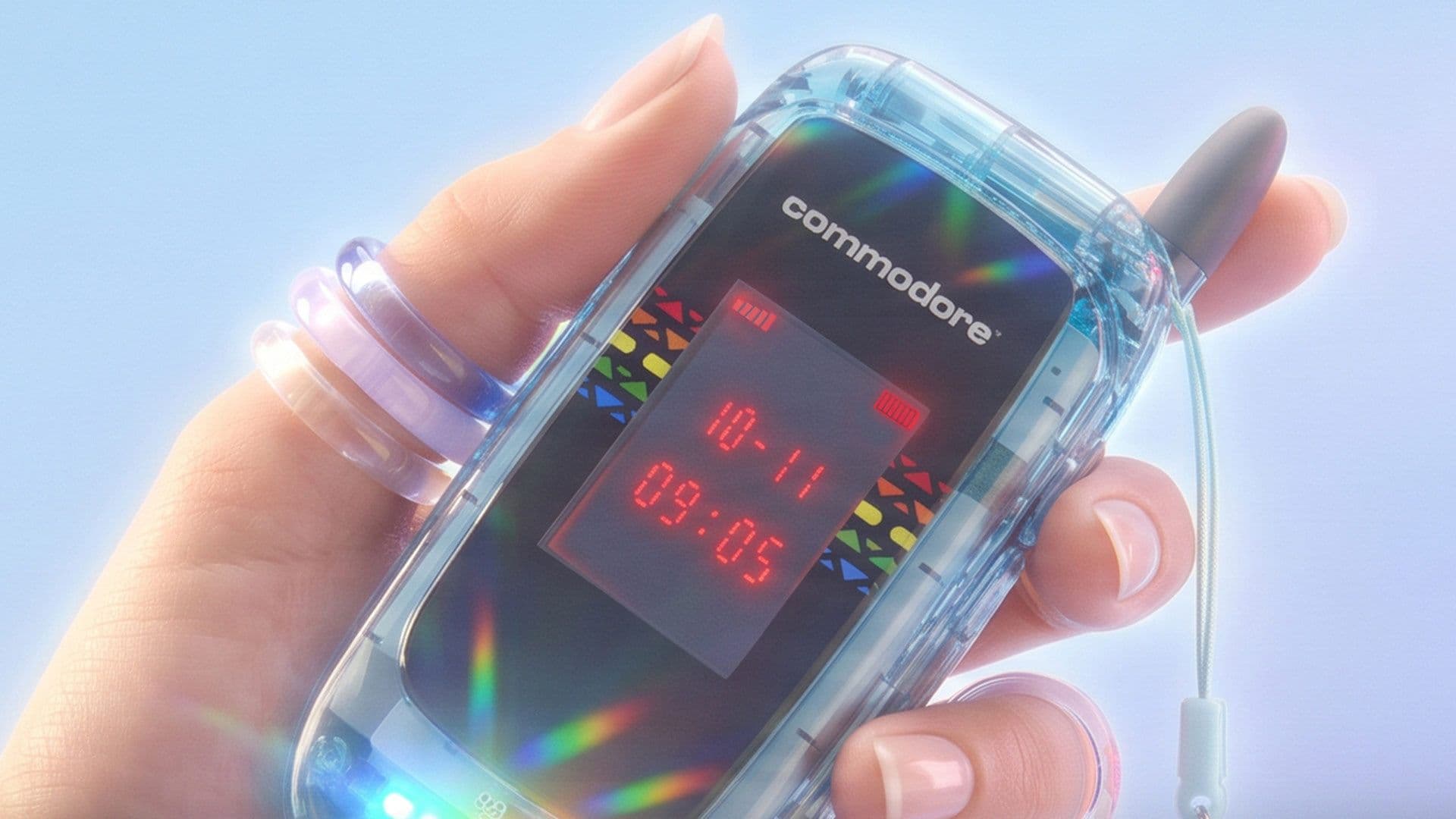
Commodore has introduced the Callback 8020, a Linux-based flip phone that intentionally blocks social media and web browsing. It still runs 99% of Android apps and starts at $499.
This device aims to push back against the attention-driven model that dominates today’s smartphones. Commodore, known for its classic home computers from the 1980s, describes the Callback 8020 as a phone “where the customer is not the product.” This statement directly targets ad-supported platforms that profit from tracking user behavior and keeping them engaged.
What Exactly Is the Callback 8020?
The Callback 8020 features a clamshell design, folding in half, and runs on a custom Linux-based operating system instead of standard Android or iOS. Using Linux means it relies on open-source software, which isn’t controlled by any single corporation. This gives Commodore the ability to remove unwanted features—specifically social media apps and traditional web browsers.
Imagine buying a car that’s designed without a radio. You still get a fully functional vehicle, just without that one specific distraction.
Even with these limitations, Commodore insists the phone supports 99% of Android apps through a compatibility layer. This software allows Android apps to run on non-Android systems, similar to some Windows applications running on a Mac. So, your banking app, maps, podcast players, and productivity tools should work perfectly—just no Instagram, TikTok, or Chrome.
Five Retro Colorways
Commodore is embracing its nostalgic roots with the Callback 8020, which will come in five retro color options. However, the company hasn’t revealed all the colors at the launch announcement. The starting price is set at $499, placing it in the same range as mid-tier Android phones, but well below flagship prices.
| Detail | Spec |
|---|---|
| Starting Price | $499 |
| Operating System | Linux-based (custom) |
| Android App Compatibility | 99% |
| Form Factor | Flip / Clamshell |
| Color Options | 5 retro colorways |
| Social Media Apps | Blocked by design |
| Web Browser | Blocked by design |
Why Would Anyone Want This?
The market for “dumb-ish” phones has been growing quietly for years. Devices like the Light Phone and various minimalist models have attracted users who feel their smartphones are more of a burden than a help. Studies show adults average over four hours of daily phone use, with a significant portion spent on social media.
The Callback 8020 is aimed at people who want to quit social media and reduce excessive browsing but don’t trust themselves to do it with just app blockers or willpower. By embedding these restrictions at the hardware and OS level, Commodore makes it tougher to fall back into old habits. It’s like the difference between keeping cookies in a cabinet and simply not buying them.
The Linux base also appeals to privacy-conscious users. Typical Android phones come with Google services that collect usage data. A custom Linux build can be set up to share much less.
What This Means for Everyday Users
If you’ve tried every app-blocking tool and still find yourself scrolling through Twitter at 11 p.m., the Callback 8020 offers a hardware-based solution. You can still make calls, send texts, use maps, listen to music and podcasts, manage your calendar, and handle banking—just without the endless-scroll apps that many find hardest to put down.
The flip phone design adds a practical element too. Closing the phone feels more satisfying and intentional than just pressing a power button, which might help reinforce the habit of actually putting it away.
The $499 price tag raises some eyebrows. That’s a significant amount for a device defined partly by what it can’t do. For comparison, you can find basic Android smartphones for under $200, and there are free app-blocking solutions for all platforms. Commodore is betting that enough people will pay extra for built-in restrictions they can’t easily bypass.
Community Reactions
“Finally. I’ve deleted Instagram four times. I need something that physically won’t let me reinstall it.”
— u/quietphone_guy, Reddit r/minimalism
“$499 to not have a browser feels insane when you can just… not open your browser? But I get it. Some people need the training wheels built into the bike.”
— YouTube commenter on Linus Tech Tips Shorts, @techskeptic88
What To Watch
- Full specs release: Commodore hasn’t yet shared details about the processor, battery, camera, or display. These specs will help determine if $499 offers good value or is a tough sell.
- Android compatibility testing: The 99% app compatibility claim will be closely examined once reviewers get their hands on the device. Apps that depend on Google Play Services may face challenges running on non-Android systems.
- Pre-order and availability dates: No shipping date has been confirmed yet. Keep an eye on Commodore’s official channels for pre-order announcements.
- Competitor response: The Light Phone and other minimalist devices might adjust their pricing or features as Commodore gains more recognition in this space.
Sources: Tom’s Hardware | Ars Technica

Ava Mitchell
Ava Mitchell is a digital culture journalist at Explosion.com covering social media platforms, streaming services, and the creator economy. With 4 years reporting on TikTok, Instagram, YouTube, and the apps that shape daily life, Ava specializes in explaining platform policy changes and their impact on everyday users. She previously managed social media strategy for a tech startup, giving her firsthand experience with the platforms she now covers.