
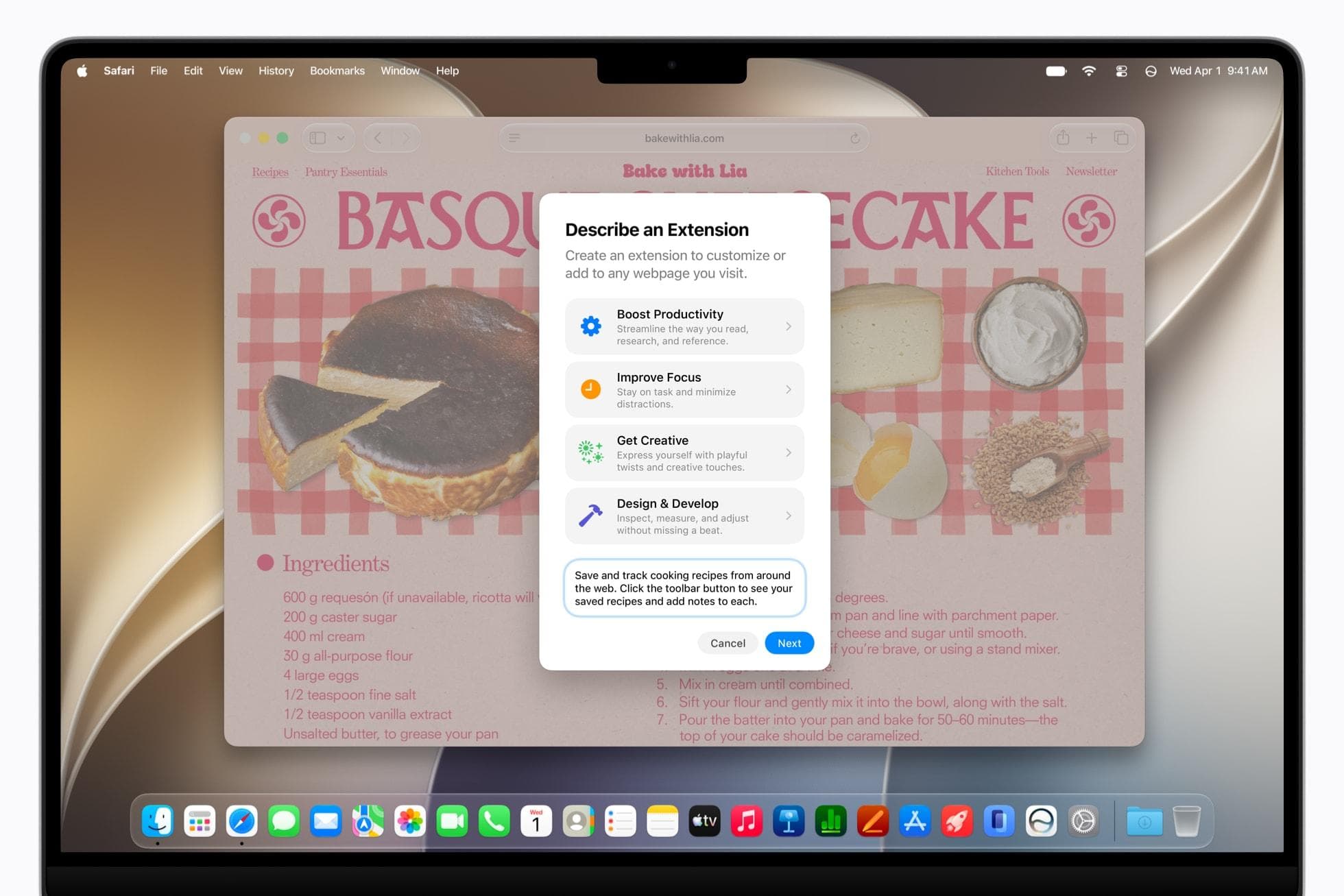
Apple is addressing a long-standing issue with Safari by allowing users to create their own browser extensions using AI, no coding skills needed. This new feature, announced as part of Apple’s recent software updates, enables Safari users to describe the desired functionality of an extension in plain English, and Apple’s AI generates it automatically.
| Apple (AAPL) — By The Numbers | |
|---|---|
| Stock Price | $291.13 (−1.52%) |
| CEO | Tim Cook |
| Headquarters | Cupertino, CA |
| Founded | 1976 |
| Sector | Big Tech |
Why Safari Has an Extension Problem
If you’ve ever switched from Chrome to Safari and found that a useful browser add-on was missing, you’ve experienced this issue. Browser extensions are small programs that enhance your browser with features like ad blockers, password managers, or tools that reformat web pages. Chrome boasts tens of thousands of these extensions, while Safari has far fewer.
The problem arises from Apple’s strict development guidelines. Historically, creating a Safari extension required more technical knowledge than making one for Chrome or Firefox. As a result, many developers opted out of building for Safari entirely. Consequently, Safari users have faced a limited selection of options, even as the browser has become more capable.
Apple’s AI Fix: Just Describe What You Want
Apple’s answer simplifies the process by essentially removing the developer from the equation. In a demo shared before the update, Apple showcased users typing a plain-English request for an extension, and the AI generated it instantly. It’s like asking a tech-savvy friend to code a small program for you, but this friend lives in your browser.
This technique is sometimes referred to as “vibe coding,” where AI creates working software based on informal descriptions instead of detailed technical specifications. Apple is bringing this concept to everyday Safari users.
The practical benefits are clear. A user wanting Safari to hide a particular annoying element on a website, or to reformat article pages for easier reading, could potentially whip up that tool in minutes without writing a single line of code.
Siri Gets Its Own App, Too
The Safari update isn’t the only change. Apple is also giving Siri its own dedicated app, as reported by TechCrunch. This marks a shift from Siri’s current role as a background feature activated by voice or button press. A dedicated app suggests that Apple wants users to interact with Siri more actively, making it feel like a tool rather than just a hidden shortcut.
Both the Safari extension feature and the new Siri app reflect a broader strategy: Apple is integrating AI more deeply into its software. It’s not just a behind-the-scenes helper; it’s something users can engage with directly to accomplish tasks.
This aligns with a trend we’ve been observing. Earlier this month, Apple also revamped Safari’s search interface and introduced new AI-assisted capabilities across iOS. This suggests Apple is weaving AI into its core apps ahead of a major software release cycle.
What This Means for Everyday Users
For most Safari users, the immediate takeaway is that the browser is about to become much more customizable without needing technical expertise. If there’s something about your browsing experience that’s always bugged you, and no existing extension fixes it, you might soon be able to describe the solution and let Apple’s AI take care of the rest.
In the bigger picture, Apple is trying to catch up with Chrome, which has dominated desktop browsing partly due to its extensive extension library. Safari has made strides on mobile devices, being the default browser on iPhones and iPads, but it has struggled to lure users away from Google’s browser on desktop. Enhanced extension support, even if AI-generated rather than developer-created, could significantly benefit users who have clung to Chrome mainly for its add-ons.
Quality and security remain important questions. Extensions crafted by professional developers typically undergo review processes. AI-generated extensions made by individual users in real time will need some form of sandboxing. This security technique limits what a program can access on your device, ensuring that a poorly described extension doesn’t cause unintended issues. Apple hasn’t clarified how it plans to tackle this yet.
Community Reaction
“This is actually huge for Safari. The extension gap has been my only reason for keeping Chrome installed. If I can just make my own, that’s Chrome gone.”
— u/pacific_rim_dev, Reddit
“Cool idea but I want to know who’s reviewing these AI-generated extensions before they run in my browser. That’s the part Apple needs to explain.”
— YouTube comment on Apple’s WWDC coverage
What To Watch
- WWDC follow-up details: Apple usually releases developer documentation after its keynotes, offering technical details on how AI-generated extensions will be reviewed and sandboxed. Keep an eye out for that to address security concerns.
- Public software release: Expect these features to roll out in the fall iOS and macOS updates. Beta versions for developers and public testers should be available soon.
- Siri app rollout: Now that Siri has a dedicated app, look for Apple to explain its new capabilities compared to the old version and how it stacks up against competitors like Google Gemini on Android.
- Developer response: If AI-generated extensions gain traction, traditional Safari extension developers may either adapt or push back. Their response could influence how Apple refines this feature.

Daniel Park
Daniel Park covers AI, cloud infrastructure, and enterprise software for Explosion.com. A former software engineer who transitioned to technology journalism 5 years ago, Daniel brings technical depth to his reporting on artificial intelligence, startup funding rounds, and the companies building the future of computing. He breaks down complex AI developments and business strategies into clear, actionable insights for readers who want to understand how technology is reshaping industries.


