
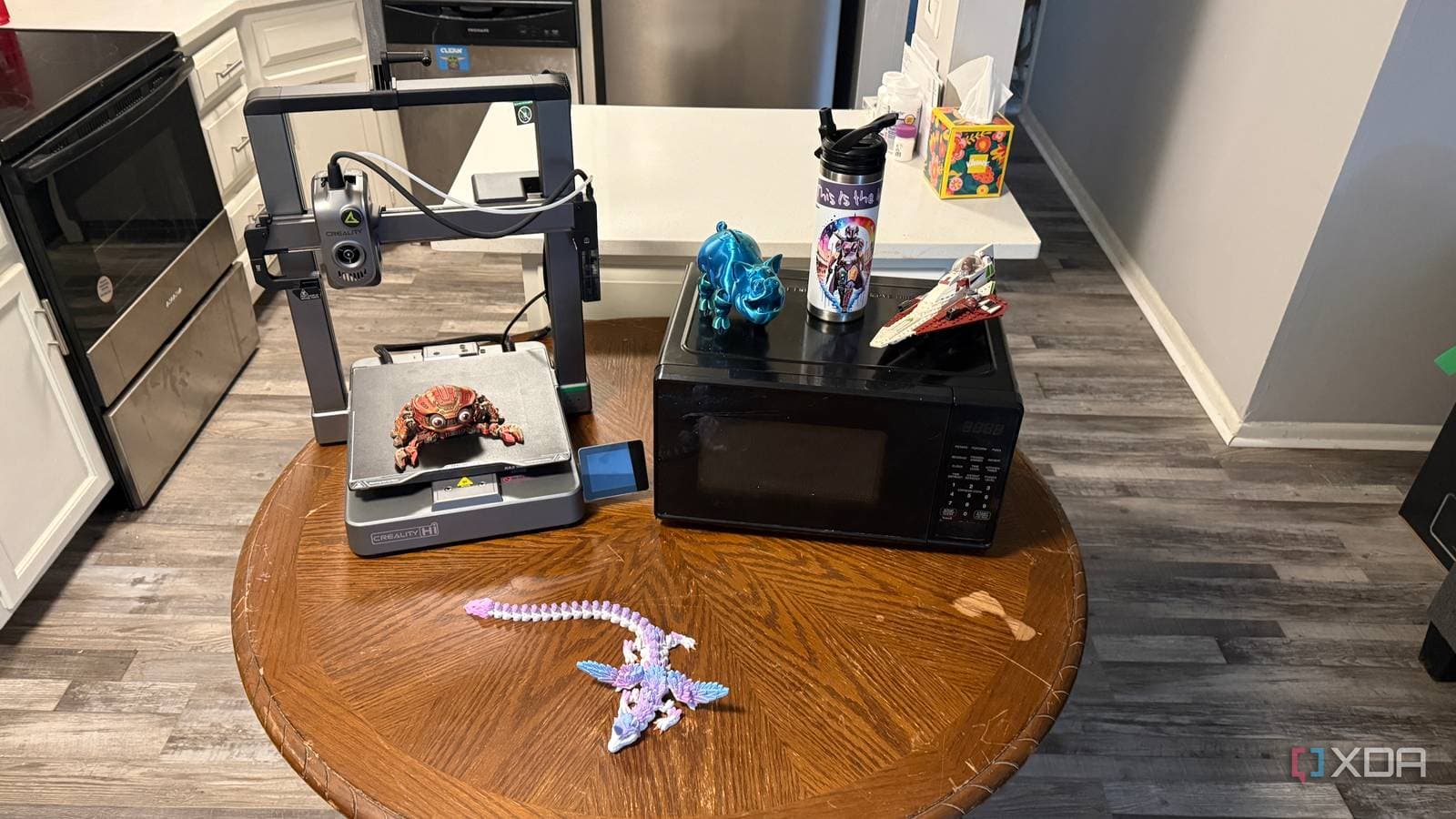
A 3D printer isn’t just a gadget for enthusiasts — for many, it’s become an essential repair tool at home. It can replace broken plastic parts that would otherwise push perfectly good devices to the landfill.
From Hobby Machine to Repair Powerhouse
Most folks who buy a 3D printer imagine creating figurines or phone stands. They don’t expect to use it every time a plastic clip breaks, a hinge snaps, or a manufacturer stops selling spare parts for an older product.
This scenario plays out for an increasing number of users. As an article from XDA Developers highlighted, the printer transitions from a hobby machine to the go-to repair tool for everyday issues. Picture it as a mini factory right on your desk, capable of producing a custom replacement part in under an hour, tailored to your exact needs.
The real advantage here isn’t just speed or cost, though those are nice perks. It’s about availability. When a dishwasher handle breaks, or the plastic bracket in your car’s interior falls apart, the part might not be available online or could cost more to ship than it’s worth. A 3D printer completely bypasses that issue.
What a 3D Printer Actually Does (Plain English)
If you haven’t used one yet, a 3D printer builds objects layer by layer from melted plastic filament, similar to how an inkjet printer lays down ink. It takes a digital design file and creates a physical object. Most home printers use a method called FDM — Fused Deposition Modeling. This means a heated nozzle traces shapes in thin layers of plastic, gradually building up a complete part from the bottom.
The filament (that spool of plastic wire feeding into the printer) comes in various materials. Standard PLA plastic works for most household repairs. PETG, a tougher and slightly flexible plastic like what water bottles are made from, is great for parts needing extra strength. For mechanical components facing heat or friction, ABS and nylon are better choices.
The Repair Use Cases That Actually Matter
Let’s get practical. Here are some of the most common repairs people tackle at home:
- Appliance knobs and clips — Stove knobs, washing machine buttons, and refrigerator shelf brackets are among the most sought-after parts on community design sites like Printables and Thingiverse.
- Cable management and mounts — Custom brackets that hold cables in place or mounts for a specific TV model that’s no longer available.
- Furniture hardware — Replacement cam locks (the small rotating fasteners used in flat-pack furniture) and shelf pin holders.
- Tech accessories — Battery door replacements, tripod adapters, and cases for older gadgets that you can’t find commercially anymore.
These examples all share a common thread: plastic parts that break, are no longer produced, and are too inexpensive for a repair shop to bother with — yet are too important to simply discard.
What This Means for Everyday Users
If you’ve ever tossed a product because one small plastic piece failed, a 3D printer solves that issue. The math changes quickly when you view it as a repair tool instead of a hobby device. Entry-level printers from brands like Bambu Lab, Creality, and Prusa now start at around $200 to $300, and a kilogram of PLA filament (enough for hundreds of small parts) costs about $20.
The learning curve exists, but it’s manageable. You can find pre-made designs on free community sites in just minutes. Printing a small part can take anywhere from 20 minutes to a few hours, depending on its size. You don’t need to design anything from scratch — most common household repair parts are already available as free downloads, shared by others who faced the same issues.
The bigger picture here is about repairability — the belief that people should be able to fix their belongings instead of just replacing them. As manufacturers move away from user-serviceable parts, home 3D printing fills a gap the market isn’t addressing.
| 3D Printing By The Numbers | |
|---|---|
| Entry-level printer cost | ~$200–$300 |
| 1kg PLA filament spool cost | ~$20 |
| Free designs on Printables.com | 3+ million |
| Typical small part print time | 20 min – 3 hours |
| Most common repair material | PLA / PETG filament |
What the Community Is Saying
“I bought my Bambu A1 Mini thinking I’d print minis for D&D. I haven’t printed a single mini. I’ve printed 4 appliance parts, 2 cable clips, and a replacement foot for my monitor stand.”
— u/Ferrofluid_Dreams, r/3Dprinting
“The moment it clicked for me was when my vacuum’s attachment holder broke and the manufacturer wanted $35 plus shipping for a piece of plastic I printed in 40 minutes for about 12 cents.”
— YouTube commenter on a 3D printing repair tutorial, 2024
The Limits Worth Knowing
A home 3D printer isn’t a universal fix. Printed plastic parts struggle with continuous high heat — don’t expect a PLA bracket to survive inside a car on a hot summer day. Parts under heavy mechanical stress might fail at the layer lines where plastic bonded during printing. While finding existing designs is easy, creating a custom part from scratch requires learning CAD software (like Fusion 360 or TinkerCAD), which has its own challenges.
For electronics repairs, circuit boards, and anything needing precision tolerances measured in fractions of a millimeter, a consumer printer won’t suffice. However, for the wide range of “plastic thing broke and I can’t find a replacement,” it’s hard to beat.
What To Watch
- Bambu Lab’s entry-level lineup is expected to grow in late 2025, possibly pushing capable printers below the $200 mark for the first time.
- Right-to-repair legislation in the US and EU is advancing through 2025 and 2026 — if passed in more states, it could encourage manufacturers to make spare parts easier to find, complementing home printing.
- AI-assisted design tools from companies like Autodesk are simplifying the process for non-technical users to create custom parts from photos or measurements, which could lower the barrier for those wanting to print parts that aren’t already available as downloads.
Sources: XDA Developers — My 3D printer is the repair tool I couldn’t live without

Ava Mitchell
Ava Mitchell is a digital culture journalist at Explosion.com covering social media platforms, streaming services, and the creator economy. With 4 years reporting on TikTok, Instagram, YouTube, and the apps that shape daily life, Ava specializes in explaining platform policy changes and their impact on everyday users. She previously managed social media strategy for a tech startup, giving her firsthand experience with the platforms she now covers.


