Tesla’s Full Self-Driving Package Arrives in China After Delays
Tesla has officially rolled out its Full Self-Driving (FSD) package in China. This suite of advanced driver assistance features marks a big step into one of the world’s largest electric vehicle markets. After years of navigating regulatory challenges, Tesla is now poised to compete more effectively with local EV manufacturers that have been rapidly advancing their own autonomous technologies.
What is Full Self-Driving (FSD)?
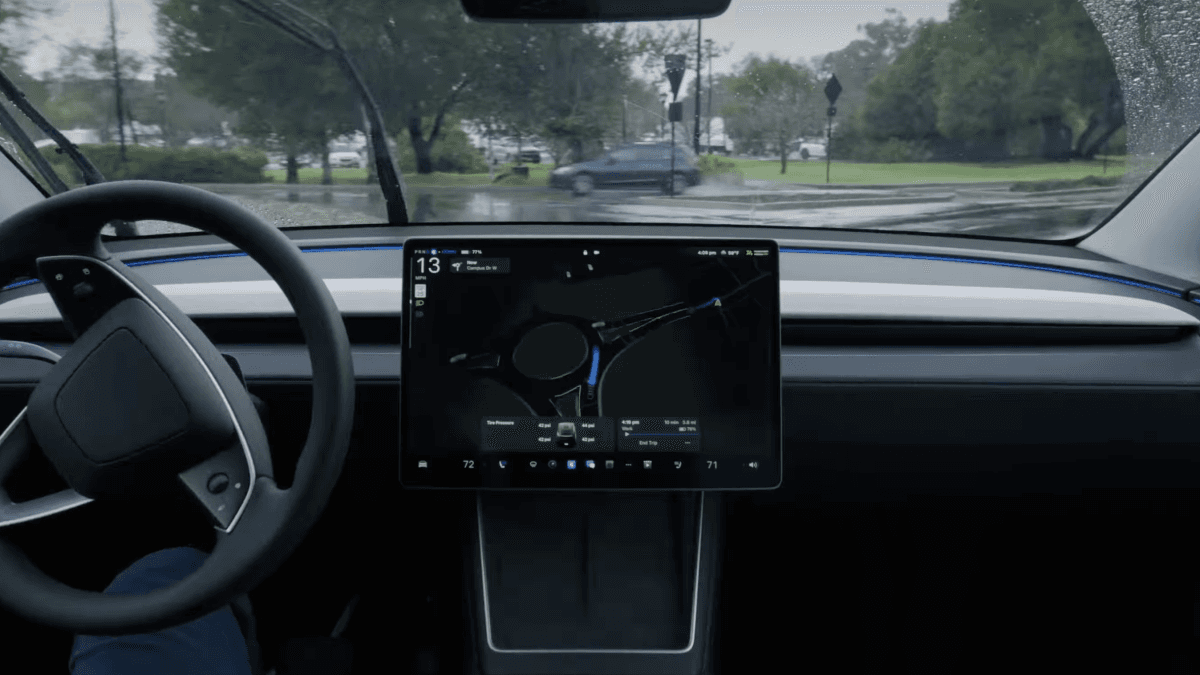
Despite its ambitious name, Tesla’s FSD isn’t a fully autonomous system that lets a car drive itself without any human input. Rather, it’s a set of advanced driver assistance systems (ADAS) designed to help with tasks like highway navigation, lane changes, parking, and stopping at traffic lights and stop signs. Think of it as a highly skilled co-pilot that still needs your attention and readiness to take control.
The system utilizes a network of cameras and sensors around the vehicle, along with powerful onboard computers and artificial intelligence, to understand its surroundings and make driving decisions. FSD has been available in markets like North America for years, but its launch in China faced unique challenges, especially regarding data collection, mapping, and regulatory approvals. Mashable reports that this launch helps Tesla catch up with local competitors in the autonomous driving arena.
Years in the Making: Overcoming Regulatory Hurdles
The launch of FSD in China has been a long-awaited event. Tesla CEO Elon Musk has been hinting at its arrival for years. The delay wasn’t just about technical issues; China has strict regulations regarding data privacy and mapping, especially for foreign companies. Vehicles in China often need to store all generated data on local servers, and mapping data usually requires collaboration with domestic partners.
These requirements are vital for national security and data sovereignty, and navigating them took extensive negotiation and adaptation from Tesla. The approval for FSD suggests Tesla has either met these regulations or found a compliant framework, likely in partnership with a local entity. Engadget highlighted these regulatory delays as a major reason for FSD’s late entry into the Chinese market.
| Metric | Details |
|---|---|
| FSD Price (Estimated) | ~64,000 Chinese Yuan (~$8,800 USD) or subscription |
| Years of Delay | Several years compared to North American rollout |
| Key Market | China, world’s largest EV market |
| Competitors in China | BYD, Nio, Xpeng, Li Auto (all with advanced ADAS) |
What This Means for Everyday Users
For Tesla owners in China, FSD means a more advanced driving experience. Features like automatic lane changes, navigation on city streets, and enhanced parking assist could make daily commutes smoother and less stressful. Imagine your car adjusting speed for curves, signaling and changing lanes for you on the highway, or navigating complex intersections with traffic lights and stop signs.
However, users must understand that FSD requires active driver supervision. You can’t just set a destination and relax. Drivers need to stay attentive, with their hands on the wheel, ready to step in at any moment. While FSD aims to reduce driver fatigue and enhance safety, it also adds a new kind of cognitive load: monitoring an AI driver. The real-world performance will largely depend on how well the system adapts to China’s unique and often dynamic road conditions, which can differ greatly from those in North America.
Community Reactions
“Finally! Been waiting for FSD to drop in China. Curious to see how it handles our city traffic, especially the scooters and pedestrians. Hope it’s not just for highways.”
— u/DragonDriver_86 on Reddit
“The price is still steep, even if it’s a subscription. Local brands like Xpeng already have pretty good ADAS features for less. Tesla needs to prove its FSD is better to justify the cost here.”
— TechEnthusiast_CN on YouTube comments
What To Watch
The rollout of FSD in China is just the start. Here are a few things to keep an eye on:
- Performance and Adaptation: How well FSD performs on China’s diverse roads—from bustling megacities to rural areas—will be crucial. Tesla will need to gather data quickly and refine its algorithms to handle local driving conditions.
- Local Competition: Chinese EV makers like Xpeng, Nio, and Li Auto have heavily invested in their own advanced driver assistance systems, tailored for Chinese road conditions. Tesla’s FSD will face tough competition, and its perceived superiority (or lack thereof) will affect its market share.
- Regulatory Evolution: China’s regulations around autonomous driving are constantly changing. Any updates could impact FSD’s capabilities or require further adjustments from Tesla.
- Pricing Strategy: The initial pricing of FSD, whether as a one-time purchase or a subscription, will significantly influence its adoption. Tesla might try different tiers or bundles to attract more users.
The arrival of FSD in China marks a major step for Tesla’s global ambitions and the broader advancement of driver assistance technology in this vital market. Its success will rely not just on technical skill but also on how well it integrates into a unique regulatory and cultural landscape.

Ava Mitchell
Ava Mitchell is a digital culture journalist at Explosion.com covering social media platforms, streaming services, and the creator economy. With 4 years reporting on TikTok, Instagram, YouTube, and the apps that shape daily life, Ava specializes in explaining platform policy changes and their impact on everyday users. She previously managed social media strategy for a tech startup, giving her firsthand experience with the platforms she now covers.