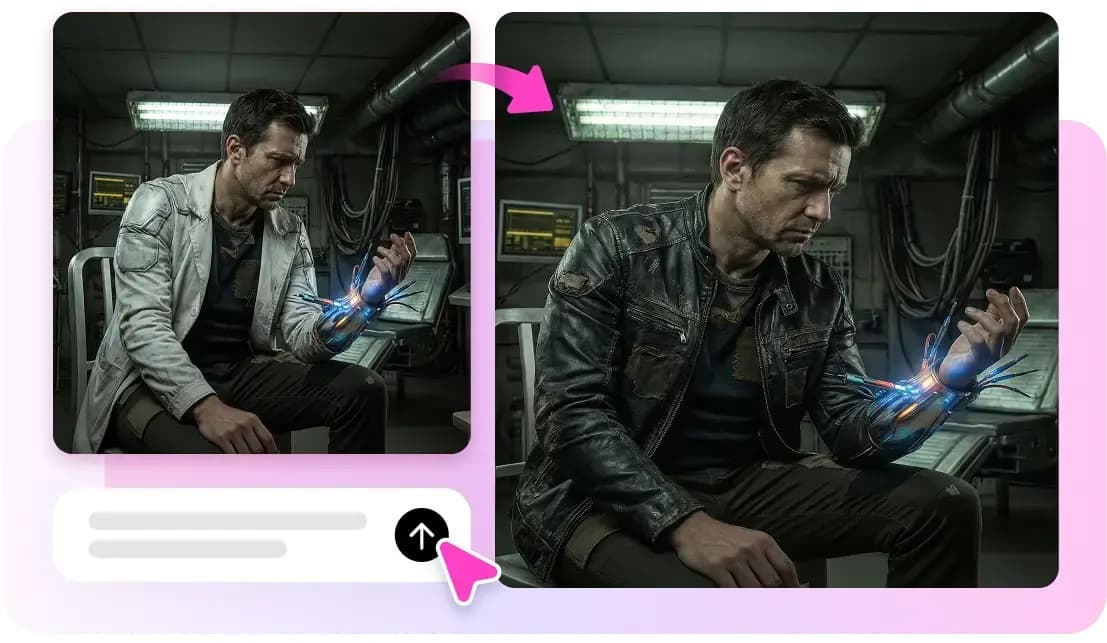
Google has introduced a new set of AI-powered features targeting two main groups: scientists who want to expedite their research and everyday users curious about whether an image or video was created by AI. These announcements extend Google’s Gemini AI platform into new areas, covering everything from laboratory workflows to watermark detection, even for content produced by competitor OpenAI.
| Ticker | GOOGL |
|---|---|
| Stock Price | $384.68 (-0.77%) |
| CEO | Sundar Pichai |
| Headquarters | Mountain View, CA |
| Founded | 1998 |
| Sector | Big Tech |
What Google Announced
Gemini for Science: Three New Research Tools
The first set of features is part of a collection called Gemini for Science, designed specifically for researchers and scientists. Google has added three new tools to this suite, which aims to reduce repetitive and time-consuming tasks in scientific work—like literature reviews, data organization, and workflow management. This way, researchers can focus more on discovering new insights.
Imagine having a tireless research assistant who has read everything. Instead of spending hours sifting through countless published papers, Gemini quickly processes that information and highlights the most relevant findings. This approach helps minimize the preparatory work that usually takes up valuable research time.
Google has been steadily integrating Gemini across its product offerings. Just earlier this week, the company introduced AI features for Google Workspace, including an AI-managed inbox and voice tools. They also added an ‘Ask YouTube’ feature that finds specific moments in videos. The science tools fit into this broader strategy of embedding Gemini into specialized workflows.
AI Watermark Detection Comes to Chrome and Search
The second announcement is more relevant for anyone browsing the web. Google is extending its AI content identification tool to both Chrome (for desktop and mobile) and Google Search. This feature uses SynthID, a watermarking system that embeds an invisible, machine-readable signature into AI-generated images, videos, and audio. The watermark isn’t a visible logo; it’s a hidden pattern embedded in the file itself, readable only by detection software.
This partnership is particularly interesting. Gemini’s watermark detection will now work with content generated by OpenAI, Google’s main competitor in the AI arena. So, if someone shares an image made with ChatGPT’s image generator, Google’s tools in Chrome or Search might flag it as AI-generated. This type of cooperation on AI transparency is relatively new, indicating both companies see the benefit of establishing shared standards for labeling synthetic content while still competing fiercely elsewhere.
The practical outcome? When you encounter an image or video on Chrome or Google, the platform will have a better chance of identifying whether it was created by a human or an AI.
What This Means for Everyday Users
For most people, the science tools won’t have an immediate impact on daily life. However, the ripple effects could be significant—faster research workflows can lead to quicker advancements in areas like drug development, climate modeling, and materials science.
Watermark detection is a different matter. Misinformation from AI-generated images is a growing issue, from fake celebrity photos to fabricated news images. With a built-in detector in your browser or search results, you won’t need to use an external tool to verify suspicious images. Google is integrating this check into your usual browsing experience.
That said, no watermark system is foolproof. Watermarks can sometimes be removed or degraded through screenshots, heavy compression, or editing. So, while detection is a useful signal, it’s not a foolproof guarantee.
Community Reaction
Initial reactions online show a mix of cautious optimism and skepticism about how effective these tools will be in real-world use.
“The cross-company watermark thing with OpenAI is actually surprising. I didn’t expect them to cooperate on anything. Whether it holds up when people start trying to strip the watermarks is another question.”
“Gemini for Science sounds great on paper, but I want to see real researchers using it before I get excited. A lot of these AI research tools oversell and underdeliver.”
What To Watch
- Adoption by researchers: Keep an eye out for case studies or early feedback from academic institutions using Gemini for Science. Real-world usage data will show if the tools deliver on their promise.
- Watermark reliability testing: Independent researchers will likely evaluate how easily SynthID watermarks can be removed or bypassed. Those results will influence how much trust users should place in the detection feature.
- OpenAI partnership scope: The cross-company watermark agreement raises questions about whether other AI firms like Meta or Stability AI will join a similar framework. Any industry standard for AI content labeling would be a significant step forward.
- Gemini for Science rollout: Google hasn’t announced a public availability date for all three new features, so look for more details at or after Google I/O 2026.

Daniel Park
Daniel Park covers AI, cloud infrastructure, and enterprise software for Explosion.com. A former software engineer who transitioned to technology journalism 5 years ago, Daniel brings technical depth to his reporting on artificial intelligence, startup funding rounds, and the companies building the future of computing. He breaks down complex AI developments and business strategies into clear, actionable insights for readers who want to understand how technology is reshaping industries.