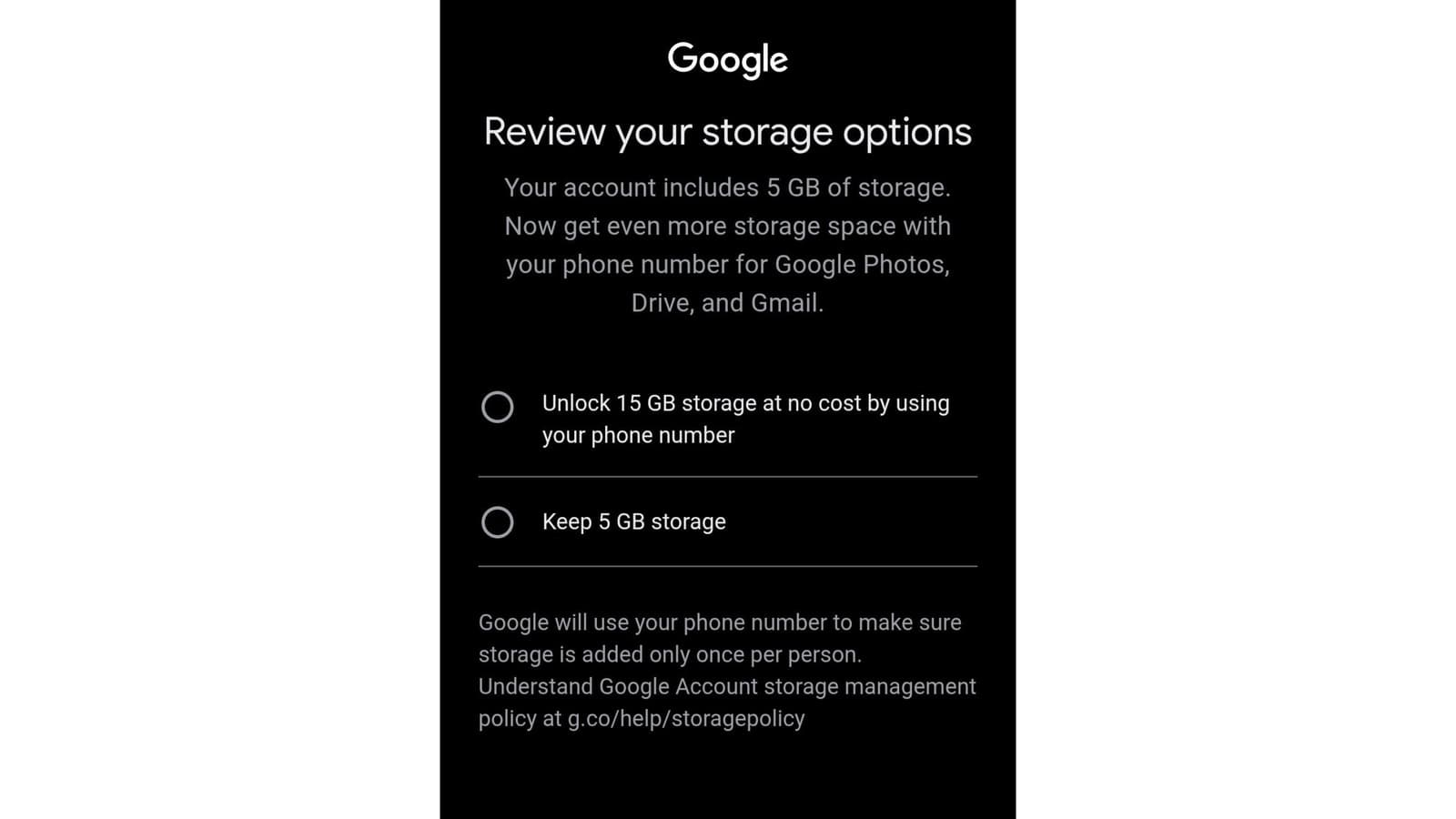
Google has made a quiet change to the free storage offered to new accounts, dropping the default from 15GB to just 5GB — unless you link a phone number to your account.
This shift, first reported by 9to5Google, affects only newly created Google accounts. Previously, each new account received 15GB of free cloud storage automatically. Now, you’ll only get that full 15GB after adding a verified phone number. Without it, you’re limited to 5GB — a 67% reduction from the previous default.
Google hasn’t provided a public explanation for this change, so the exact reasons remain uncertain.
What Changed, Exactly
Google’s 15GB of free storage includes everything linked to your account: Gmail, Google Drive, and Google Photos all draw from the same shared pool. You can think of it like a single bucket of water supplying multiple faucets.
With the new policy, a newly created account without a linked phone number only gets 5GB to use across all three services. That 5GB can fill up quickly — a single hour of HD video in Google Photos can take up 1–2GB. For anyone using Google as their main email provider, 5GB of Gmail storage can vanish within a year or two of regular use.
Once you add a verified phone number, the full 15GB becomes available. But this requirement marks a notable shift in how Google approaches user privacy, since a phone number connects a digital account to a real-world identity.
Why Google Might Be Doing This
Google hasn’t clarified the reasoning behind this move, but the structure suggests two main goals: reducing misuse and gathering more user data.
Phone number verification acts as a common measure against spam and fraud. Requiring it to unlock the full storage makes it tougher to create multiple disposable Google accounts — a tactic often employed by spammers or those trying to bypass account bans. A phone number adds a “cost” to account creation that a free email address doesn’t.
At the same time, phone numbers serve as valuable identifiers. They help Google link accounts, verify identities, and provide recovery options. By tying a desirable feature like storage to phone number submission, Google encourages users to share that information, even if technically it’s optional.
As Engadget notes, the key difference now is that the 15GB used to be unconditional.
| By The Numbers: Google / Alphabet | |
|---|---|
| Free storage (old default) | 15GB |
| Free storage (new default, no phone) | 5GB |
| Storage reduction without phone number | 67% |
| Storage to unlock full 15GB | Verify a phone number |
| Stock (GOOGL) | $396.78 (-1.07%) |
| CEO | Sundar Pichai |
| Founded | 1998, Mountain View, CA |
What This Means for Everyday Users
If you already have a Google account, nothing changes for you at this point. This policy seems to apply only to new accounts, so your existing 15GB remains safe.
However, if you’re setting up a new Google account — for a family member, a new device, or a work project — you’ll hit the 5GB limit unless you verify a phone number. For most people, adding a phone number is straightforward and quick. The practical impact is minor if you’re okay with that.
The most affected users are those who prefer not to link phone numbers for privacy reasons, those in areas where phone numbers are hard to verify, or anyone wanting to create a secondary account without connecting it to their real identity. For them, 5GB feels quite limiting in 2026.
Google One, the paid storage service, starts at $2.99 per month for 100GB. That remains an option for anyone needing more space, regardless of phone number status.
Community Reactions
“So Google is basically making you trade your phone number for storage you used to get for free. It’s not about security, it’s about data collection.”
“Honestly, I get why they do it for spam prevention, but 5GB is almost nothing in 2026. At least make it 10.”
What To Watch
- Google’s official response: The company hasn’t acknowledged the change publicly. A formal explanation or policy page update could clarify if this is a permanent decision or just a test.
- Existing account impact: Keep an eye on whether Google extends this policy to older accounts during future storage updates.
- Regulatory attention: In the EU, tying service features to personal data sharing may attract scrutiny under GDPR, a law that limits how companies handle personal information. If this change rolls out widely in Europe, it could face legal challenges.
- Competitor moves: If Google’s storage change frustrates users, it opens the door for services like iCloud, OneDrive, or Proton Drive to market themselves as more generous or privacy-conscious alternatives.

Ava Mitchell
Ava Mitchell is a digital culture journalist at Explosion.com covering social media platforms, streaming services, and the creator economy. With 4 years reporting on TikTok, Instagram, YouTube, and the apps that shape daily life, Ava specializes in explaining platform policy changes and their impact on everyday users. She previously managed social media strategy for a tech startup, giving her firsthand experience with the platforms she now covers.