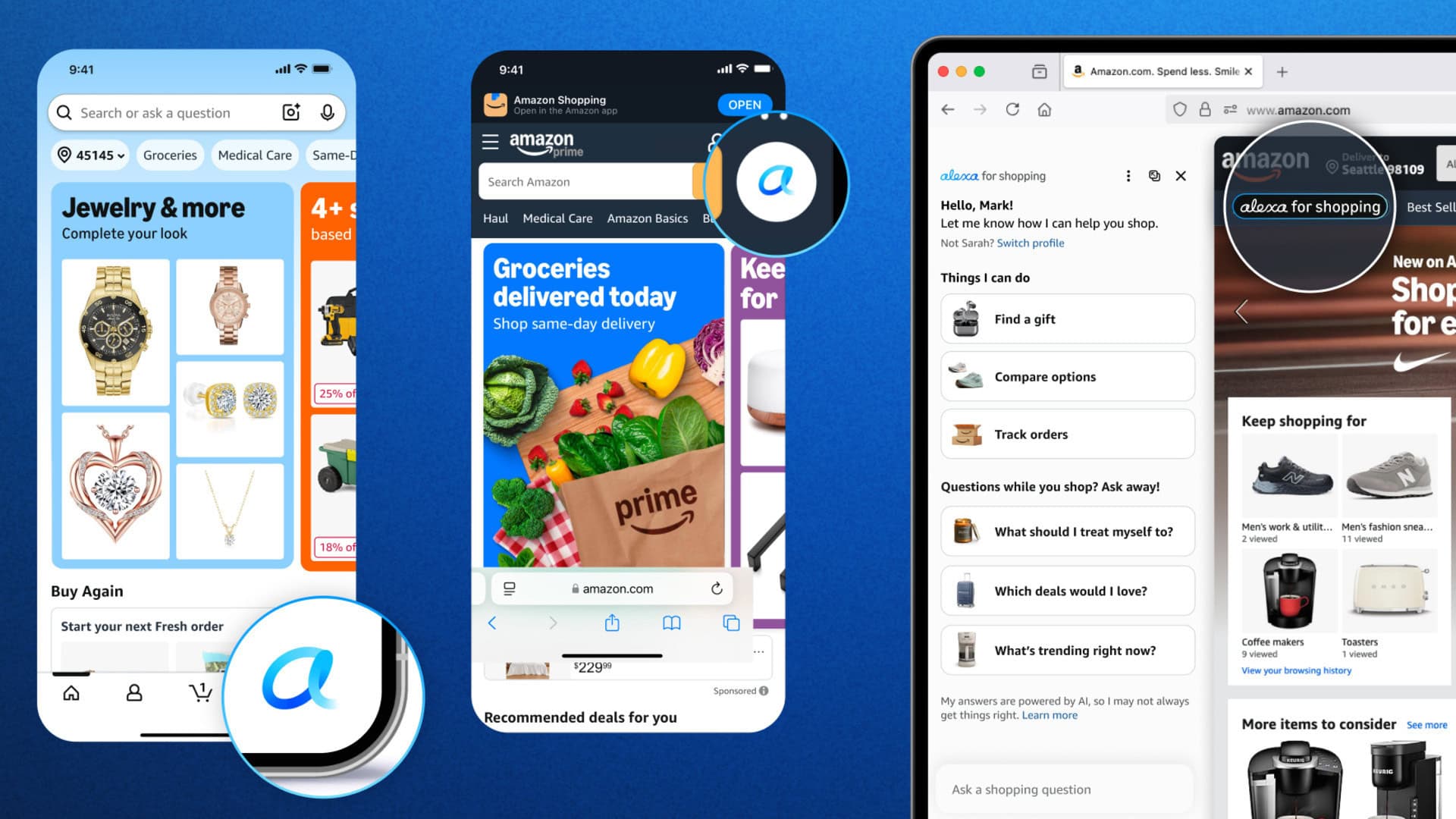
Amazon has introduced a new tool called Alexa for Shopping, replacing its previous Rufus AI shopping assistant. This new feature is now embedded directly into the Amazon search bar. It allows millions of daily shoppers to access a conversational AI product advisor without leaving the page they’re on.
| By The Numbers: Amazon (AMZN) | |
|---|---|
| Stock Price | $263.27 (-1.48%) |
| CEO | Andy Jassy |
| Headquarters | Seattle, WA |
| Founded | 1994 |
| Sector | Big Tech |
What Is Alexa for Shopping?
Alexa for Shopping acts as a personalized AI shopping assistant powered by Alexa+—Amazon’s advanced version of its voice assistant. It now lives in the Amazon.com search bar. Imagine having a knowledgeable store clerk right in the search box. Instead of typing “wireless headphones” and sifting through countless listings, you can ask something like “What are the best wireless headphones for working out under $100?” and receive direct, conversational answers along with tailored product recommendations.
This new feature replaces Rufus, Amazon’s AI shopping chatbot launched in early 2024. Rufus operated in a separate chat panel, which many users overlooked. By integrating Alexa for Shopping right into the search experience, Amazon puts the AI front and center as soon as you begin searching.
Why Amazon Made the Switch
Rufus marked Amazon’s first significant push to incorporate generative AI—AI that can produce human-like responses—into shopping. However, since it functioned separately from the main search bar, many users didn’t notice it or engage with it. Integrating this capability directly into the search removes that barrier.
This change also highlights Amazon’s commitment to Alexa+ as its main AI product. Earlier this year, Amazon started rolling out Alexa+ as a subscription upgrade to its existing Alexa voice assistant, promising smarter, more context-aware responses. By embedding Alexa+ into the website’s search bar, Amazon connects this technology to its largest audience: shoppers on Amazon.com, not just Echo device users at home.
How It Works in Practice
When you click on the Amazon search bar, you’ll see an option to interact with Alexa for Shopping. You can pose a question in plain English instead of using keyword-style search terms. The assistant leverages your order history, browsing habits, and preferences to personalize its recommendations. For instance, a regular runner might receive different headphone suggestions than someone who mainly uses them at a desk.
The assistant can handle multi-step questions as well. If you ask about the best air fryer for a family of four and then follow up with “Does it have to be under $80?” the assistant will refine its answer without making you start over. This kind of back-and-forth conversation is something traditional keyword searching just can’t provide.
What This Means for Everyday Shoppers
For most Amazon users, this update simplifies the toughest part of online shopping—narrowing down countless options. Amazon lists hundreds of millions of products. Even a basic search for something like “laptop bag” can yield thousands of results. An AI that can filter based on your specific needs, budget, and preferences in everyday language is genuinely useful, not just a gimmick.
There’s also a personalization aspect to consider. Since the assistant connects to your Amazon account, it can take into account your past purchases. If you typically buy a certain coffee brand and ask for a coffee grinder recommendation, it might suggest grinders that work best with that brand’s grind size. Such contextual awareness isn’t possible with a standard search bar.
However, some shoppers might feel uneasy about Amazon using their purchase history to guide recommendations. The more personalized the suggestions, the more the system relies on detailed knowledge of your habits.
Community Reactions
“Rufus was already pretty good at narrowing things down. If this is integrated into the search bar properly and not just a chat bubble, that’s a real upgrade.”
— Reddit user, r/amazon
“I don’t want AI telling me what to buy. I want unbiased search results. Amazon already buries organic results under ads—now the AI is going to push whatever it wants too?”
— YouTube comment on TechCrunch’s coverage
The mixed reactions are telling. Users frustrated with Amazon’s cluttered search results see the value in a smarter filter. Meanwhile, others worry that an AI trained and operated by Amazon will prioritize its revenue goals over user interests, especially regarding product recommendations.
What To Watch
- Rollout timeline: Amazon hasn’t confirmed when Alexa for Shopping will be available to all U.S. users. Expect a broader announcement soon.
- Alexa+ subscription: It’s unclear whether the full capabilities of Alexa for Shopping will require an Alexa+ paid subscription or if a basic version will be free for all Amazon account holders.
- Competitor response: Google Shopping and other AI-driven product discovery tools will be keeping an eye on this. If Alexa for Shopping boosts Amazon’s conversion rates (the percentage of visitors who make a purchase), competitors may speed up their own AI integrations.
- Advertising questions: How Amazon manages sponsored products within AI-generated recommendations will be a key story. Regulators and consumer advocates are already scrutinizing how AI systems disclose paid placements.
Sources: Android Authority, TechCrunch

Maya Torres
Maya Torres is the Consumer Tech Editor at Explosion.com with 7 years covering product launches for major technology publications. She has reviewed over 300 devices across smartphones, laptops, wearables, and smart home products. Maya specializes in translating spec sheets into real-world buying advice and attends CES, MWC, and Apple keynotes as press. Her reviews focus on helping readers decide what to buy, not just what specs look good on paper.