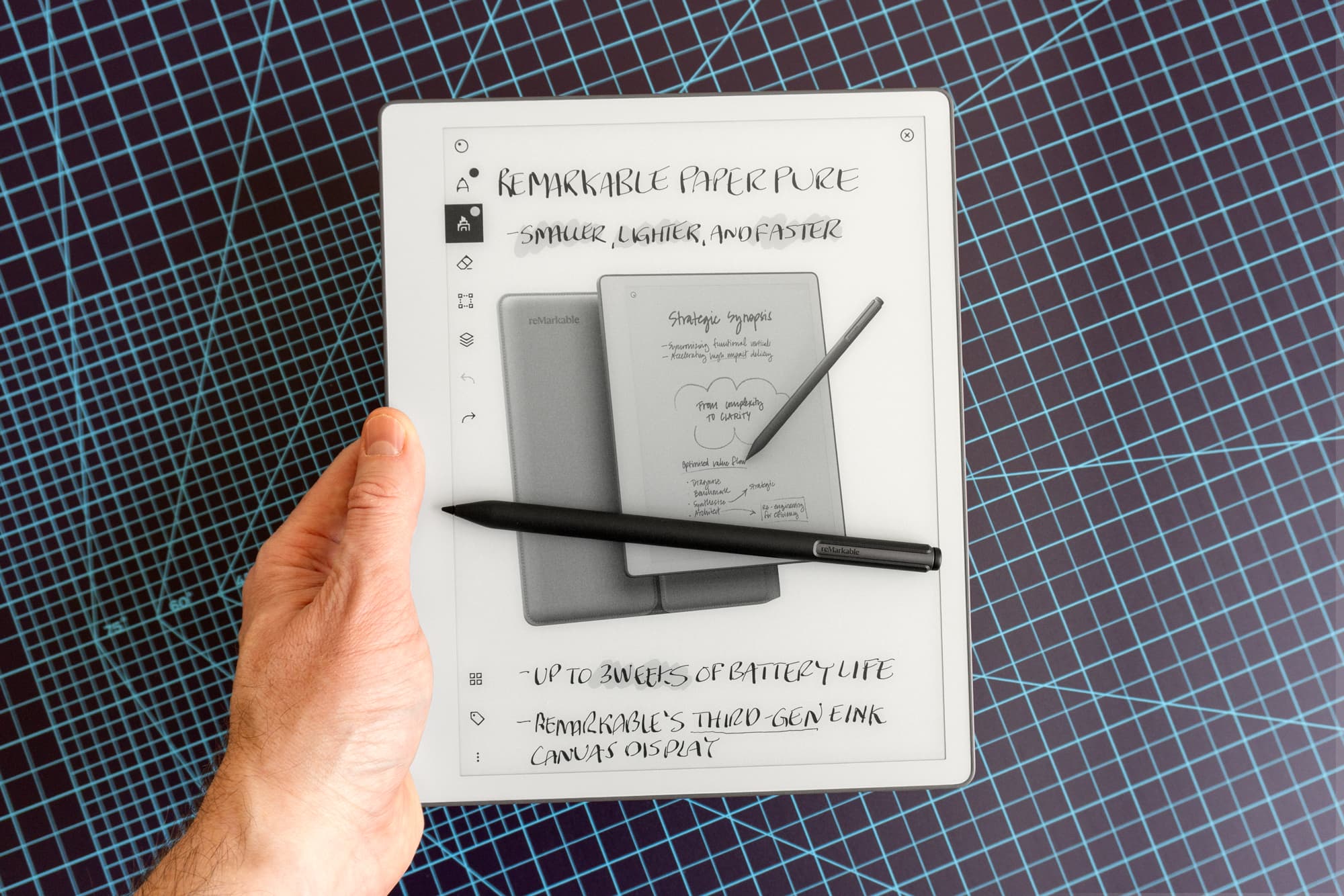
reMarkable’s new Paper Pure is receiving rave reviews, with early impressions labeling it as the most realistic paper-like writing experience on a screen to date. However, its subscription-heavy business model is raising questions.
What Is the reMarkable Paper Pure?
The Paper Pure is reMarkable’s successor to the Remarkable 2, released in 2020. While the company recently launched premium color E Ink tablets like the Paper Pro and Paper Pro Move, the Paper Pure opts for a black-and-white approach.
This might seem like a step back, but the display is not just a recycled panel. The Paper Pure features an improved version of the black-and-white E Ink screen from the Remarkable 2, refined over five years. Reviewers note that the result is a writing surface that’s truly hard to distinguish from writing on real paper.
Think of it this way: if color E Ink tablets are fancy all-in-one printers, the Paper Pure is a sharp, efficient laser printer that excels at one task.
The Writing Experience
The Verge’s hands-on review stated it clearly: “Was I writing with pen and paper, or a stylus on a tablet? It’s getting more difficult than ever to tell.” That’s a strong statement for devices that have long dealt with the delay between stylus movement and ink appearing on screen. This lag has often broken the illusion of writing on paper.
The Paper Pure’s screen has a slightly textured surface that creates resistance against the stylus tip, mimicking the feel of a ballpoint pen on notebook paper. Reviewers say the upgraded display’s responsiveness enhances the writing experience, even under close examination.
The Catch: A Subscription Model
Not everything is perfect. Engadget’s review points out a major frustration: reMarkable locks several core features behind a subscription fee. If you want to convert handwriting to typed text, that’s a subscription. If you need to sync notes to Google Drive or Dropbox, yep, that’s a subscription too. Want to use cloud features? You guessed it—subscription.
Engadget described this as “great hardware held back by bad philosophy,” highlighting the tension between reMarkable’s business model and what users expect from a device they’ve already paid for.
This isn’t new for reMarkable; they’ve used this model for years. Just keep it in mind before you hand over your credit card.
| Spec / Detail | Value |
|---|---|
| Display type | Black-and-white E Ink (upgraded from Remarkable 2) |
| Predecessor launch year | 2020 (Remarkable 2) |
| Color screen? | No — black and white only |
| Premium alternatives | Paper Pro, Paper Pro Move (color E Ink) |
| Key locked features | Handwriting-to-text, cloud sync (require subscription) |
Who Actually Needs This?
The Paper Pure isn’t meant to replace your iPad or Android tablet. It doesn’t run apps, won’t stream video, and the black-and-white screen isn’t great for browsing the web. This device focuses on one job: taking notes and sketching ideas in a way you can organize and search later.
This is perfect for anyone who constantly fills physical notebooks—students, journalists, lawyers, and designers brainstorming ideas—but struggles to find old notes or retype handwritten content. If that sounds like you, the Paper Pure’s promise of a near-paper feel combined with digital organization is definitely appealing.
If you mainly type notes or need a versatile tablet for different tasks, you’d be better off with an iPad and Apple Pencil or a similar Android device.
What This Means for Everyday Users
For note-takers who’ve tried previous digital notepads and found the experience lacking, the Paper Pure seems to bridge that gap more effectively than earlier models. That’s important because the comfort of writing directly impacts how often people use a device. A notepad you don’t use is a waste of money, regardless of how good it looks on paper.
However, the subscription model is something to consider. Before you buy, think about what you’ll actually spend over two or three years, including the subscription. A device that feels premium at first can become pricey quickly when you factor in recurring fees for features that competitors often include by default.
Community Reactions
“I’ve had the Remarkable 2 for three years, and the writing experience genuinely changed how I take notes. If the Pure is even better, I might actually upgrade for the first time ever.”
— u/AnalogDigitalBridge, Reddit r/RemarkableTablet
“The hardware looks incredible, but I’m so tired of paying a subscription for features that should be built in. Just charge me more upfront, reMarkable.”
— YouTube commenter on Engadget’s Paper Pure review
What To Watch
- Pricing confirmation: Expect full retail pricing and availability dates to be finalized soon after the announcement. Keep an eye on reMarkable’s official site for pre-order information.
- Subscription changes: Community feedback has previously pushed reMarkable to modify what’s included in free tiers. It’s worth seeing if that happens again with the Paper Pure launch.
- Competitor responses: Boox and Supernote both offer competing E Ink notepads with fewer subscription restrictions. If the Paper Pure sparks renewed interest in this category, anticipate updated models from both brands.
- Long-term reviews: Early impressions are positive, but full reviews after weeks of daily use will provide a clearer picture of durability and whether the writing feel remains consistent over time.

Ava Mitchell
Ava Mitchell is a digital culture journalist at Explosion.com covering social media platforms, streaming services, and the creator economy. With 4 years reporting on TikTok, Instagram, YouTube, and the apps that shape daily life, Ava specializes in explaining platform policy changes and their impact on everyday users. She previously managed social media strategy for a tech startup, giving her firsthand experience with the platforms she now covers.