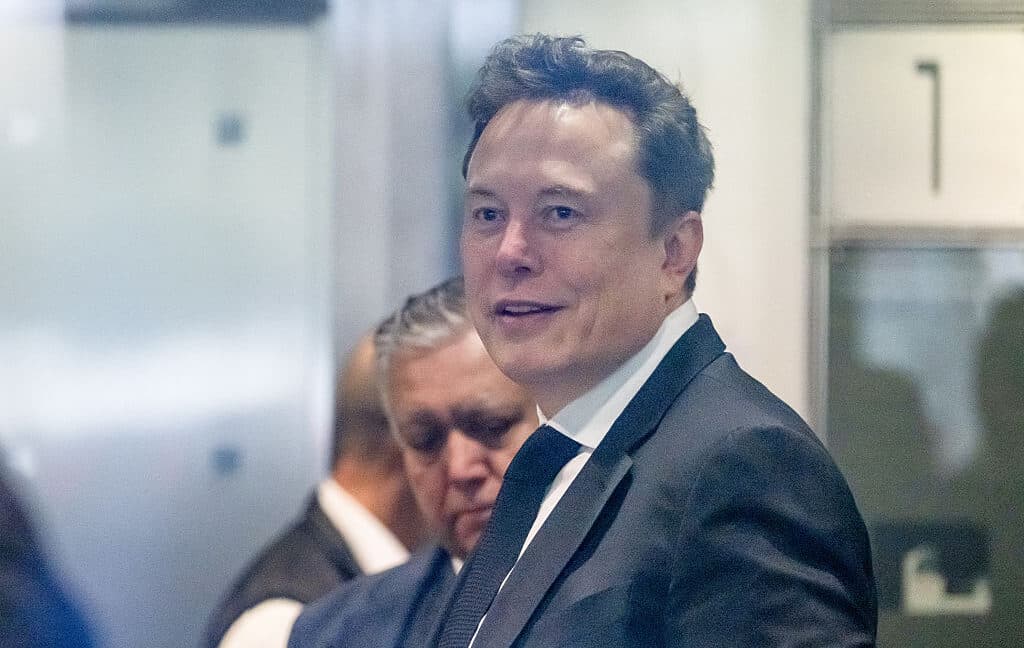
Elon Musk spent three days on the witness stand as the first witness in his lawsuit against OpenAI, and things didn’t go well for him. He admitted that his AI company copied competitor models and contradicted himself about his reasons for helping to found OpenAI. His court appearance produced several moments that could complicate his case against Sam Altman’s organization.
What Is This Trial About?
Musk co-founded OpenAI in 2015 with Sam Altman and others, aiming to build artificial general intelligence (AGI) safely for the benefit of humanity. Originally set up as a nonprofit, Musk left the board in 2018 and started his own AI company, xAI, which creates the Grok chatbot. Now, he’s suing OpenAI, claiming it strayed from its nonprofit mission by shifting towards a for-profit model and prioritizing commercial interests over safety.
This trial, taking place in a San Francisco federal court, is one of the most high-profile legal battles in the AI sector so far.
The 7 Stumbles
1. xAI Trained Grok on OpenAI’s Models
One of Musk’s most damaging admissions came when he confirmed under oath that xAI used a technique called distillation to train Grok. This process involves a smaller AI model learning by copying the outputs of a larger, more powerful model. In this case, Grok learned from a model built on OpenAI technology. This practice is exactly what OpenAI has been trying to combat across the industry, making it a tricky confession for someone suing OpenAI over ethical concerns.
2. Contradictions About His Motivations
Musk claims he’s suing because OpenAI betrayed its founding mission. However, during cross-examination, attorneys pointed out internal communications that suggested his reasons for joining and later leaving OpenAI were more complex than just concern for humanity. Emails and messages entered into evidence indicated tension between Musk and Altman over who would control the organization.
3. His Own For-Profit Ambitions
Musk has criticized OpenAI for adopting a for-profit structure. Yet, his own company, xAI, operates as a for-profit business and has raised billions in outside investment. When questioned about this contradiction, Musk struggled to explain the difference between what he criticizes OpenAI for and what his own company is doing.
4. The $1 Billion Pledge That Wasn’t
Musk has often claimed he pledged $1 billion to OpenAI at its founding. However, under questioning, it came out that he contributed much less than that amount, and the $1 billion figure was more of a goal than a commitment. This detail is important for his case, as it impacts his argument about having standing—meaning a legal right to sue—based on being a major donor who was allegedly defrauded.
5. Disputes Over Early Agreements
Musk’s case hinges on the idea that OpenAI violated founding agreements about remaining a nonprofit and keeping its technology open. But during cross-examination, the specific terms of those agreements proved hard to define. What Musk viewed as firm commitments, OpenAI’s lawyers described as informal discussions.
6. Tone and Demeanor on the Stand
Several legal observers noted that Musk appeared combative and dismissive at times during questioning. This demeanor rarely helps a witness’s credibility with a judge. While courtroom behavior doesn’t change legal facts, it can affect how testimony is perceived.
7. The Timing Question
Musk filed his lawsuit right after OpenAI announced plans to transition more fully to a for-profit company. This was also around the same time he was trying to organize a competing bid to acquire OpenAI’s assets. Opposing counsel used this timing to argue that the lawsuit was less about principle and more about competitive strategy, a claim Musk didn’t effectively counter on the stand.
What This Means
For everyday users of AI tools like ChatGPT, Grok, or Google’s Gemini, this trial isn’t just about two billionaires squabbling in court. It raises a crucial question: when a company claims to exist for the benefit of humanity, does that promise have any legal weight? If Musk wins, it could force OpenAI to restructure or limit its commercial activities. If OpenAI wins, it would suggest that founding ideals in tech can change as business realities evolve—a precedent that could shape how future AI companies are created and governed.
The admission about distillation is significant too. If courts or regulators view AI distillation as intellectual property theft, it could change how every AI lab develops and competes, impacting what products reach consumers and their costs.
| OpenAI — By The Numbers | |
|---|---|
| Founded | 2015 |
| CEO | Sam Altman |
| Headquarters | San Francisco, CA |
| Sector | Artificial Intelligence |
| Original Structure | Nonprofit |
| Current Structure | Transitioning to for-profit |
Community Reactions
“The distillation thing is genuinely wild. He’s suing OpenAI for going commercial while his own company literally trained on their outputs. That’s not a great look.”
— Reddit user on r/artificial
“Whatever you think of Musk, the core question here — can a nonprofit just decide to become a for-profit when billions of dollars show up — is actually really important and nobody seems to be talking about that part.”— YouTube comment on a trial recap video
Sources
- Ars Technica: Elon Musk’s 7 biggest stumbles on the stand at OpenAI trial
- TechCrunch: Elon Musk testifies that xAI trained Grok on OpenAI models
What To Watch
- Sam Altman and other OpenAI executives are expected to take the stand after Musk, likely providing a very different perspective on the company’s founding and evolution.
- The distillation admission could draw additional scrutiny from OpenAI’s legal team and possibly other AI companies that may have used similar methods.
- A ruling on whether Musk has legal standing to bring this case could happen before the trial ends. If the judge determines he wasn’t a formal party to any binding agreement, the case could become much narrower or get dismissed.
- OpenAI’s planned shift to a for-profit model continues alongside this trial, and the court’s stance on that process may become clearer as testimony unfolds.

Daniel Park
Daniel Park covers AI, cloud infrastructure, and enterprise software for Explosion.com. A former software engineer who transitioned to technology journalism 5 years ago, Daniel brings technical depth to his reporting on artificial intelligence, startup funding rounds, and the companies building the future of computing. He breaks down complex AI developments and business strategies into clear, actionable insights for readers who want to understand how technology is reshaping industries.