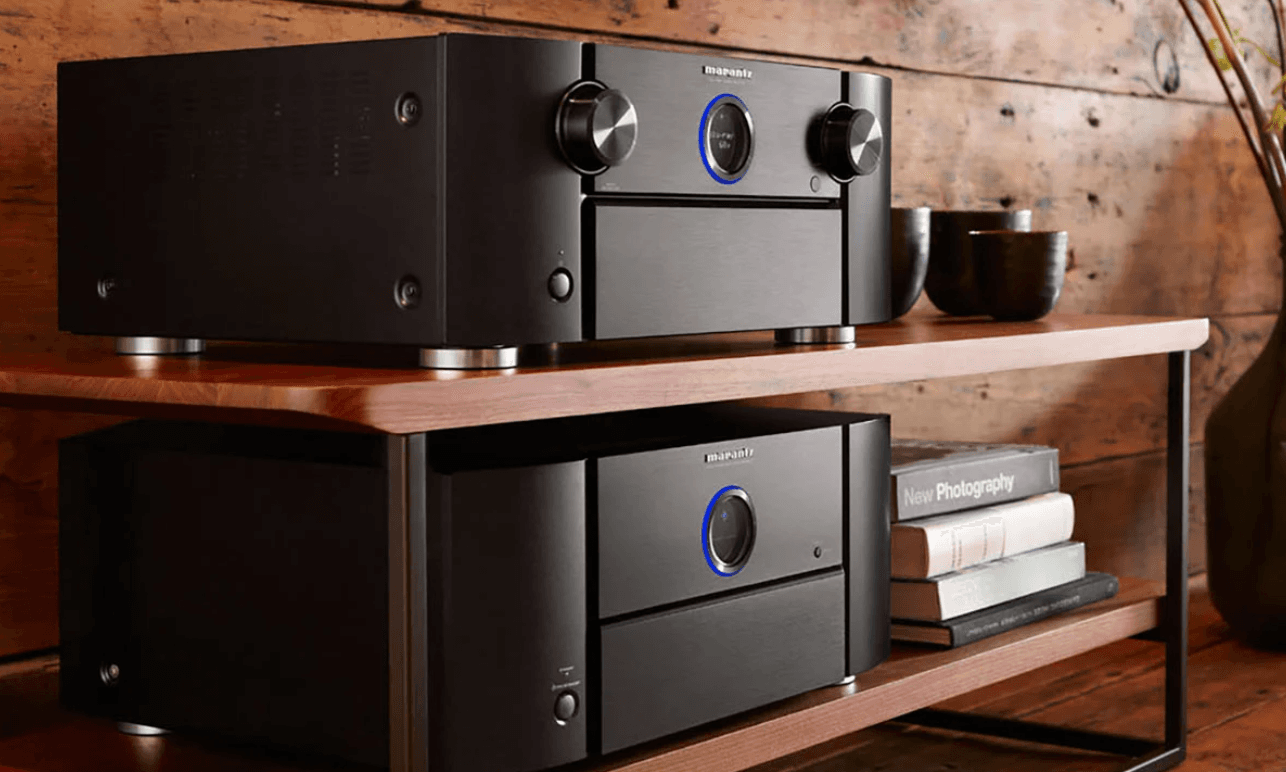
There is that certain point for every music enthusiast when you discover that your all-in-one receiver, your Bluetooth speaker, and your ‘perfectly fine’ sound system just isn’t doing justice to your favourite tunes. You hear notes that should hit you straight in the chest, but they sound soft and polite. Soundstages that should stretch wide and deep feel flat and crowded. Something is missing, and you can’t unhear it.
And that problem is often the power amplifier. Not a combination of features crammed into a single box housing the radio tuner, the phonograph preamp, and the HDMI switcher. But the kind that comes from a separate unit whose sole purpose is to amplify an audio signal sufficiently to make the speakers truly come alive. That’s what stereo amplifiers do. And if you have never experienced listening to a well-designed one, prepare to be amazed.
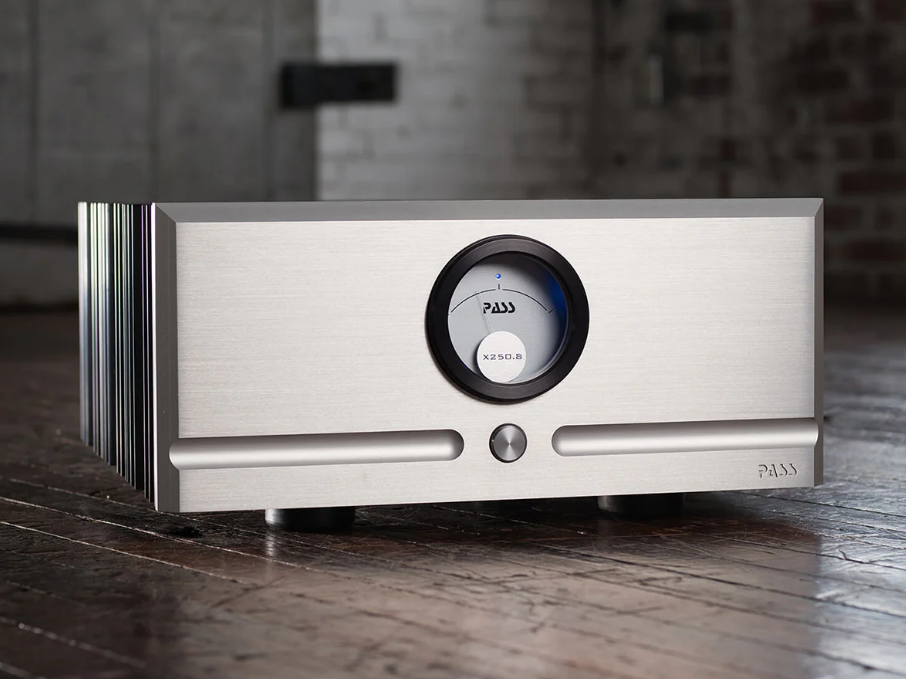
What Is a Stereo Power Amplifier?
The purpose of a power amplifier is rather simple: it takes a line-level signal and converts it into an output big enough to drive your sound speakers and fill a room or venue. No tuner, no streaming apps, or Bluetooth – just pure amplification.
Here’s what a standard hi-fi system looks like: source (turntable, digital-to-analogue converter, streamer), preamplifier, power amplifier, and speakers – in that order. The preamp handles volume control and source switching, while the power amp delivers current to your speaker drivers. A stereo power amplifier has two separate channels: left and right. Nothing more complicated than that.
Some audiophiles believe that separating the sources into different pieces of equipment makes the setup more efficient, as you can always upgrade individual parts without changing the entire system. And then, there is also the satisfaction of a dedicated, top-of-the-line stereo power amplifier sitting in your rack, doing exactly one job really well.
Important Specifications: What They Really Mean
Power Output (Watts)
The watts are the big number everyone focuses on. A 100-watt-per-channel amplifier could deliver high volume levels when used with highly efficient speakers. However, what people do not know is that doubling the watts increases volume by a mere 3 dB. If you want sound twice as loud, you need ten times the power. So, chasing watts in the amplifier may not help. The most important thing is having sufficient headroom for dynamic peaks.
Speaker Impedance
Amp specifications for speaker impedance are crucial. Most speakers have impedance levels of 4, 6, or 8 ohms. A good amp should be stable at 4 ohms and double power level as impedance decreases (doubling down). An amplifier with low impedance will operate poorly under heavy load, and get hot or even shut down.
Signal-to-noise Ratio
The SNR tells you how much noise and hiss will be present in the audio signals. Anything above 100 dB SNR is superb for home use. An SNR below 90 dB results in audible background hiss.
Damping Factor
The damping factor is another specification worth mentioning. It determines the extent to which an amplifier can manage the speaker cone’s motion after the signal stops. A high damping factor (100+) results in tight, better-controlled bass. With low damping, the bass becomes soft and boomy.
THD
THD refers to total harmonic distortion. Modern solid-state amplifiers produce negligible THD figures (under 0.01%), which cannot be heard. In tube amplifiers, the THD values are higher, but the distortion tends to be even-order harmonics, which many find pleasant.
Solid State Amplifiers vs. Tube Amplifiers
Here is the eternal question for the audio power amplifier market. Solid-state amplifiers rely on transistors, MOSFETs, and other semiconductor technologies. They are dependable, provide lots of power, are highly efficient, and offer excellent precision. If you value quality and practicality, then this type of equipment suits you best.
In contrast, tube amplifiers use vacuum tubes and date back to the infancy of audio equipment. They produce a warmer sound with superior musicality and include a specific ritual of use that involves pre-heating, swapping tubes, and admiring their glow. However, such devices tend to be less affordable due to frequent maintenance. Nonetheless, if you love the romance of analogue audio and own efficient speakers (with a sensitivity of 90dB or higher), you will find tube amplifiers magical. Ultimately, there is no wrong choice.
How to Select the Right One
First off, match it to your speakers. This is the number one rule of amplifiers. Find out the sensitivity of your speakers and the impedance rating. The amplifier will need much more power to drive an 85 dB speaker in a big room compared to a 94 dB speaker in a small apartment. Overpowering speakers may not damage them as badly as underpowering does. A clipping amp destroys speakers’ drivers.
Consider the size of your room. Small room with nearfield listening? It’s likely you won’t need anything more than 30-50 watts per channel. Large, open-plan living room? Then you definitely need 100 watts or more.
Think about your budget. Don’t waste money on an expensive amplifier when the rest of your equipment is cheap. Make sure your expenditure is evenly distributed.
Try listening before making a purchase. Specifications only say so much. Two amplifiers with similar specifications may sound noticeably different. Test the amplifier or find a dealer with a good return policy.
A Few Practical Tips
Let it warm up. Most hi-fi power amplifiers sound their best after 20–30 minutes of use. So, don’t be quick to assess its performance.
Allow some space for airflow. Power amps produce heat when working. Make sure there’s plenty of space around the unit, and don’t place other equipment on top of it.
The power supply shouldn’t be neglected. An efficient power amplifier will have an adequate and highly regulated power supply. This can be what differentiates a low-end and high-end product.
Make sure input sensitivities are correct. Check whether your preamp voltage output is compatible with the amp’s input sensitivity.
There’s some truth to the importance of cables. Good speaker cables and interconnects are worth it, but you don’t need to spend a fortune on them.
A hi-fi amplifier can be one of the most durable pieces of equipment in your collection. Choose wisely, and it will become the heart of an amazing listening experience.

Nick Guli
Nick Guli is the founder and editor-in-chief of Explosion.com, which he launched in February 2012. With over a decade of experience in digital publishing, Nick oversees editorial direction across entertainment, gaming, technology, and lifestyle content. He is an avid gamer and movie enthusiast who brings a critical eye to coverage of industry trends, game reviews, and entertainment news.