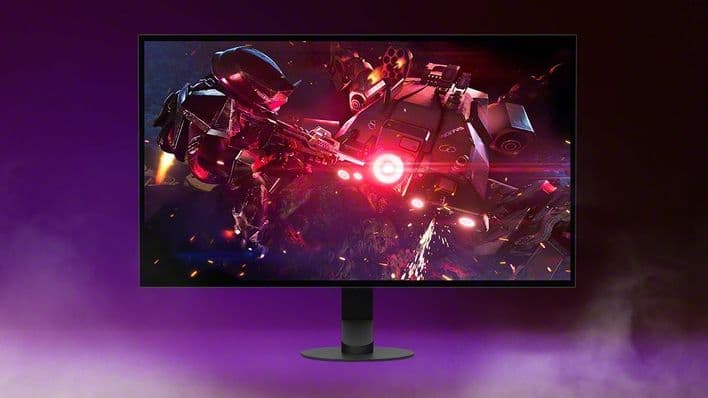
Sony just unveiled the Inzone M10S II, a 27-inch OLED gaming monitor that boasts an impressive 720 Hz refresh rate at 720p resolution. This makes it one of the fastest display panels you can buy right now.
Launched on April 14, 2026, this monitor is aimed at competitive eSports players who want every advantage in fast-paced games. Refresh rate is like the number of frames a flip-book shows per second: the higher the number, the smoother and more responsive the action looks on screen. At 720 Hz, the Inzone M10S II refreshes the image 720 times each second.
Dual-Mode: What That Actually Means
The “dual-mode” feature lets the monitor switch between two resolution and refresh rate settings. In standard mode, the M10S II operates at QHD (2560×1440 pixels, or 1440p) resolution, providing sharp visuals at more moderate refresh rates. Switch to eSports mode, and the resolution drops to 720p, unlocking that impressive 720 Hz refresh rate.
This trade-off is deliberate. Competitive gamers in titles like Counter-Strike 2 or Valorant usually prioritize smoothness and reaction time over image clarity. A lower resolution means the GPU (graphics processing unit, which renders game visuals) has much less work to do, allowing it to generate frames at lightning speed. The monitor displays every single one of those frames.
The underlying technology is OLED (organic light-emitting diode), which means each pixel generates its own light instead of relying on a backlight. This gives the M10S II incredibly fast pixel response times and deep blacks that traditional LCD monitors can’t match.
How It Compares to the Original M10S
The first Inzone M10S hit the market in late 2024. It received mixed reviews. While it earned praise for its compact stand and a 480 Hz refresh rate that was impressive at the time, critics noted its high price and a feature set that seemed lacking compared to competitors like LG and Asus.
The M10S II directly addresses the refresh rate concerns: 720 Hz is a 50% increase over the original’s 480 Hz. Whether Sony has also improved the price and features will likely determine how well this monitor sells beyond the hardcore eSports community.
| Spec | Detail |
|---|---|
| Screen Size | 27 inches |
| Panel Type | OLED |
| Max Resolution | 2560×1440 (QHD / 1440p) |
| Max Refresh Rate | 720 Hz (at 720p) |
| Standard Mode Refresh Rate | Up to 480 Hz (at 1440p) |
| Previous Model Max Refresh Rate | 480 Hz |
| Refresh Rate Increase vs. M10S | +50% |
| Sony Stock (SONY) | $21.36 (+0.54%) |
| Sony HQ | Tokyo, Japan |
Who Actually Needs 720 Hz?
To give you some perspective: most mainstream gaming monitors max out at 144 Hz or 165 Hz. Enthusiast models have pushed that to 240 Hz and even 360 Hz. The leap to 720 Hz mainly targets professional and semi-professional eSports players, where the difference between 360 Hz and 720 Hz can be measured in milliseconds of input lag reduction.
For context, one frame at 720 Hz lasts about 1.39 milliseconds. At 144 Hz, one frame lasts around 6.94 milliseconds. That gap may seem small, but it can make a difference in tournament settings where reaction times shrink to mere milliseconds.
Casual gamers likely won’t notice a significant advantage over a well-tuned 165 Hz monitor during regular gaming sessions.
What This Means for Everyday Users
If you’re into competitive gaming or just want the smoothest experience possible, the M10S II represents the cutting edge of display technology. Its OLED panel will provide noticeably better contrast and color than most gaming monitors available today.
However, to actually take advantage of 720 Hz, your PC needs a GPU powerful enough to render 720 frames per second in your favorite games. Most gaming setups, even those with Nvidia’s RTX 4080 or AMD’s RX 7900 XTX, can only hit those frame rates in older or less demanding titles at 720p. For the latest, graphically intense games, you’ll likely find yourself using the 1440p mode more often.
Think of this monitor as future-proof hardware for serious competitive gamers, or as a flashy option for enthusiasts who want the best panel they can get.
Community Reactions
“720Hz sounds insane until you realize your GPU is struggling to hit even 240fps in any modern game. This is for CS2 and Valorant players on minimum settings, full stop.”
“The OLED upgrade from the first M10S is the real story here. 720Hz is the headline but perfect blacks and fast pixel response at 1440p is what most buyers will actually use day to day.”
What To Watch
- Pricing announcement: Sony hasn’t confirmed a retail price for the M10S II yet. The original M10S launched at a premium, and the price of this sequel will influence whether it competes with LG and Asus OLED rivals or stands apart.
- Availability date: No specific on-sale date has been confirmed beyond the April 2026 announcement window. Keep an eye on Sony’s Inzone product page for updates.
- Competitor response: LG and Asus ROG have been aggressive in the high-refresh OLED market. Expect competing announcements as brands react to Sony’s 720 Hz claim.
- GPU compatibility: Watch for Nvidia and AMD driver support for extreme refresh rates at 720p over DisplayPort 2.1 connections in reviews once hardware ships.
Further Reading

Maya Torres
Maya Torres is the Consumer Tech Editor at Explosion.com with 7 years covering product launches for major technology publications. She has reviewed over 300 devices across smartphones, laptops, wearables, and smart home products. Maya specializes in translating spec sheets into real-world buying advice and attends CES, MWC, and Apple keynotes as press. Her reviews focus on helping readers decide what to buy, not just what specs look good on paper.