
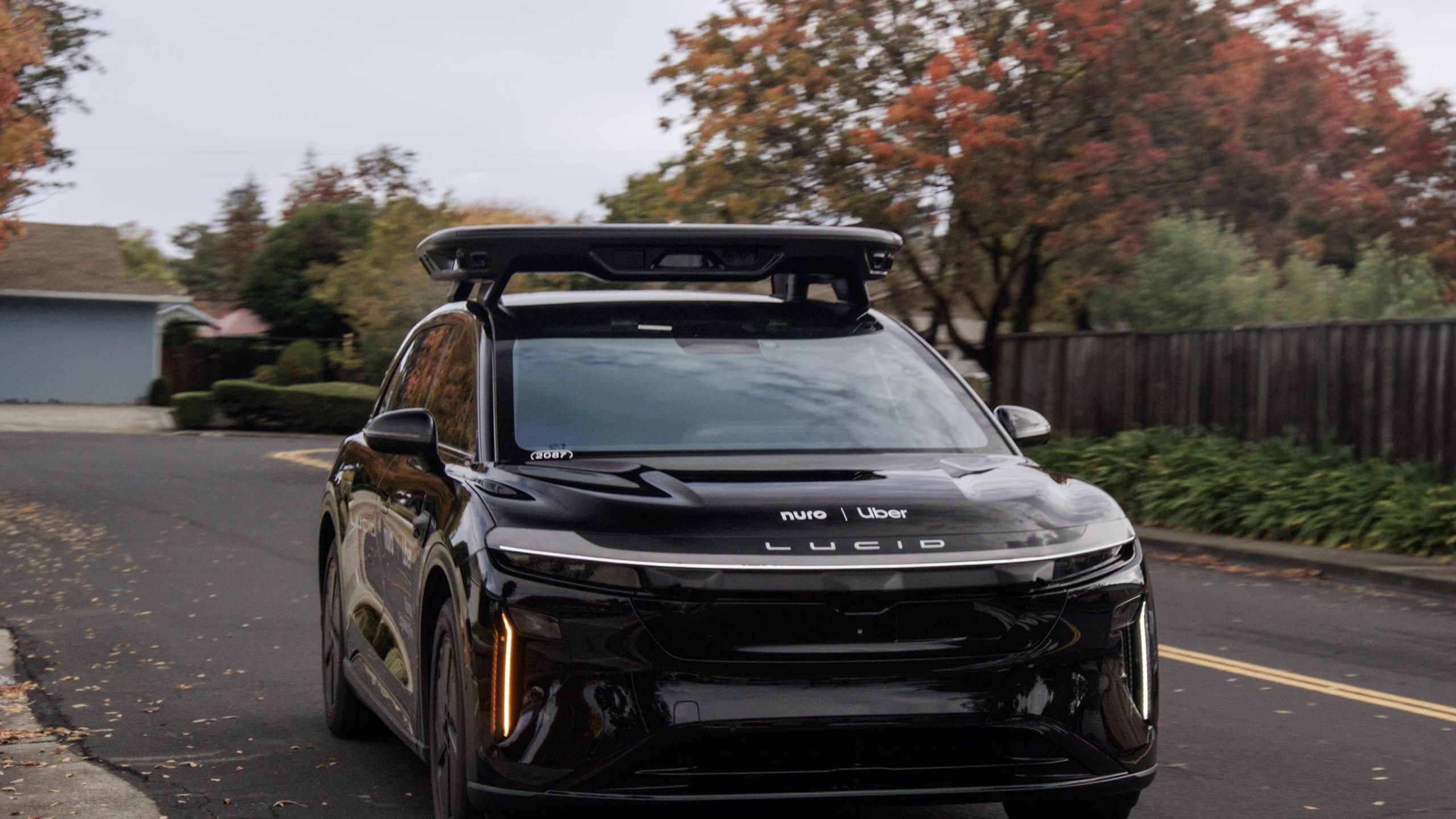
Uber, Lucid, and self-driving startup Nuro have kicked off tests for fully driverless robotaxis in the San Francisco Bay Area. These self-driving cars will transport passengers without a human safety driver on board. Soon, rides for employees will follow, according to The Verge.
What Just Happened
Until now, test vehicles in this program had a human behind the wheel, ready to take control if needed. That person is now out of the equation. The chosen vehicle is the Lucid Gravity, an electric luxury SUV, which runs on self-driving software from Nuro known as the Nuro Driver. This AI system handles steering, braking, and navigation, while Uber provides the ride-hailing app and the customers.
Think of it like a student driver finally taking the test without their instructor present. They’ve practiced for a long time, and now it’s time for the car to go solo.
Engadget mentions that the robotaxis are almost ready for public rides. CNET notes this brings them a step closer to a commercial launch for the Gravity robotaxi.
How the Three Companies Fit Together
Lucid builds the car
Lucid is behind the Gravity, an electric SUV designed as a luxury option. So this robotaxi offers a more upscale experience than your typical Uber ride.
Nuro builds the brain
Nuro creates the autonomous driving software. They don’t run a ride-hailing service in this partnership.
Uber brings the riders
Uber handles the familiar part: opening an app and requesting a ride. This partnership was first announced in July 2025. At that time, Uber said it planned to integrate over 20,000 Lucid vehicles into its network over six years, along with a $300 million investment in Lucid.
| By The Numbers | |
|---|---|
| Company | Uber (NYSE: UBER) |
| Stock price | $65.03 (+1.50%) |
| CEO | Dara Khosrowshahi |
| Headquarters | San Francisco, CA |
| Founded | 2009 |
| Partnership announced | July 2025 |
| Planned Lucid vehicles for Uber | 20,000+ over six years (per July 2025 announcement) |
| Uber investment in Lucid | $300 million (per July 2025 announcement) |
What This Means
For now, everyday riders won’t notice any changes. Testing is restricted to public roads without passengers. The first rides will be for employees only. You still can’t book one of these cars.
This change is important because getting rid of the safety driver is crucial for making a robotaxi service economically viable. A human driver represents the biggest expense in a ride. So a self-driving car is the main goal. Plus, it’s the toughest part to perfect since there’s no one to grab the wheel if something goes wrong.
If testing goes well, riders in the Bay Area might soon see another driverless option in the Uber app. Waymo already provides fully driverless rides in San Francisco, meaning Uber and its partners are stepping into a market with an established competitor. More competition could lead to better choices and possibly different pricing, though no fare details have been released yet.
How People Are Reacting
We didn’t find verified comments on Reddit or YouTube about this announcement to quote. Overall, community feelings about driverless cars are mixed. There’s excitement about the convenience, but also concerns about safety and job losses. We’ll update with specific reactions as discussions evolve.
The Safety Question
Removing the safety driver marks a major milestone in trust. In California, the regulations for driverless testing and paid passenger services differ. Each step requires its own approvals. Testing without a driver isn’t the same as offering paid rides to the public. That’s why the employee-only phase comes first. This phase allows companies to gather real-world data with a less risky group of riders before expanding their reach.
What To Watch
- Employee-only rides: These are expected to begin shortly after testing starts. Keep an eye out for any incidents or service issues.
- Public availability: There’s no set date for opening rides to the general public. The July 2025 announcement hinted at a Bay Area launch, so that’s likely the first location.
- Regulatory approvals: Any approval to charge for driverless rides in California will be a strong signal that a commercial launch is near.
- Pricing and the Waymo comparison: Once the rides are available to everyone, fares and wait times will reveal how the Gravity robotaxi compares to existing options.

Ava Mitchell
Ava Mitchell is a digital culture journalist at Explosion.com covering social media platforms, streaming services, and the creator economy. With 4 years reporting on TikTok, Instagram, YouTube, and the apps that shape daily life, Ava specializes in explaining platform policy changes and their impact on everyday users. She previously managed social media strategy for a tech startup, giving her firsthand experience with the platforms she now covers.