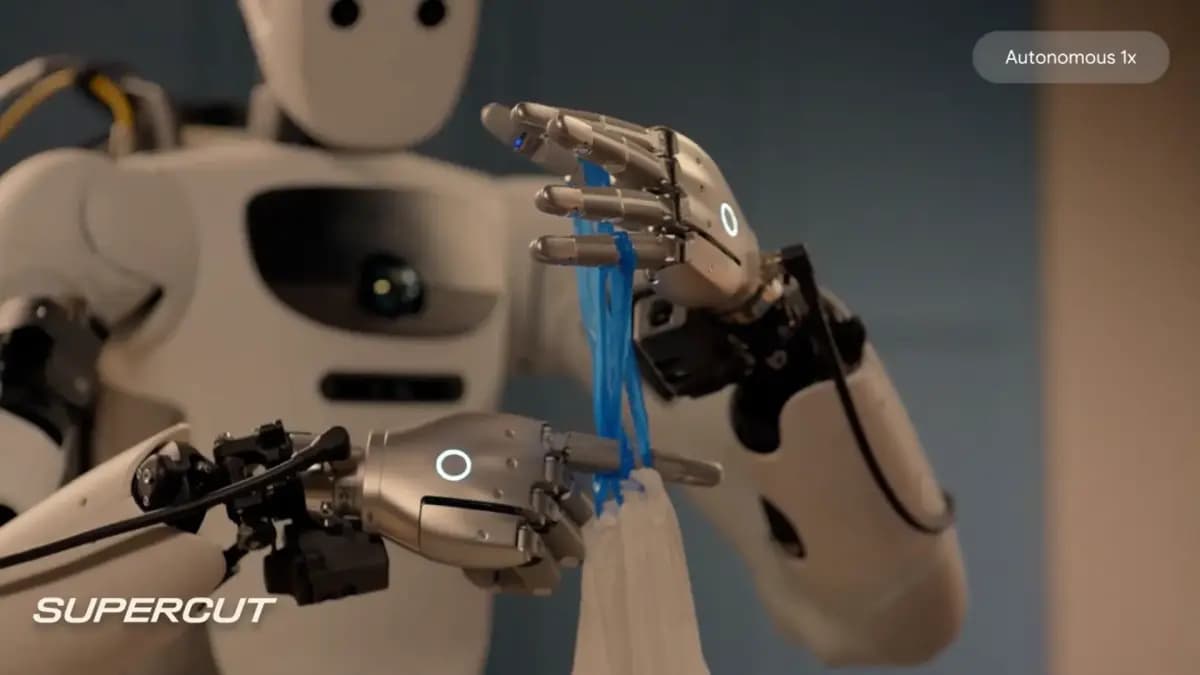
Google DeepMind has shared video demonstrations of its Gemini Robotics 2 AI system controlling humanoid robots as they tackle everyday household chores. The results are impressive and raise questions about how soon we might see a robot housekeeper.
The demos showcase two robots: the Apptronik Apollo 2, a full-body humanoid robot with arms and legs that moves like a human, and the Franka F3 Duo, a dual-arm robotic system designed for tasks on a tabletop. Both robots run on Gemini Robotics 2, the latest AI model from Google DeepMind designed specifically to control physical robots in real-world settings.
What the Robots Are Actually Doing
The videos reveal the robots performing tasks that may seem simple but have long challenged robotics researchers. They fold laundry, pick up objects of various shapes and sizes, and navigate home environments without collisions.
Consider this: teaching a robot to fold a t-shirt is surprisingly tough. A shirt has no fixed shape; it crumples and flops, behaving differently every time you handle it. Getting AI to manage that unpredictability is a major hurdle in robotics, which is why these demos are turning heads.
The Apptronik Apollo 2 takes on more physical, whole-body tasks that require balance and coordination. Meanwhile, the Franka F3 Duo excels at precise manipulation at a table or counter. Together, they indicate that Google DeepMind is testing Gemini Robotics 2 across a variety of physical scenarios, not just one specific task.
Why Gemini Robotics 2 Is Different
Previous robotic AI systems usually focused on a single job, like tightening a bolt or sorting a package, and struggled when conditions changed even slightly. In contrast, Gemini Robotics 2 is built on the same large-scale AI foundation as Google’s Gemini chatbot. This gives it a broader understanding of the world, allowing it to reason through complex physical tasks.
Think of it like the difference between a calculator and a smartphone. The calculator does one thing perfectly, while the smartphone adapts to various needs. Google DeepMind believes that a general-purpose AI brain, trained on vast amounts of data, will create robots capable of thriving in messy, unpredictable environments — like your kitchen.
| By The Numbers: Alphabet / Google | |
|---|---|
| Stock (GOOGL) | $343.80 (-3.84%) |
| CEO | Sundar Pichai |
| Headquarters | Mountain View, CA |
| Founded | 1998 |
| Sector | Big Tech |
| Robots Featured | Apptronik Apollo 2, Franka F3 Duo |
Who Built These Robots?
Google DeepMind didn’t create the robots themselves. Apptronik, based in Austin, Texas, has been developing the Apollo humanoid robot with commercial use in mind. On the other hand, Franka Robotics is a German company known for its precision robotic arms used in various fields. Testing Gemini Robotics 2 on hardware from different manufacturers shows Google wants its AI to function across multiple platforms instead of being tied to one specific device.
What This Means
For everyday users, we’re still in a “watch this space” moment rather than a “buy one now” scenario. Home robots that can reliably do chores aren’t available yet. The demos come from controlled testing environments, not someone’s messy apartment on a typical Tuesday morning.
However, the direction is clear. The robotics industry is heading toward general-purpose machines that can adapt to various tasks. Major AI companies are racing to provide the software brains to make this happen. If Gemini Robotics 2 proves effective in testing, it could eventually be used in commercial robots for warehouses, hospitals, elder care facilities, and, yes, homes.
The immediate impact will more likely be seen in workplaces. Robots that manage diverse physical tasks without needing reprogramming for each job could transform how factories and logistics centers operate. This might lower costs for companies and change the demand for certain types of manual labor.
What People Are Saying
“The laundry folding alone would justify the entire robotics budget. That’s the one task I’d genuinely pay for.”
“Cool demo but I’ll believe it when it works in my actual house and not a staged lab environment. Still, progress is progress.”
That sentiment captures it well. There’s excitement about the technological achievement, but also a healthy skepticism about real-world readiness. Both reactions are fair based on what we’ve seen so far.
Further Reading
- Google DeepMind shows off Gemini Robotics 2 doing household chores (Mashable)
- Google DeepMind Shows Off Gemini Robotics 2 Doing Chores (CNET)
What To Watch
Google DeepMind hasn’t announced a timeline for the commercial release of Gemini Robotics 2 or confirmed which robot manufacturers will adopt the system moving forward. Here are a few things to keep an eye on:
- Apptronik’s Apollo 2 commercial rollout. Apptronik is working toward deploying Apollo in industrial settings. Any partnership announcements with Google DeepMind would signal how close this technology is to leaving the lab.
- Competing announcements. Tesla’s Optimus robot and Figure AI’s humanoid platform are both in active development. Google releasing these demos now suggests the race for a viable general-purpose robot is heating up, and competitor updates are likely to follow.
- Google I/O and DeepMind research publications. Google DeepMind typically shares more technical information through research papers and developer events. A formal paper on Gemini Robotics 2’s architecture and training approach would provide a clearer picture of what the system can and can’t do yet.

Daniel Park
Daniel Park covers AI, cloud infrastructure, and enterprise software for Explosion.com. A former software engineer who transitioned to technology journalism 5 years ago, Daniel brings technical depth to his reporting on artificial intelligence, startup funding rounds, and the companies building the future of computing. He breaks down complex AI developments and business strategies into clear, actionable insights for readers who want to understand how technology is reshaping industries.