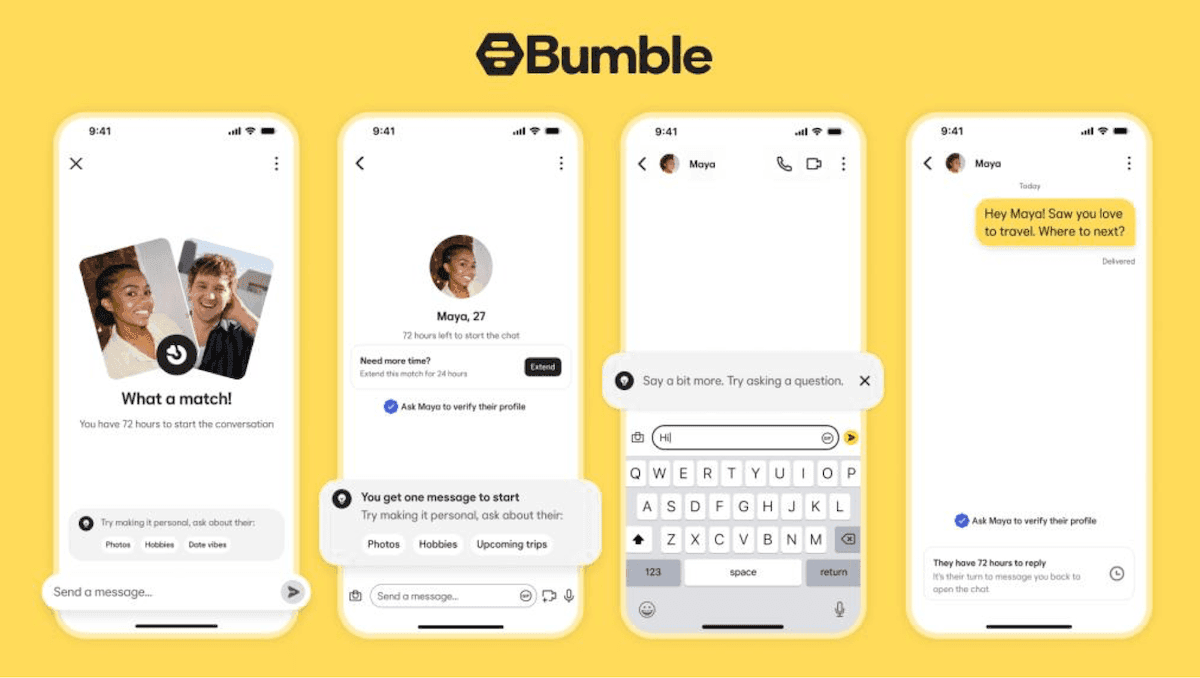
Bumble is changing a key rule that defined its identity: starting today, anyone can send the first message after matching. This ends the app’s 12-year requirement for women to initiate conversations in heterosexual matches.
Since its launch in 2014, Bumble had one standout feature — in straight matches, only women could send the first message. Men had 24 hours to respond, or the match would expire. This design aimed to reduce the harassment women faced on other apps like Tinder. For over a decade, this policy was Bumble’s hallmark.
The company now calls this change a “global evolution to its signature conversation experience.”
What Actually Changed
With the new system, anyone in a match can send the first message, regardless of gender. The 24-hour expiration window remains — matches will still disappear if no one initiates contact — but the previous restriction is gone.
Bumble hinted at this change back in May, indicating it was reevaluating its core matching system. The full rollout is happening globally today on both iOS and Android.
For same-sex matches, Bumble has always allowed either person to message first. This change specifically impacts heterosexual matches, which account for the majority of user activity on the platform.
Why Bumble Made the Switch
Dating apps rely on engagement numbers, and the “women message first” rule created a serious bottleneck. If a woman matched with someone but felt hesitant to message first, the match often just fizzled out. Both individuals wanted to connect, but the connection never materialized.
Imagine a door that only opens from one side. Even if two people want to step through, only one can turn the handle. Bumble is now adding a handle on both sides.
While the company hasn’t shared exact figures on how many matches went unanswered under the old system, changing a rule that was fundamental to its foundation indicates the numbers must have been significant.
| Metric | Detail |
|---|---|
| Year founded | 2014 |
| Years the women-first rule was in place | 12 years |
| Match expiration window | 24 hours (unchanged) |
| Rollout scope | Global, iOS and Android |
| Change first teased | May 2026 |
What This Means for You
If you’re a Bumble user in a heterosexual match, you don’t have to wait any longer. Men can now send a message right after matching. Women who like to send the first message can still do so — there’s nothing stopping them. The key difference now is that both parties can choose.
For users who picked Bumble because of the women-first rule, this change is significant. The app’s appeal as a safer, less aggressive alternative to other dating platforms was closely linked to that feature. Only time will tell how the new setup affects the app’s overall vibe.
The 24-hour expiration rule still applies, ensuring both parties feel a sense of urgency. This should help maintain the distinctiveness that made Bumble stand out from apps where matches can linger for weeks.
Community Reactions
“Honestly, I always thought the women-first thing was cool, but it meant half my matches never went anywhere. At least now both people can actually try.”
“They built their entire brand on this one rule. Dropping it now feels like Bumble admitting it didn’t work as well as they claimed.”
What To Watch
- User retention data: Bumble’s next earnings report will reveal if this change helped or hurt the platform. Keep an eye on active user numbers and subscription revenue.
- Competitor response: Tinder, Hinge, and other dating apps will be watching closely. If Bumble sees increased engagement, expect others to take notes.
- User feedback over the next 30-60 days: App store reviews and social media sentiment will show whether longtime Bumble users are sticking around or leaving because of this change.
- Further product updates: The teaser from May suggested broader changes to the conversation experience. This first-message change could be just the beginning of several updates throughout 2026.
Sources: TechCrunch, The Verge, Mashable

Maya Torres
Maya Torres is the Consumer Tech Editor at Explosion.com with 7 years covering product launches for major technology publications. She has reviewed over 300 devices across smartphones, laptops, wearables, and smart home products. Maya specializes in translating spec sheets into real-world buying advice and attends CES, MWC, and Apple keynotes as press. Her reviews focus on helping readers decide what to buy, not just what specs look good on paper.