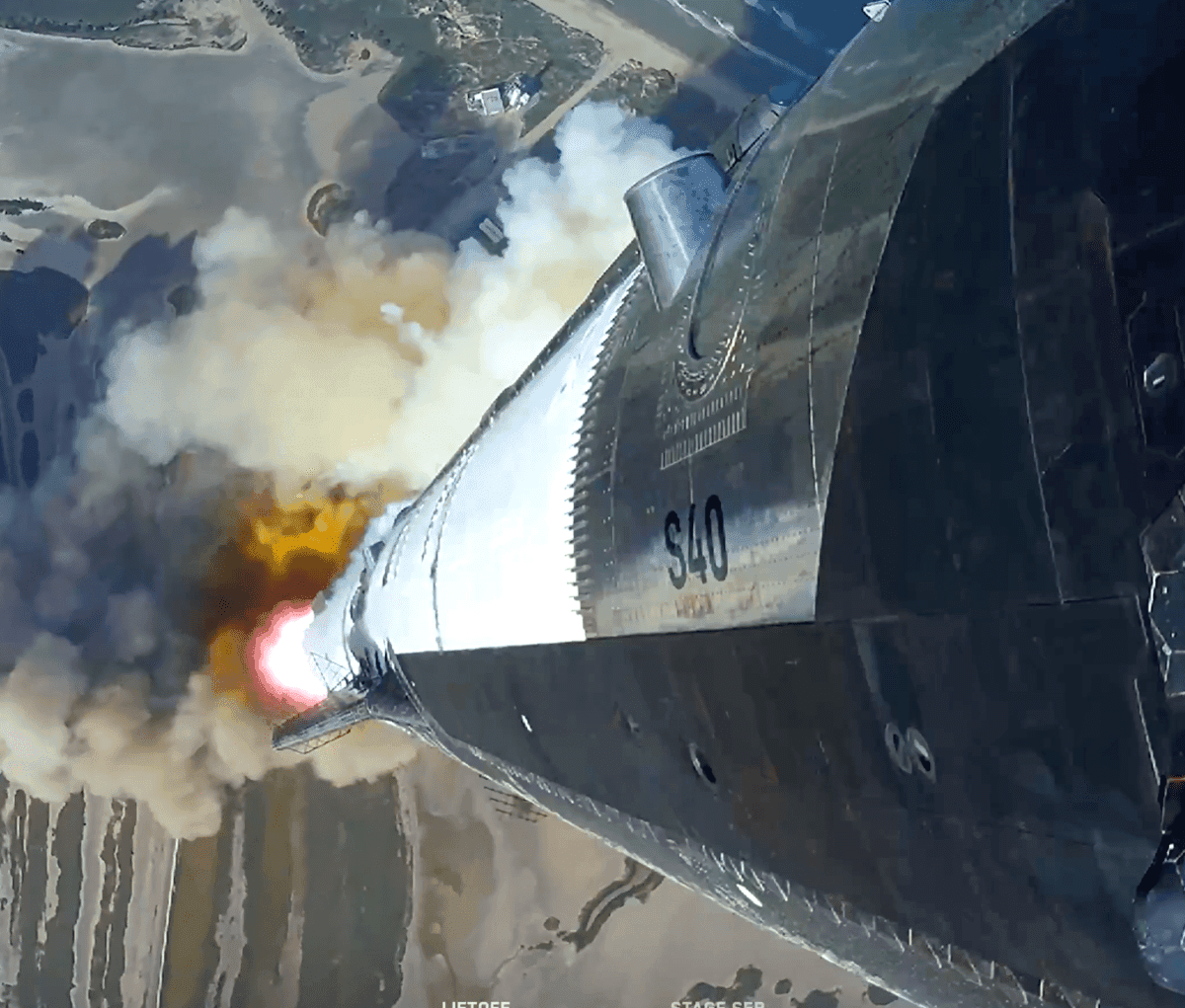
SpaceX launched 20 next-generation V3 Starlink satellites on its 13th Starship test flight. This marks a significant step forward for the program. However, the mission faced challenges again, as the Super Heavy booster’s engines failed to reignite during its return descent.
What Happened
The 13th Starship test flight carried a commercial payload for the second time, featuring 20 V3 Starlink satellites. These are the latest in SpaceX’s broadband internet hardware lineup. Launching real satellites into orbit is crucial for building Starship, so this test mission is a meaningful advancement beyond just demonstrating that the rocket can launch successfully.
During this flight, SpaceX achieved several milestones compared to earlier tests. Still, the company encountered the same issue as in the previous V3 mission. The Super Heavy booster, which is the large lower stage of the rocket, failed to relight its Raptor engines during descent. This engine relight is necessary for the booster to slow down enough for a controlled landing or catch attempt.
Why the Booster Problem Matters
Think of Super Heavy as a very expensive bus. SpaceX’s entire business model for Starship relies on reusing both the booster and the upper stage (called Ship), similar to how airlines reuse aircraft. If the booster can’t land successfully, SpaceX essentially discards a massive piece of equipment after each flight, which is the costly model they’re trying to avoid.
The recurring nature of this issue, seen across at least two flights, indicates that SpaceX is grappling with a specific technical challenge regarding the booster’s engine restart sequence. Engine relights in the cold, near-vacuum conditions of high-altitude descent are tough. Ensuring reliability in this area is one of the trickier engineering tasks on the program’s agenda.
The V3 Satellites: Why They Matter
The 20 satellites launched in this flight are the V3 Starlink units, the most recent version of SpaceX’s broadband constellation hardware. V3 satellites are larger and more capable than the previous V1 and V2 Mini versions already in orbit. They’re designed to be launched in bulk using Starship, rather than the smaller Falcon 9 rocket that SpaceX typically uses for most Starlink launches.
Starship can carry a much larger payload to orbit than Falcon 9. This capability could allow SpaceX to deploy satellites more quickly and affordably once the vehicle is fully operational. Launching V3 hardware on Starship, even in small quantities during test missions, helps SpaceX validate their performance in real conditions.
| Metric | Detail |
|---|---|
| Flight number | 13th Starship integrated test flight |
| Payload | 20 V3 Starlink satellites |
| V3 flights on Starship | 2nd mission to carry V3 satellites |
| Booster outcome | Apparent engine relight failure during descent |
| Launch site | Starbase, Boca Chica, Texas |
What This Means
For everyday Starlink subscribers, this flight doesn’t change your current service. However, it’s part of the broader effort to expand and enhance the network. V3 satellites are designed to provide faster speeds and support more users per satellite. The sooner SpaceX can launch them at scale, which requires a working, reusable Starship, the quicker those improvements will reach customers.
For the wider space industry, each Starship flight generates valuable data that SpaceX can use to work toward full reusability. While the booster issue is a setback, the program has bounced back from bigger challenges. The fact that SpaceX is now flying real commercial payloads on test missions shows growing confidence in the vehicle’s fundamental reliability, even as they address tricky issues like the booster relight.
What People Are Saying
“The booster issue two flights in a row is concerning, but remember they were also catching boosters with chopstick arms a year ago. SpaceX tends to fix things fast when they have data.”
“Actually flying Starlink satellites on these test flights is huge. That’s not a test dummy payload; those are real satellites going to real orbits. Program is maturing.”
What To Watch
- Booster investigation: SpaceX will analyze telemetry from the descent to find out what caused the engine relight failure. How quickly they resolve this will indicate whether it’s a software, hardware, or propellant management issue.
- Flight 14 timeline: SpaceX hasn’t announced a date for the next Starship test, but the pace has been picking up. Keep an eye out for a regulatory filing with the FAA (Federal Aviation Administration) as an early sign.
- V3 satellite performance: The 20 V3 units from this flight will be monitored in orbit. Good performance data would bolster SpaceX’s case for speeding up V3 deployments in future flights.
- Booster catch attempts: If the relight issue gets resolved, SpaceX may resume mechanical catch attempts at the launch tower. This would be one of the program’s most exciting milestones so far.
Sources: TechCrunch | Engadget

Maya Torres
Maya Torres is the Consumer Tech Editor at Explosion.com with 7 years covering product launches for major technology publications. She has reviewed over 300 devices across smartphones, laptops, wearables, and smart home products. Maya specializes in translating spec sheets into real-world buying advice and attends CES, MWC, and Apple keynotes as press. Her reviews focus on helping readers decide what to buy, not just what specs look good on paper.