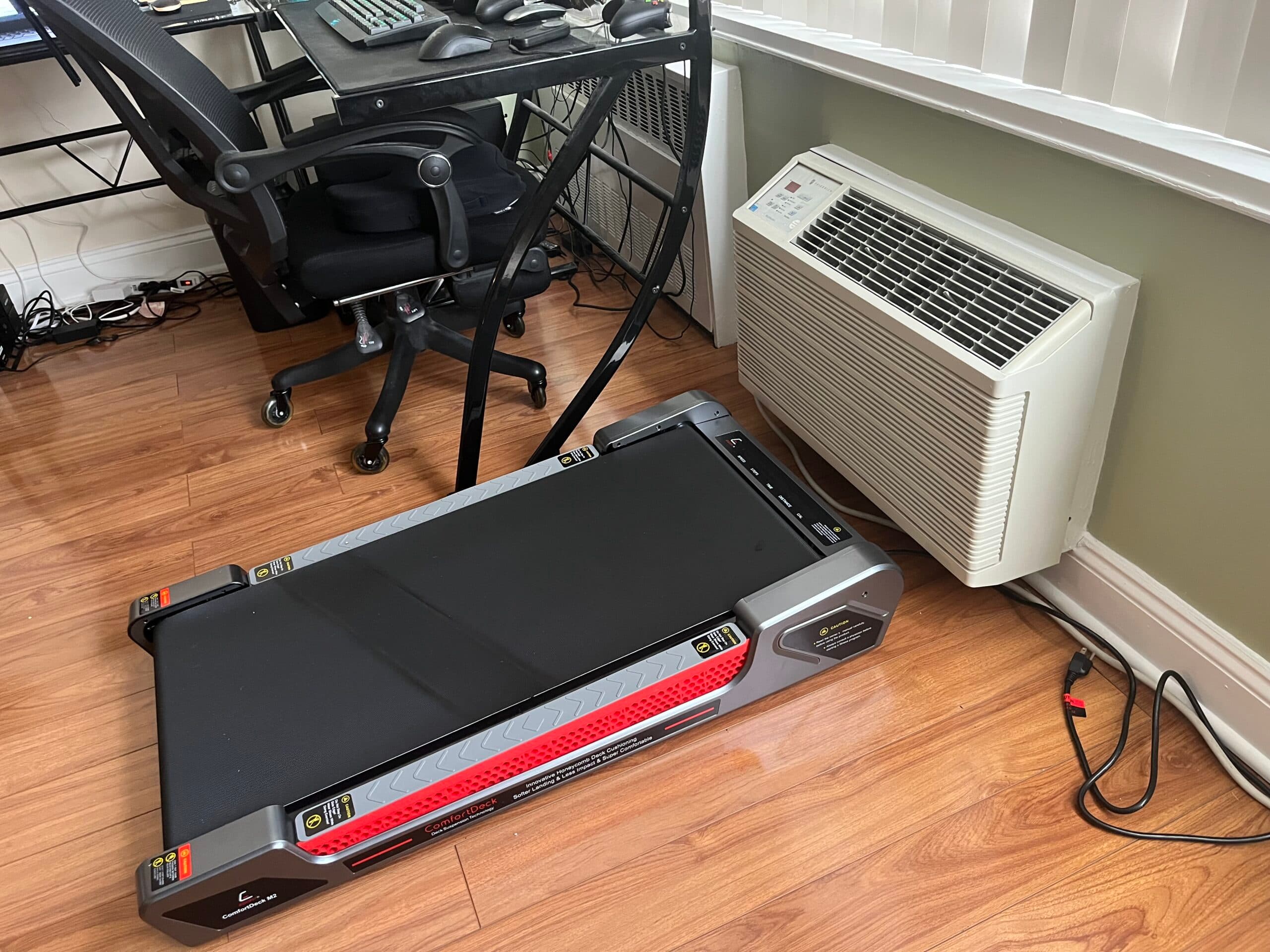
Walking pads are compact treadmills designed to fit under your desk, allowing for slow walking while you work. They can boost your daily step count, though they won’t replace a structured workout routine. CNET tested two popular models from Egofit and Costway to see how they perform.
What Is a Walking Pad, Exactly?
A walking pad is like a basic treadmill made to slide under a standing desk. Unlike full-sized treadmills, these are thin enough to tuck away under a couch and operate quietly for video calls. They typically run at speeds between 0.5 and 4 mph, a gentle pace you can maintain while typing or reading. Think of them as a way to turn your workday into a slow walk instead of just sitting still.
This is especially appealing for remote workers. Sitting for eight hours straight can lead to various health issues, and getting outside for a walk isn’t always possible during back-to-back meetings. Walking pads offer a solution: stay productive while moving more.
What the Testing Showed
CNET’s tester spent time using both the Egofit Walker Pro and a Costway model, tracking step counts, calorie estimates, and comfort while working. The main finding? Both pads succeeded in increasing daily movement. On days using a walking pad, step counts rose noticeably compared to fully sedentary days.
However, there were some trade-offs. Typing while walking takes some getting used to. Initially, typing accuracy drops, and tasks requiring deep concentration become harder at speeds above about 1.5 mph. Most users found the ideal pace for knowledge work to be around 1 to 2 mph, similar to a leisurely stroll through a grocery store.
Egofit vs. Costway: Key Differences
The Egofit Walker Pro stands out as the more refined option. It connects to an app via Bluetooth, automatically tracks your sessions, and operates much quieter — a big plus if you’re on calls. Plus, it has a slimmer profile.
The Costway model is more budget-friendly, but it shows some limitations. It’s louder, doesn’t connect to an app, and has slightly less smooth belt movement. If you just want to rack up steps without fancy data tracking, it gets the job done. But if you work in shared spaces or want workout logs, the Egofit is worth the higher price.
| Stat | Detail |
|---|---|
| Typical walking pad speed range | 0.5 to 4 mph |
| Recommended working speed | 1 to 2 mph |
| Models tested | Egofit Walker Pro, Costway walking pad |
| Primary benefit found | Increased daily step count on work days |
| Key limitation | Not a substitute for structured cardio workouts |
What This Means for You
If you work from home and find it tough to hit 7,000 to 10,000 steps a day — a common fitness goal — a walking pad can be a helpful tool. It won’t provide the cardiovascular fitness of running, nor will it build muscle. But it does help bridge the gap between a sedentary desk day and basic movement goals, which is important for your long-term health.
Think of it this way: a walking pad is to fitness what a multivitamin is to nutrition. It fills a gap but can’t replace a full workout. If you’re active outside of work hours, you might not need one. But if your job has you averaging just 2,000 steps a day, it could really enhance your routine.
However, the setup can be a hurdle for many. Walking pads work best with a standing desk or a raised work surface. Trying to walk while hunched over a regular desk defeats the purpose quickly.
Community Reactions
“I’ve had mine for 6 months, and it genuinely changed my work-from-home routine. I do about 8k steps before lunch now without even thinking about it. The key is keeping it slow — the second I try to go faster than 2mph, I can’t type properly.”
“Tried one of these at a friend’s place. The noise is real — not terrible, but definitely noticeable on video calls. Might be a dealbreaker depending on your setup.”
What To Watch
- Price trends: Prices for walking pads have been falling as more brands join the market. You can now find budget models under $200, with prices likely dropping further by late 2026 due to competition.
- Desk integration: Some standing desk manufacturers are looking into walking pad bundles. Bundled packages could make it easier for buyers to set up.
- Workplace adoption: With more companies bringing employees back to the office, keep an eye on corporate wellness programs that may start subsidizing walking pad purchases — a few large employers have already begun this in the U.S.
Sources: CNET: Do Walking Pads Do Anything for Your Fitness? I Tested 2 to Find Out

Maya Torres
Maya Torres is the Consumer Tech Editor at Explosion.com with 7 years covering product launches for major technology publications. She has reviewed over 300 devices across smartphones, laptops, wearables, and smart home products. Maya specializes in translating spec sheets into real-world buying advice and attends CES, MWC, and Apple keynotes as press. Her reviews focus on helping readers decide what to buy, not just what specs look good on paper.