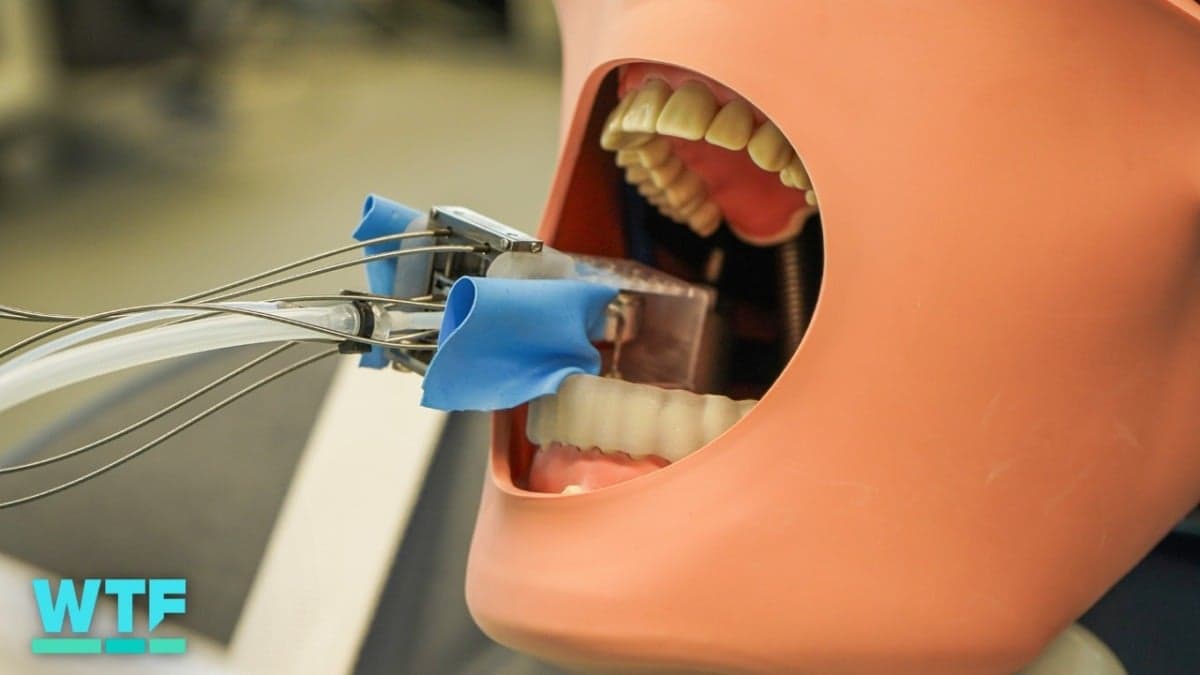
A new robotic dental device is in the works. This device attaches to a patient’s teeth to enable precision drilling. The aim is to reduce the number of visits needed for a dental crown from two or more to just one. This robot, still under development, will work alongside dentists rather than replacing them. While the robot handles the drilling, the dentist supervises the entire procedure.
How It Actually Works
The robot clamps directly onto the patient’s teeth to stabilize itself. This anchoring allows it to position the drilling tool with great accuracy. Picture a power drill mounted in a custom jig — but in this case, the jig is your mouth, and the drill knows exactly where to go.
This precise positioning is crucial because drilling for a dental crown involves removing a specific amount of tooth material. If too much material is removed, the crown won’t fit. If too little is removed, it won’t sit correctly. While dentists are skilled at this task, they work within the limits of human steadiness. A robotic arm, however, doesn’t face that issue.
The system aims to enable dentists to design and fit a crown in a single appointment. This is a big change from the usual process, which requires one visit for drilling and impressions, a waiting period of days or weeks for the crown to be manufactured at a lab, and then a second visit to install it.
Why Dental Crowns Take So Long Right Now
The current two-visit process mainly exists because of manufacturing constraints. After drilling and taking an impression (a mold of the tooth and surrounding teeth), the mold goes to a dental lab. There, technicians create a custom crown by hand or with milling machines. This whole process takes time.
Some dental offices use chairside milling machines — devices that carve a crown from a ceramic block in about 15 minutes — to provide same-day crowns. However, these systems still rely on the dentist’s drilling prep being accurate enough for the machine’s scan to work. The new robot aims to make that prep step more consistent and precise, which could lead to better results, whether you’re getting a same-day crown or one crafted in a lab.
What This Means
For most people, the immediate benefit is clear: fewer dental appointments. Getting a crown now means scheduling two separate visits, taking time off work or school twice, and wearing a temporary crown in between that can pop off at the worst times. A robot-assisted single-visit crown could eliminate much of that hassle.
There’s a potential comfort benefit too. Robotic drilling could be quicker and more controlled than manual drilling. That might mean less time with your mouth open and instruments inside it. Generally, less time in the chair leads to less discomfort, even if you’re properly numbed.
For dentists, consistent robotic prep could lead to fewer crowns that don’t fit well on the first try. This would cut down on the number of patients who need to return for adjustments, adding yet another appointment to the process.
| Metric | Detail |
|---|---|
| Current crown visits required | 2 or more |
| Target visits with robot assist | 1 |
| How robot anchors itself | Clamps directly onto patient’s teeth |
| Development status | In development, not yet commercially available |
Community Reactions
“As someone who’s had a temp crown fall out in a work meeting, I would absolutely let a robot do this if it meant going home with the real crown the same day.”
— Reddit user in r/Dentistry discussion on the robot
“I’m curious how it handles the variation in people’s mouths. Teeth aren’t standardized like the parts in a factory.”
— YouTube comment on CNET’s dental robot demo video
The Bigger Picture
Robotics in medicine isn’t a new concept. Surgical robots like the da Vinci system have been in operating rooms for years. However, dentistry has been slower to embrace robotic assistance. This is partly because dental offices are small businesses with limited budgets and partly due to the physical challenges of working in the human mouth.
Getting a robot to work accurately inside someone’s mouth, attached to their teeth, while the patient breathes and occasionally needs to swallow poses significant engineering challenges. The clamping attachment method developers are using helps solve the stability issue without the need for complete patient immobilization.
Whether this technology expands beyond crown prep to other procedures like fillings, implant placement, or orthodontic work will depend on its performance in broader clinical testing and its cost for practices.
What To Watch
- Clinical trial results: The device is still under development, so keep an eye out for announcements about formal human trials and their outcomes. This will influence how quickly it moves toward approval and commercial use.
- Regulatory clearance: In the U.S., this device will need FDA clearance before dentists can use it on patients. The timeline for that process will be an important indicator of when patients might actually encounter this technology.
- Cost and accessibility: Even if the robot performs well, its price will determine whether it ends up in general dental offices or just specialty clinics. Watch for news about licensing or purchase options aimed at smaller practices.
Sources: CNET: New Dental Robot Attaches to Patient’s Teeth for Drilling | CNET: Dental Robot for Drilling Teeth Put to the Test (Video) | Mashable: Meet the Dental Robot for Tooth Drilling

Daniel Park
Daniel Park covers AI, cloud infrastructure, and enterprise software for Explosion.com. A former software engineer who transitioned to technology journalism 5 years ago, Daniel brings technical depth to his reporting on artificial intelligence, startup funding rounds, and the companies building the future of computing. He breaks down complex AI developments and business strategies into clear, actionable insights for readers who want to understand how technology is reshaping industries.