
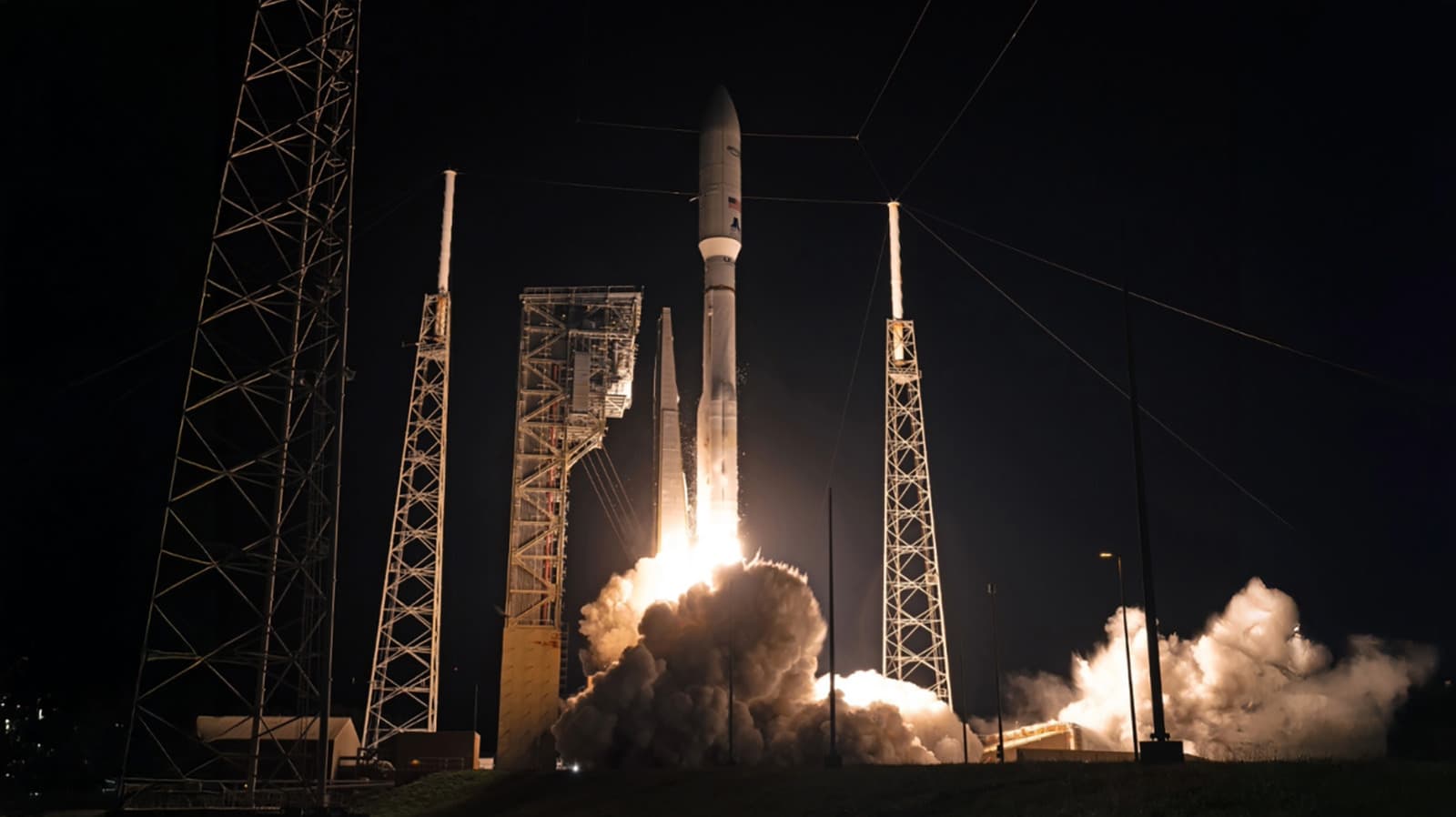
Amazon has launched enough satellites to kick off its long-awaited internet service. This marks a significant step for Project Kuiper, allowing it to compete directly with SpaceX’s Starlink.
This week, Amazon’s Leo service hit a milestone with 396 satellites in low-Earth orbit (LEO, which ranges from about 200 to 1,200 miles above Earth). Chris Weber, the VP leading the project, stated this number is “enough to support continuous service across initial latitudes.”
What Amazon Leo Actually Is
Leo is Amazon’s response to Starlink, the satellite internet service from SpaceX that delivers broadband to customers on the ground. These systems utilize a network of satellites overhead, eliminating the need for cables or cell towers. This setup is particularly useful in rural or remote areas lacking traditional internet infrastructure.
Amazon has been working toward this milestone for years through the broader Project Kuiper initiative. Engineers consider the 396-satellite mark a “tipping point.” It’s the minimum number required to maintain a steady signal over a specific area, preventing gaps in coverage as satellites move in and out of range.
The Gap Between Amazon and Starlink Is Still Enormous
However, there’s a catch: while 396 satellites sound impressive, SpaceX’s Starlink already operates over 7,000 satellites. That means Starlink’s constellation is roughly 18 times larger than Amazon’s current fleet.
Think about it like cell towers. More towers mean better coverage and the ability to serve more customers. Starlink’s head start gives it a considerable advantage in both coverage and capacity—at least for now.
Amazon has received regulatory approval to eventually deploy around 3,200 satellites under its FCC license. Achieving that will demand many more launches and months, if not years, of extra work.
| Stock Price | $245.34 (−0.69%) |
|---|---|
| CEO | Andy Jassy |
| Headquarters | Seattle, WA |
| Founded | 1994 |
| Leo Satellites Deployed | 396 |
| Starlink Satellites (for comparison) | 7,000+ |
| Amazon’s Approved Constellation Size | ~3,200 |
What This Means
If you live in an area with inconsistent or no broadband access, this development matters. Starlink has proven that satellite internet can be a viable alternative to cable or fiber in underserved regions, but it has operated as a monopoly in that space. A competitor shifts the dynamics.
Competition usually leads to lower prices and improved service quality. Currently, Starlink’s residential service costs around $120 per month. If Amazon aggressively enters the market, as it’s done with cloud computing and retail, pricing pressure could benefit millions of rural customers with limited options.
For most urban users with cable or fiber, the immediate impact will be minimal. Yet for people in rural America, remote areas of Europe, or underserved regions worldwide, having a second major player in satellite broadband is definitely worth watching.
Amazon also has an advantage in distribution. Its existing AWS (Amazon Web Services) infrastructure could make Leo especially appealing for businesses that already utilize Amazon’s ecosystem.
Community Reactions
“396 vs 7000+ lol, Amazon has a long way to go. That said, competition is always good. Starlink pricing hasn’t moved much because there’s been nobody pushing back.”
— u/orbital_drift, r/Starlink
“The real question is what the pricing looks like and whether they can actually get terminals in people’s hands. Starlink had years of hardware head start too.”
— YouTube comment on The Verge’s coverage
What To Watch
- Service launch timing: Amazon has confirmed it has enough satellites for initial service but hasn’t set a public availability date. Keep an eye out for beta access announcements soon.
- Pricing details: How Amazon prices Leo will determine if it can genuinely compete with Starlink or become a niche product. Consumer pricing remains undisclosed.
- Constellation expansion: Each new launch batch will increase coverage and capacity. Follow Amazon’s launch schedule to gauge how quickly Leo will reach its approved 3,200-satellite limit.
- Hardware availability: Satellite internet needs a physical dish and receiver at your home. Amazon will need to get that hardware into stores or ship it affordably to compete with Starlink’s established supply chain.
Sources: Engadget — Amazon Leo is ready to go | The Verge — Amazon has enough satellites to launch its Starlink competitor

Maya Torres
Maya Torres is the Consumer Tech Editor at Explosion.com with 7 years covering product launches for major technology publications. She has reviewed over 300 devices across smartphones, laptops, wearables, and smart home products. Maya specializes in translating spec sheets into real-world buying advice and attends CES, MWC, and Apple keynotes as press. Her reviews focus on helping readers decide what to buy, not just what specs look good on paper.


