
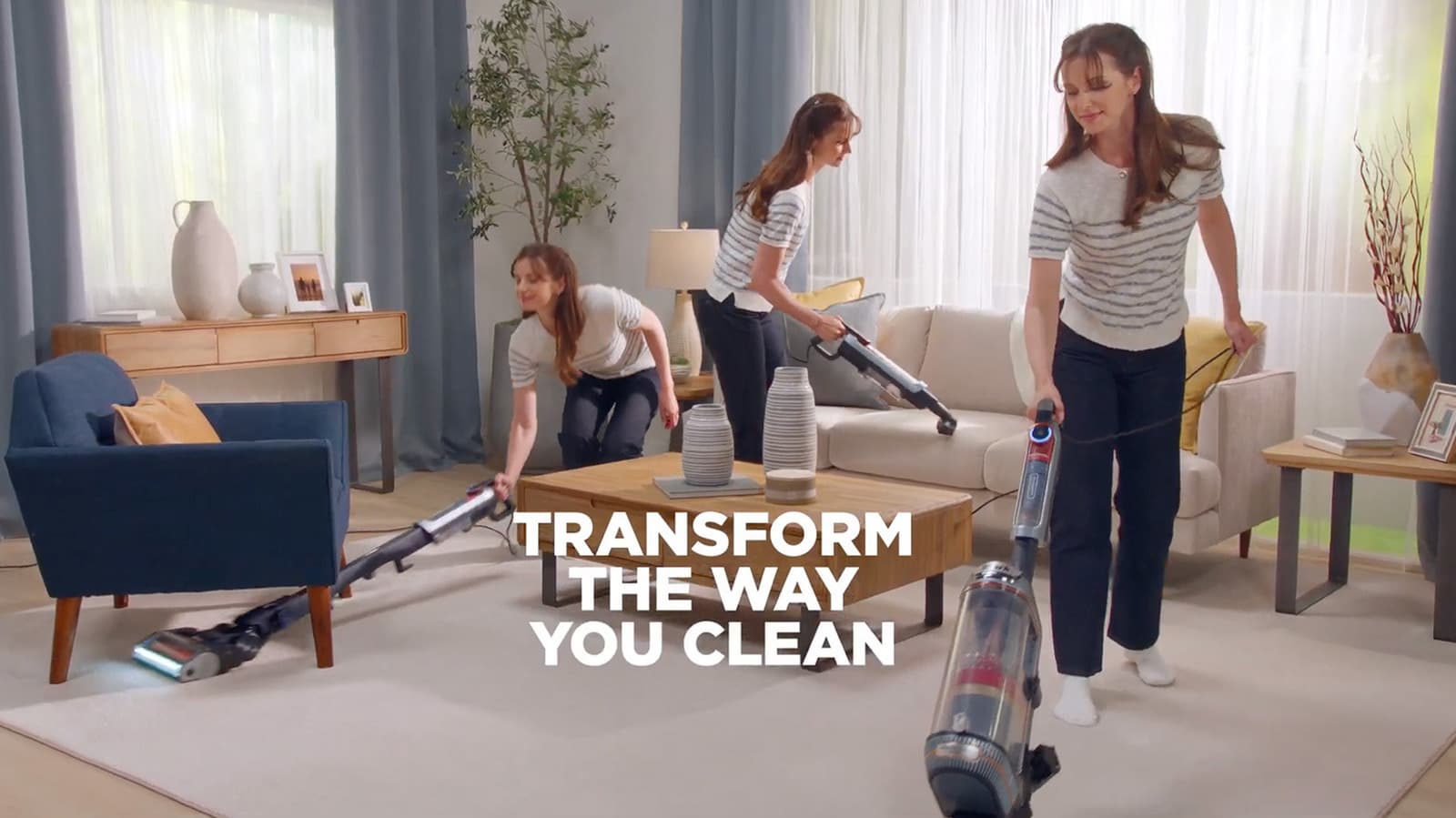
Shark has introduced the PowerDetect Transformer, a versatile vacuum that splits into three different cleaning machines: a full-size upright, a cordless stick vacuum, and a handheld unit — all included in one purchase.
How It Actually Works
Picture it like a Russian nesting doll, but for cleaning. The PowerDetect Transformer begins as a traditional upright vacuum — the type you push across carpets in long, sweeping motions. The top part detaches to become a cordless stick vacuum (a lighter, battery-powered model you can carry around easily), which can then be further broken down into a compact handheld for reaching tight spots like car interiors, stairs, or couch cushions.
Shark claims the full-size setup is its most powerful mode, and that makes sense. In upright form, the vacuum draws power from both the battery and a wired connection, delivering suction usually found in plug-in machines. If you switch to stick or handheld mode, you rely solely on battery power.
What the “PowerDetect” Name Actually Means
The PowerDetect label highlights Shark’s automatic debris detection system. Sensors inside the vacuum sense when you roll over a particularly dirty area and boost suction automatically. Once the area is clean, it reduces suction. This feature aims to extend battery life by avoiding full power all the time — a common issue with cordless vacuums that often drain their charge in just 20 to 30 minutes.
The Specs
| Spec | Detail |
|---|---|
| Form Factors | 3 (upright, stick, handheld) |
| Power Modes | Wired + battery (upright), battery-only (stick/handheld) |
| Key Feature | Automatic debris detection and suction adjustment |
| Brand | Shark (SharkNinja) |
| Product Line | PowerDetect series |
What This Means for You
If you’ve ever wished for just one vacuum instead of three — one for carpets, one for quick cleanups, and a handheld for the car — Shark’s got you covered. The practicality is clear: less storage space, fewer devices to charge or maintain, and just one purchase instead of three.
The automatic suction adjustment is also a standout feature. Many cordless vacuums require you to manually switch between power modes, often leading people to leave it on high and quickly drain the battery. A vacuum that knows when to increase suction could genuinely extend battery life during a typical cleaning session.
However, there’s a catch with any convertible device: it might do a lot, but it may not excel in any one area. Dedicated uprights from brands like Dyson or Miele usually outperform combo units in pure suction tests. Whether the convenience is worth it will depend on your home’s size and how often you switch between cleaning tasks.
What People Are Saying
“This is actually smart design. I live in an apartment, and I don’t have room for an upright AND a stick vacuum. If the battery life is decent, this is a no-brainer.”
“I’ll believe the auto-detect suction thing when I see it. My last Shark claimed to be smart, and it absolutely wasn’t.”
Further Reading
- Shark’s new PowerDetect Transformer turns into three different types of vacuum — Engadget
- Shark’s New Transformer Vacuum Breaks Down Into Three Different Vacuums — CNET
What To Watch
Shark hasn’t confirmed when the PowerDetect Transformer will be widely available beyond the initial launch announcement. Keep an eye out for it at major retailers like Best Buy, Target, and Amazon in the coming weeks. Independent battery life tests from reviewers will be crucial — especially for stick mode under real-world conditions, not just lab tests. If competing brands like Dyson launch their own convertible models, it could mean this format is becoming a mainstream product category instead of just a novelty.

Ava Mitchell
Ava Mitchell is a digital culture journalist at Explosion.com covering social media platforms, streaming services, and the creator economy. With 4 years reporting on TikTok, Instagram, YouTube, and the apps that shape daily life, Ava specializes in explaining platform policy changes and their impact on everyday users. She previously managed social media strategy for a tech startup, giving her firsthand experience with the platforms she now covers.