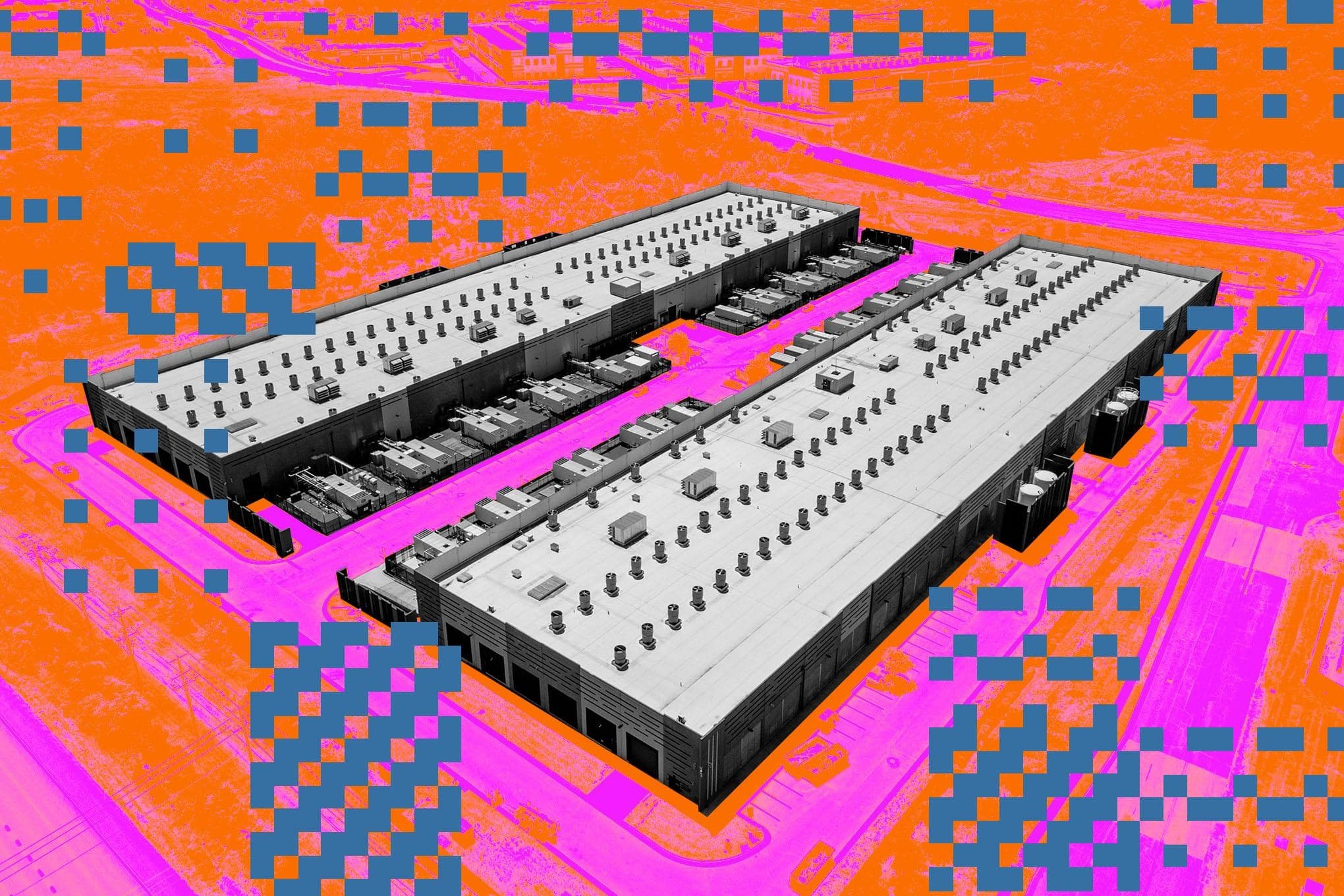
Nvidia claims its next-gen data center design nearly eliminates water use inside the building. However, critics and researchers argue that this doesn’t tackle the bigger issue: where AI consumes most of its water — the power plants that keep those data centers running.
What Nvidia Is Actually Announcing
The company is showcasing its “Rubin” generation reference design, a blueprint for fully liquid-cooled AI infrastructure. Traditional data centers cool servers with a mix of air conditioning and evaporative cooling towers, which operate like a giant swamp cooler. They spray water into the air to pull heat away, consuming millions of gallons annually at large facilities.
Nvidia’s new design runs its chips hotter and sends liquid coolant directly through the server hardware. Since the system is closed-loop — meaning the coolant circulates without evaporating — it significantly reduces on-site water consumption. Nvidia claims this design has “eliminated massive amounts of power usage and pretty much all water usage” compared to conventional setups.
This is a notable engineering achievement. While liquid cooling has been around in specialized computing for decades, scaling it to entire AI data center campuses poses technical and financial challenges. Getting the industry to adopt a standardized approach is crucial.
Here’s the Catch
Reducing on-site water consumption is just one part of AI’s water footprint — and arguably not the biggest part.
The real issue lies at the power plant. Most AI data centers in the U.S. still rely on electricity from the grid, which includes a significant share of thermoelectric generation: natural gas, coal, and nuclear plants. These facilities use vast amounts of water to generate steam and cool their equipment. So, when a data center demands more electricity, upstream water costs increase too, even if you can’t see it on the data center campus.
Think of it like purchasing a “paperless” airline ticket. You didn’t print anything, but the servers storing your booking confirmation are still consuming power somewhere. The water hasn’t vanished; it just shifted upstream, out of sight.
Researchers studying AI’s environmental impact emphasize that the distinction between on-site and off-site water usage is important when companies discuss water reduction. On-site water is something a company can directly control and highlight in sustainability reports. Off-site water, tied to the energy mix of the regional grid, is much harder to track and nearly impossible to claim credit for reducing without switching to genuinely renewable power sources.
Why This Is Getting Attention Now
Public opposition to data centers has grown over the past two years as AI demand has driven up electricity and water consumption. Communities in Virginia, Iowa, and Arizona have pushed back against new facilities, citing strain on local water supplies and electrical grids. This pressure has prompted major tech companies to proactively address sustainability messaging.
Nvidia, being the leading supplier of AI chips designed specifically for machine learning workloads, has a vested interest in making data centers appear greener. If regulators or local governments start blocking new construction over environmental concerns, it could slow down the market for its hardware.
| Nvidia — Company Snapshot | |
|---|---|
| CEO | Jensen Huang |
| Headquarters | Santa Clara, CA |
| Founded | 1993 |
| Ticker | NVDA |
| Stock Price | $192.53 (−1.64%) |
| Sector | Hardware / AI Infrastructure |
Community Reactions
“Cutting water use inside the building while the power plant upstream is still using water is like turning off the tap while leaving the garden hose running in the backyard. Better than nothing, but let’s not act like it’s solved.”
“Liquid cooling is legitimately better engineering, I’ll give them that. But calling it an environmental solution when you’re still pulling from a coal-heavy grid is marketing, not sustainability.”
What This Means for Everyday Users
If you use ChatGPT, Google Search, Microsoft Copilot, or any AI assistant, your prompts are processed in data centers like those Nvidia is designing. The water and energy costs of those interactions are real, even if you never see them.
Nvidia’s push for liquid cooling could significantly reduce the amount of water used at the facility level — which is important for local communities near data centers. But for the bigger environmental picture, the key question is whether AI companies are genuinely purchasing renewable energy or just offsetting on paper. Liquid cooling doesn’t answer that question.
For now, view Nvidia’s announcement as a step forward on one specific issue, not a solution to AI’s broader environmental impact.
What To Watch
- Rubin GPU rollout (late 2025 into 2026): Nvidia’s Rubin architecture is the next major chip generation. The real test will be how many data center operators adopt the full liquid-cooled reference design — will it become an industry standard or remain a niche option?
- EPA and state-level data center regulations: Several U.S. states are considering disclosure requirements for data center water and energy use. If these pass, companies will face tougher questions about upstream consumption, not just on-site numbers.
- Tech company energy procurement reports (Q3 2026): Microsoft, Google, and Amazon all publish sustainability reports. Keep an eye on whether their renewable energy procurement matches their AI expansion — that’s the metric that directly connects to water use at power plants.
Sources

Maya Torres
Maya Torres is the Consumer Tech Editor at Explosion.com with 7 years covering product launches for major technology publications. She has reviewed over 300 devices across smartphones, laptops, wearables, and smart home products. Maya specializes in translating spec sheets into real-world buying advice and attends CES, MWC, and Apple keynotes as press. Her reviews focus on helping readers decide what to buy, not just what specs look good on paper.