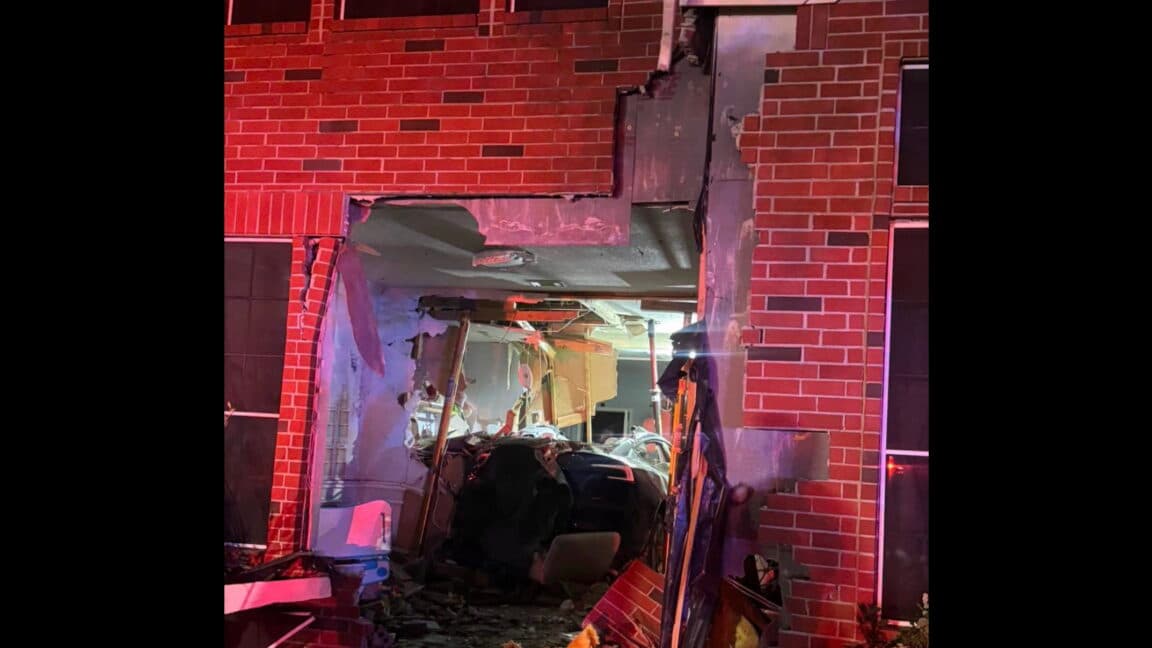
A woman has died after a Tesla using Autopilot crashed into a home in Katy, Texas. The incident, which happened recently, was captured on a doorbell camera. The National Highway Traffic Safety Administration (NHTSA) is now investigating the crash.
What Happened
The driver had Autopilot engaged when the Tesla veered off the road and crashed into a residential home, resulting in the woman’s death. Thanks to the nearby doorbell camera, investigators have clear footage of the entire event.
This tragic incident took place in Katy, a suburb located west of Houston. Authorities haven’t released the names of the victim or the driver yet. However, Engadget confirmed that an “automated driving assistance system” was active during the crash.
What’s particularly striking is that Tesla had just promoted Autopilot as a life-saving technology a day prior to the crash, according to Ars Technica.
The NHTSA Is Now Involved
The NHTSA, which oversees vehicle safety regulations, has initiated a formal investigation into the incident. This isn’t the agency’s first look at Tesla’s Autopilot. Over the years, the NHTSA has examined numerous Tesla crashes involving Autopilot and its advanced system, Full Self-Driving (FSD). Think of FSD as the more sophisticated version of Autopilot; it can handle complex driving situations like city traffic but still requires driver supervision.
In 2023, Tesla recalled more than two million vehicles due to safety concerns with Autopilot. An NHTSA investigation found that the system didn’t do enough to keep drivers alert. Tesla responded with a software update, but critics claimed the fix fell short.
How Autopilot Actually Works — and Where It Falls Short
Tesla’s Autopilot is classified as a Level 2 driver-assistance system. This means the car manages speed and steering, but the driver remains legally responsible for everything that happens. Drivers are expected to keep their hands on the wheel and eyes on the road at all times.
The issue, which safety researchers have pointed out for years, is that systems like Autopilot can create a false sense of security. When a car drives itself smoothly for long periods, it’s easy for a driver to zone out. This phenomenon, known as “automation complacency,” has been highlighted in multiple Tesla crash investigations.
The NHTSA will look into whether this complacency played a role in the Katy crash. The doorbell footage might be crucial in determining if the driver was attentive before the crash occurred.
| Metric | Detail |
|---|---|
| NHTSA Tesla Autopilot investigations (since 2016) | 40+ |
| Vehicles recalled over Autopilot concerns (2023) | 2 million+ |
| Tesla’s claimed autopilot safety stat | 1 crash per 5.94M miles driven (vs. 1 per 1.28M miles nationally) |
| Location of current crash | Katy, Texas |
| System active at time of crash | Autopilot (confirmed) |
Community Reactions
“A woman died in her own home. Her home. She wasn’t even in a car. This is why I keep saying ‘driver assistance’ should never be marketed as anything close to self-driving.”
“The fact that Tesla was literally bragging about Autopilot saving lives the day before this happened is just… the irony is too much.”
What This Means For You
If you drive a Tesla or are thinking about buying one, this crash serves as a reminder that Autopilot is there to assist you, not take over completely. Tesla’s documentation requires drivers to stay alert and ready to regain control at any moment. The system isn’t autonomous, even if it feels that way on long stretches of highway.
Even if you don’t own a Tesla, this incident is still relevant. The push for autonomous and semi-autonomous vehicles is gaining momentum across the auto industry. How regulators, courts, and manufacturers respond to incidents like this will shape the future rules of the road for everyone.
For the woman who lost her life in Katy, Texas, the consequences were tragic. She was in her own home. This detail is likely to spark more public debate about where automated vehicles can go wrong and who should be held accountable.
What To Watch
- NHTSA investigation timeline: Federal investigations of this kind usually take months to wrap up. Expect preliminary findings later in 2026, possibly leading to more recalls or regulatory actions against Tesla.
- Doorbell footage: If the video becomes public or is used in legal proceedings, it could serve as one of the clearest pieces of evidence in a Tesla Autopilot crash case.
- Legal action: Families affected by Tesla Autopilot crashes have pursued civil lawsuits with varying success. Keep an eye on whether the victim’s family decides to file a suit and how Tesla responds.
- Tesla’s response: Tesla has often pushed back against crash reports involving Autopilot, frequently highlighting driver behavior data from the vehicle’s logs. It’ll be interesting to see how the company reacts publicly to this specific crash.
Sources: Ars Technica | Engadget

Daniel Park
Daniel Park covers AI, cloud infrastructure, and enterprise software for Explosion.com. A former software engineer who transitioned to technology journalism 5 years ago, Daniel brings technical depth to his reporting on artificial intelligence, startup funding rounds, and the companies building the future of computing. He breaks down complex AI developments and business strategies into clear, actionable insights for readers who want to understand how technology is reshaping industries.