Google is completely overhauling its smart home strategy, kicking things off with a new Google Home Speaker that features Gemini AI. This advanced conversational AI aims to make interactions with your smart home feel more natural, as if you’re chatting with someone who really gets you, rather than just giving orders to a machine.
Why Google Is Starting Over
Google’s smart home products have been a bit scattered over the years. The original Google Home speaker launched back in 2016, followed by the Nest Audio in 2020. Since then, the product line has mostly been silent while Amazon’s Alexa and Apple’s HomePod have made strides. Now, Google is leveraging Gemini — its large language model, the intelligent engine behind its top chatbot — to mark a fresh beginning.
The new Google Home Speaker goes beyond just updating the hardware. It signals a new approach. Instead of receiving robotic, short answers to your questions, Gemini allows for fluid conversations. You can ask follow-up questions without restating your initial query, give instructions in a natural way, and receive replies that consider the context. This is a big leap from the usual experience of saying, “Hey Google, set a timer for ten minutes.”
What Gemini Actually Changes
The standout feature of Gemini in a home speaker is its ability to remember details during a conversation. Traditional voice assistants treat every question as a new interaction, much like calling customer service and having to explain your issue every time you get transferred. With Gemini, if you say, “turn off the lights in the kitchen” and follow up with, “actually, dim them to 40% instead,” it knows what “them” refers to.
Google also emphasizes better integration across its smart home devices. Items connected via the Google Home app — like thermostats, cameras, door locks, and lights — should respond more smoothly to complex, multi-part requests. For example, saying “Turn on the porch light, lock the front door, and set the thermostat to 68” in one go is the kind of conversation Google is aiming for.
The Bigger Picture: Android XR Is Part of This
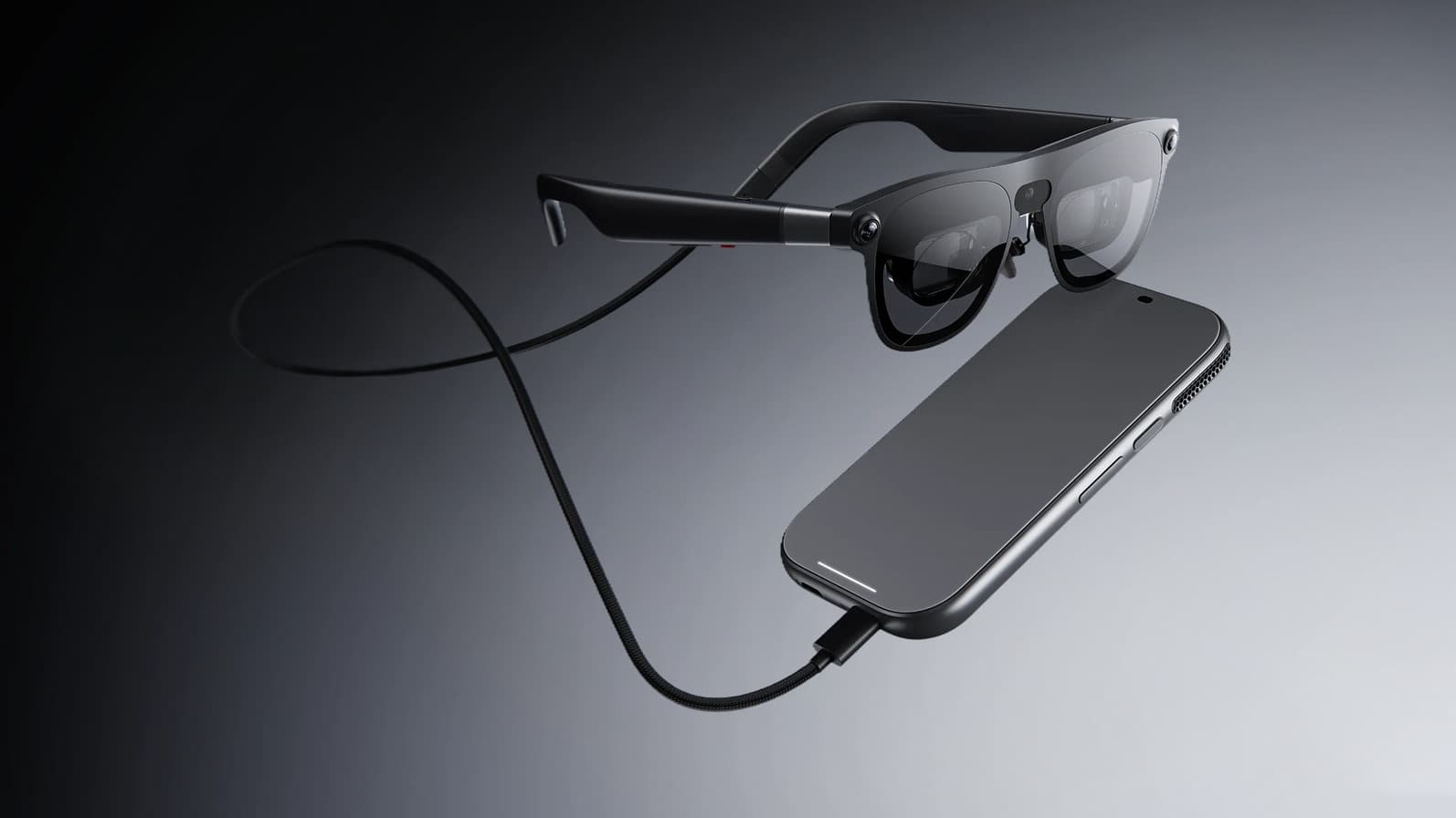
The speaker isn’t the only area where Google is embedding Gemini into your everyday life. The company recently showcased Android XR — its operating system for smart glasses and mixed reality headsets. This system uses Gemini to guide users through cities with 3D navigation overlays appearing in their view, all hands-free. Imagine Google Maps floating in front of you instead of on a screen you have to look down at.
During the demo on XREAL Aura glasses running Android XR, a user navigated through an unfamiliar area while Gemini identified landmarks, suggested nearby attractions, and provided turn-by-turn directions without needing to touch a phone. It’s an early concept, but it shows where Google envisions the entire Gemini-powered ecosystem going: ambient computing, where AI support is integrated into your environment rather than confined to a device.
The Home Speaker and XR glasses share a unified strategy: bring Gemini into more aspects of your life on various devices, without needing to open an app.
| By The Numbers: Alphabet / Google | |
|---|---|
| Ticker | GOOGL |
| Stock Price | $339.68 (−1.62%) |
| CEO | Sundar Pichai |
| Headquarters | Mountain View, CA |
| Founded | 1998 |
| Sector | Big Tech |
| Original Google Home Launch | 2016 |
| Nest Audio Launch | 2020 |
What This Means For You
If you own a Nest Audio or an older Google Home device, this news won’t change your setup immediately — your current hardware isn’t going anywhere just yet. However, it does show that Google is no longer treating its smart home products as an afterthought.
If you’re considering jumping into a smart home ecosystem or upgrading your speaker, you might want to wait for the new Google Home Speaker. The shift from rigid voice commands to real conversations is a quality-of-life upgrade that’s hard to ignore once you’ve tried it. It’s similar to the difference between navigating with a paper map and using GPS.
For renters and homeowners with a mix of smart devices — some from Google and others from different brands — improved Gemini integration means fewer frustrating moments. No more getting responses like, “Sorry, I can’t help with that” for reasonable requests.
Community Reactions
“I’ve been burned by Google killing products too many times. Stadia, Inbox, Google+, Daydream. I’ll believe the smart home commitment when I see it survive two product cycles.”
“The XR glasses demo is genuinely impressive, but the speaker is where most people will actually feel this. If Gemini on a home device is half as good as it is in the app, this is a real upgrade.”
What To Watch
- Pricing and release date: Google hasn’t confirmed when the new Home Speaker will launch or its price. Based on past product patterns, a fall 2026 announcement alongside other Pixel hardware seems likely.
- Android XR availability: The smart glasses demo used third-party hardware from XREAL. Keep an eye out for Google to clarify which devices will officially support Android XR and when consumers can buy them.
- Competitor responses: Amazon has its own AI plans for Alexa, and Apple is enhancing HomePod features. How quickly competitors adopt similar conversational AI will influence whether Google’s early lead matters.
- Google’s product commitment: Given the company’s track record of discontinuing hardware lines, user trust is crucial. Watch for promises of long-term software support at any official launch event.
Sources: Android Authority — Google’s Android XR Tour Guide Demo | Mashable — Google’s New Home Speaker and Gemini

Daniel Park
Daniel Park covers AI, cloud infrastructure, and enterprise software for Explosion.com. A former software engineer who transitioned to technology journalism 5 years ago, Daniel brings technical depth to his reporting on artificial intelligence, startup funding rounds, and the companies building the future of computing. He breaks down complex AI developments and business strategies into clear, actionable insights for readers who want to understand how technology is reshaping industries.