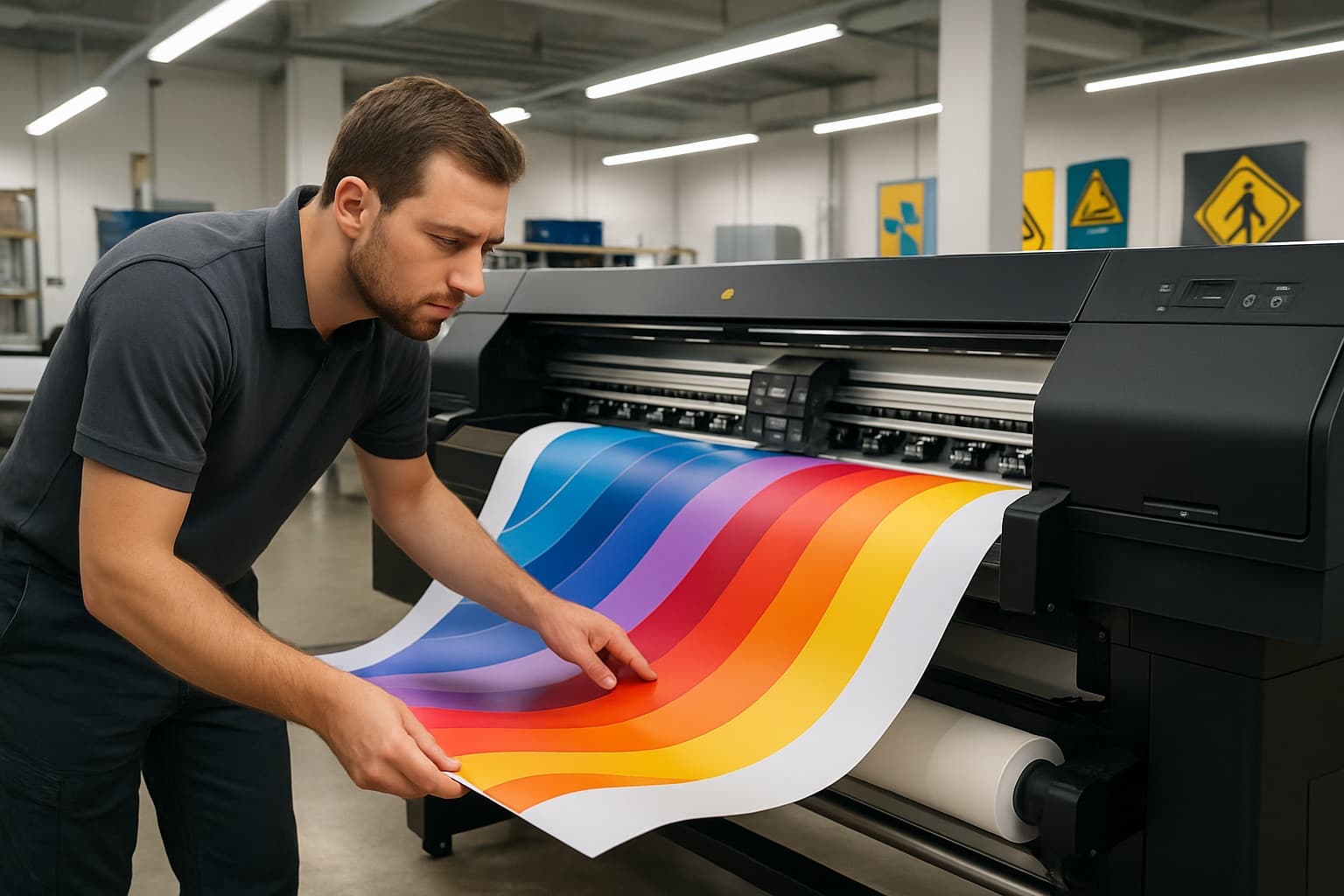
For years, many businesses outsourced large-format printing projects because it seemed like the simplest option. Whether they needed banners, construction plans, vehicle graphics, promotional displays, or retail signage, third-party print providers handled the work while companies focused on their core operations. Today, however, rising costs, tighter deadlines, and increasing demands for customization are causing many organizations to rethink that approach.
As technology has improved, wide format printing has become more accessible and cost-effective for businesses of all sizes. Companies are discovering that bringing printing operations in-house can reduce expenses, improve efficiency, and give them greater control over their branding and production schedules. From construction firms to retailers and manufacturers, organizations are finding new ways to make large-format printing a strategic advantage rather than an outsourced expense.
Keeping Fencing, Signage, and Graphics Production Running Efficiently
Many industries rely heavily on wide format printing to support daily operations, and fencing companies are a great example. Businesses involved in fencing projects frequently need large banners, site signage, safety notices, promotional displays, and branded materials. When these items are outsourced, delays can affect project timelines and increase overall costs.
For organizations that invest in their own printing equipment, maintaining uptime becomes essential. Having access to reliable supplies and replacement components, including quality wide format printer parts, helps businesses keep production moving without unnecessary interruptions. A printer that is properly maintained can continue producing large-scale graphics, promotional materials, and project signage for years, making in-house printing a valuable long-term investment.
As more businesses bring printing capabilities under their own roofs, equipment maintenance becomes just as important as the initial purchase. A reliable printer supported by quality replacement parts allows organizations to meet deadlines, reduce downtime, and avoid the expense of repeatedly outsourcing routine print jobs.
When a Wide Format Printer Delivers Positive ROI
The return on investment for a wide format printer depends largely on usage. Businesses that regularly produce banners, posters, trade show displays, architectural drawings, retail signage, or promotional materials often discover that ownership becomes financially advantageous sooner than expected.
Every outsourced project represents money leaving the organization. Once a business begins handling those projects internally, many of those expenses are replaced with significantly lower production costs. Materials, ink, and labor still need to be considered, but the overall cost per project often decreases substantially compared to outsourcing.
The benefits extend beyond direct cost savings. Faster production, improved flexibility, and the ability to respond immediately to changing needs can create additional value that is difficult to measure strictly in financial terms. For many organizations, the combination of cost savings and operational efficiency makes the investment worthwhile.
Why Investing in Quality Equipment Pays Off
One of the biggest mistakes businesses make is focusing only on the upfront purchase price of equipment. While a lower-cost printer may appear attractive initially, it often comes with limitations that become expensive over time. Frequent repairs, inconsistent output quality, and reduced productivity can quickly erase any initial savings.
This principle applies across many areas of business. Organizations often benefit when they prioritize durability, performance, and long-term value instead of simply choosing the least expensive option. The same thinking applies to wide format printing equipment, where quality machines can produce reliable results while minimizing maintenance costs and operational disruptions.
When businesses view equipment purchases as long-term investments rather than short-term expenses, the financial benefits become easier to see. A dependable printer that consistently produces professional-quality materials can generate value for years while helping organizations avoid recurring outsourcing costs.
Why Outsourcing Large Graphics is Becoming More Expensive
The cost of outsourcing large-format printing has increased significantly in recent years. Rising labor expenses, material costs, shipping fees, and production demand have all contributed to higher prices for businesses that rely on external print providers. What was once a manageable expense can quickly become a substantial line item in a company's budget.
Many organizations also face hidden costs when outsourcing. Revisions, rush fees, delivery charges, and communication delays often add to the final project cost. When a marketing team needs multiple rounds of updates or a construction firm requires immediate revisions to site graphics, outsourcing can become both expensive and time-consuming.
Bringing printing in-house gives businesses greater visibility into their actual production costs. Rather than paying markups on every project, organizations can produce materials as needed while maintaining greater control over timelines and budgets. For companies that regularly require large-format graphics, the savings can add up quickly over the course of a year.

Nick Guli
Nick Guli is the founder and editor-in-chief of Explosion.com, which he launched in February 2012. With over a decade of experience in digital publishing, Nick oversees editorial direction across entertainment, gaming, technology, and lifestyle content. He is an avid gamer and movie enthusiast who brings a critical eye to coverage of industry trends, game reviews, and entertainment news.