Meta description: How MyDefence secured a $26 million U.S. Army contract and opened an Oklahoma City facility to scale its counter-drone technology across the North American market.
A Danish counter-drone company has secured a $26 million contract with the U.S. Army, a milestone that reflects both the scale of the unmanned aerial threat facing American forces and the pace at which European defense startups are penetrating U.S. procurement. MyDefence, headquartered in Nørresundby, Denmark, is expanding its North American footprint at a moment when demand for counter-UAS technology has reached levels that domestic suppliers alone cannot meet.
The company's operational record sets it apart from competitors working primarily at the concept or prototype stage. Two thousand of its Wingman drone detection units are currently deployed in Ukraine, providing real-time RF detection for forces operating under sustained drone threat. That combat-proven track record carries weight in procurement circles where demonstrated field performance matters more than specifications on paper.
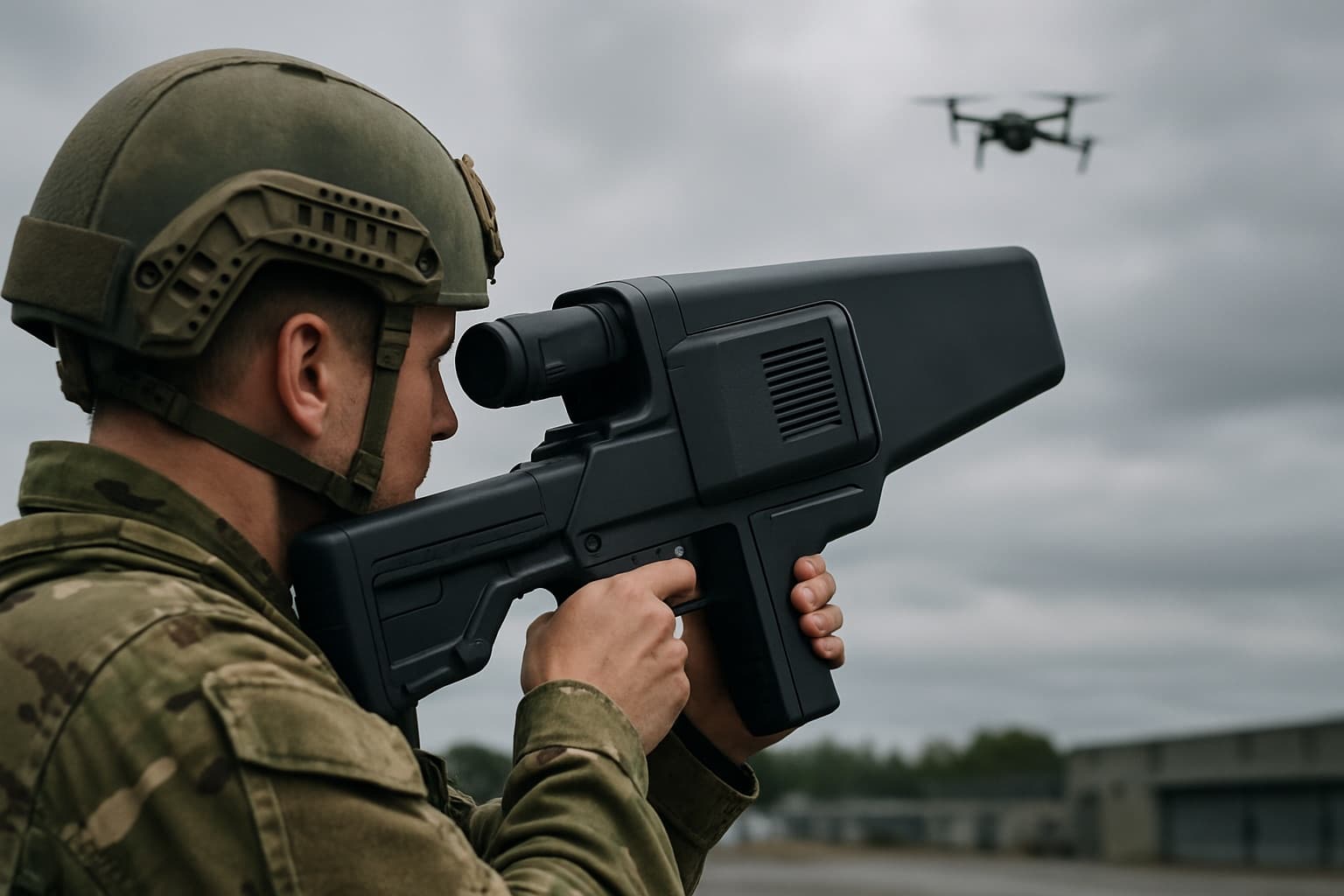
For those unfamiliar with the company, its portfolio of counter drone solutions covers detection, jamming, and integrated wearable systems designed for military, law enforcement, and critical infrastructure protection, built around the premise that effective drone defence requires operator-level mobility, not fixed installations.
A $26 Million Vote of Confidence
The U.S. Army contract is one of the most significant orders in MyDefence's history and signals a meaningful shift in how American defence procurement is approaching counter-UAS supply chains. Rather than relying exclusively on domestic contractors, the Army has demonstrated a willingness to work with allied-nation companies whose technology has been tested in active conflict zones.
That distinction matters. Equipment that has functioned reliably under real operational stress carries different weight in procurement decisions than systems evaluated only in controlled exercise conditions.
Oklahoma City: Positioning Within the U.S. Defence Industrial Base
In February 2026, MyDefence opened a manufacturing and innovation facility in Oklahoma City, moving from a position of selling into the U.S. market to actively producing within it.
Domestic Production as a Procurement Requirement
U.S. defence procurement increasingly requires domestic or allied-nation manufacturing for sensitive security equipment. A U.S. based facility addresses supply chain security, delivery timelines, and compliance standards that overseas manufacturers often cannot satisfy at scale. For MyDefence, the Oklahoma City investment is operational infrastructure and a condition of growth in the American market simultaneously.
The Technology Behind the Expansion
MyDefence's core product pairing is the Soldier Kit: the Wingman RF sensor combined with the Pitbull jammer, two devices totalling 2.5 kg designed for dismounted troops operating in drone-threat environments.
How the System Works
The Wingman passively scans frequencies from 200 MHz to 6 GHz with full 360-degree coverage, identifying drone threats in under 10 seconds at ranges up to 6 km without emitting any detectable signal. When a threat is confirmed, the Pitbull disrupts drone control and GNSS navigation signals at ranges up to 1,000 meters. Both devices integrate with the ATAK platform for real-time coordination across units in the field.
The Demand Driving the Numbers
According to a RAND Corporation report on counter-UAS operations prepared for the U.S. Army, the proliferation of small unmanned aircraft systems has created urgent demand for scalable counter-UAS solutions deployable at the individual soldier level, a gap that wearable, portable systems are specifically designed to address.
MyDefence's Oklahoma City facility positions the company to meet that demand with domestic production capacity aligned to the pace at which U.S. forces and security agencies need to equip personnel.

Nick Guli
Nick Guli is the founder and editor-in-chief of Explosion.com, which he launched in February 2012. With over a decade of experience in digital publishing, Nick oversees editorial direction across entertainment, gaming, technology, and lifestyle content. He is an avid gamer and movie enthusiast who brings a critical eye to coverage of industry trends, game reviews, and entertainment news.